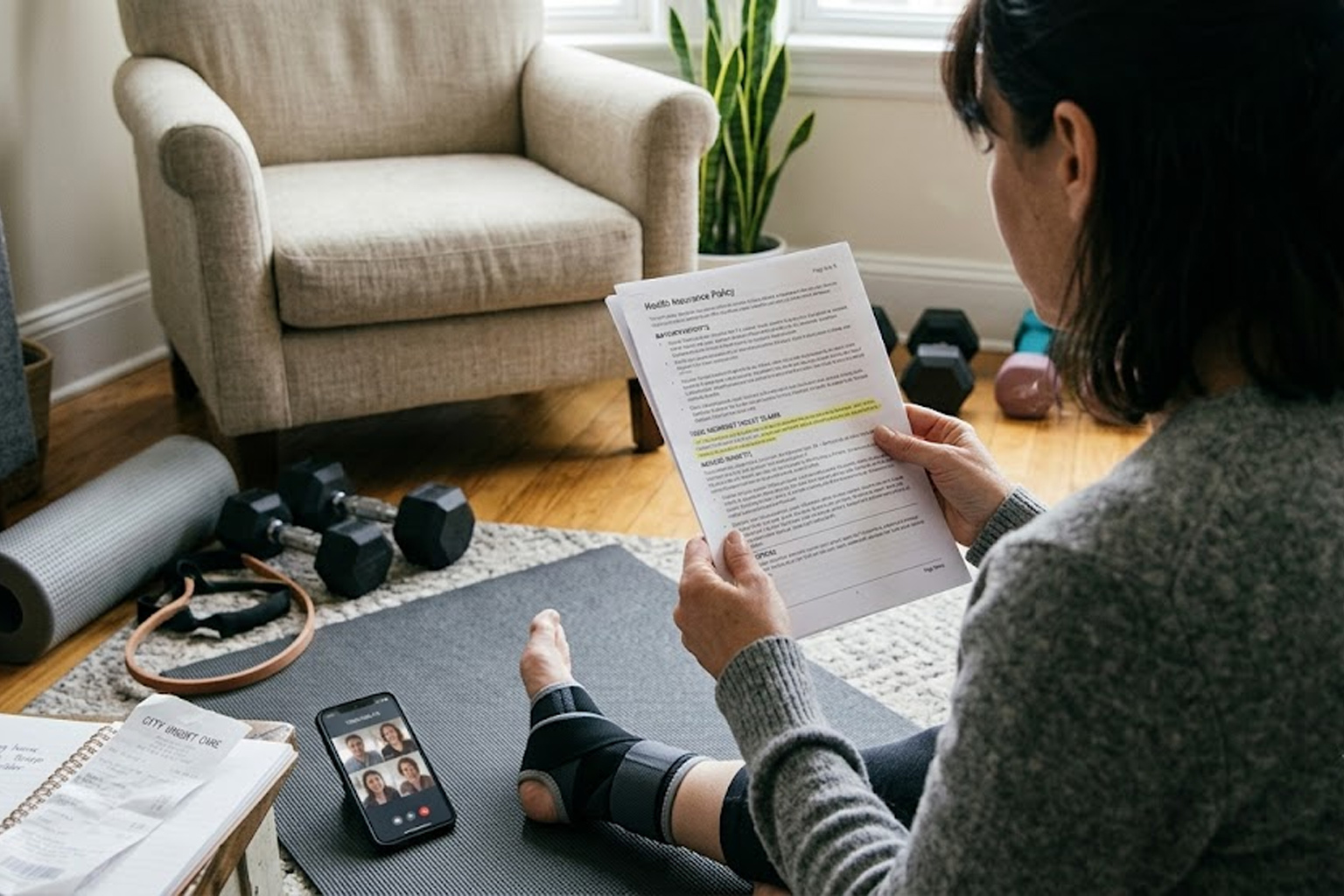
Understanding how your medical insurance responds to injuries or needs related to home exercise is increasingly important as more people train at home. A few specific clauses in your policy can determine whether you are covered for emergency treatment, rehabilitation, or equipment. Reviewing those clauses before an incident reduces the risk of unexpected bills and denied claims. This article outlines key clauses and practical steps to evaluate coverage for home fitness activities.
Start by identifying common scenarios you might face during home workouts. Consider both acute injuries and ongoing care needs. Keep notes on any equipment or virtual services you use as these details matter for claims.
Why specific clauses matter
Many policies include broad definitions and exclusions that affect coverage for at-home activity-related care. Clauses that define “accidental injury,” list excluded activities, or require prior authorization can change whether a claim succeeds. Likewise, definitions around where treatment occurs — in a facility versus at home — may affect coverage for services like physical therapy. Reading these sections clarifies practical expectations for costs and care pathways.
Knowing which parts of the contract govern emergency care, outpatient services, and therapy helps you plan. If language is unclear, request a written clarification from your insurer. That step can prevent surprises when you need care most.
Clauses to prioritize when reviewing policies
Focus on clauses that directly affect common home fitness needs: emergency room visits, imaging and diagnostics, physical therapy, durable medical equipment, and telehealth. Also check exclusions related to high-risk activities, pre-existing condition clauses, and limits on out-of-network care. Policy limits, deductibles, and co-insurance rates will determine your out-of-pocket exposure for any covered service. These elements combined shape the true affordability of care after an exercise-related injury.
- Emergency and urgent care coverage
- Rehabilitation and physical therapy limits
- Durable medical equipment and assistive device clauses
- Telemedicine and virtual visit provisions
- Specific exclusions or activity-related disclaimers
Comparing these clauses side by side across plans makes it easier to see gaps. Pay special attention to annual caps and visit limits that might restrict needed therapy.
Filing claims and documenting incidents
How you document an injury can influence a claim’s outcome, so keep records of the incident, treatment, and any communications with providers or the insurer. Photographs, timestamps, workout logs, and receipts for equipment or classes are practical supports for a claim. If a provider recommends ongoing therapy or specialized devices, obtain clear statements describing medical necessity. Early and organized documentation speeds the review process and improves the chance of approval.
Communicate promptly with your insurer and follow preauthorization requirements where applicable. When in doubt, ask your plan for written confirmation outlining how the claim will be treated.
Conclusion
Review the clauses that define coverage, exclusions, and limits for at-home exercise-related care. Keep clear records of incidents and treatments to support claims. When unclear, seek written clarification from your insurer to avoid unexpected costs.