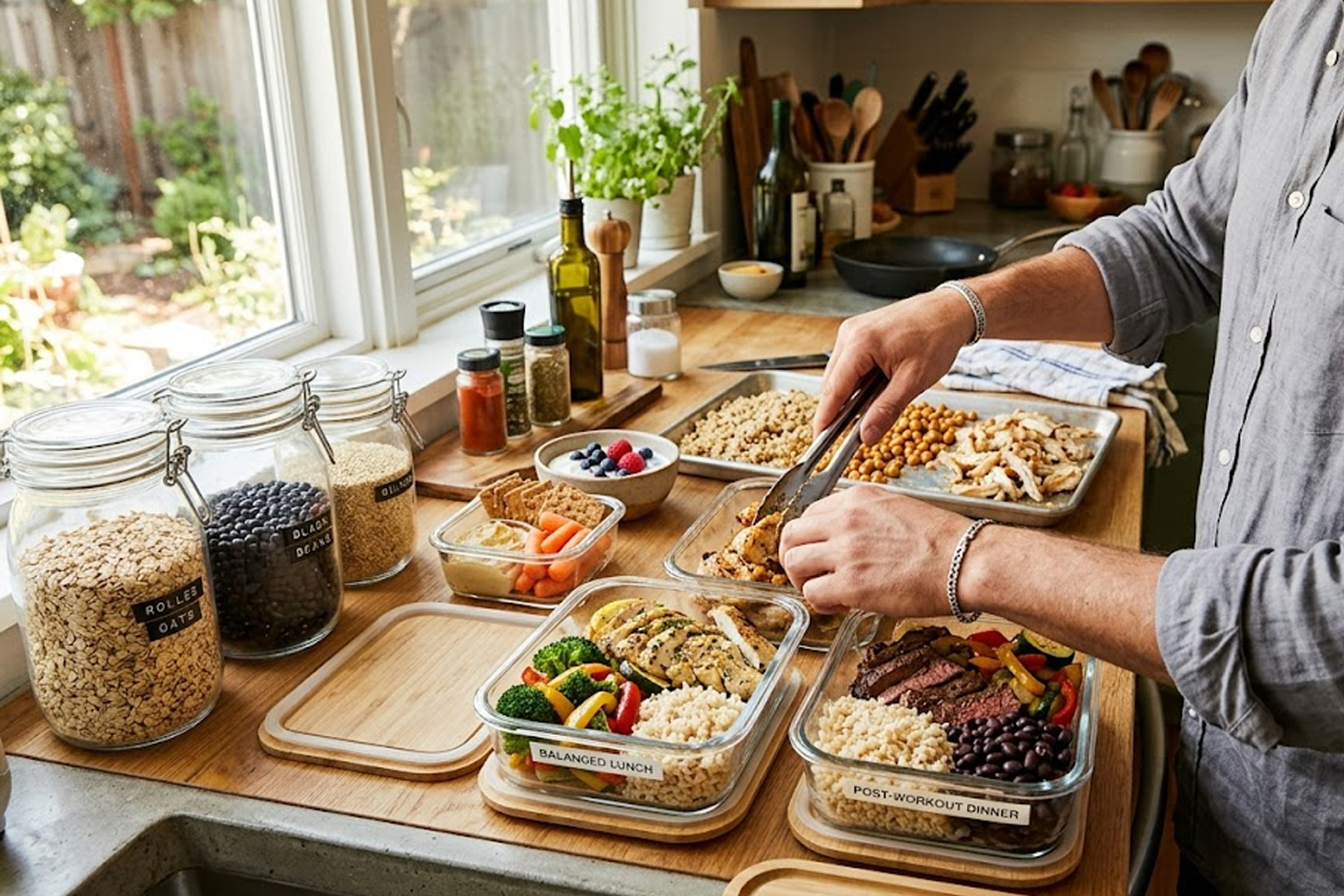
Consistent nutrition simplifies progress and keeps energy steady for home workouts.
Designing adaptable meal frameworks reduces decision fatigue and helps you match training demands.
This article outlines practical plate templates, pantry priorities, and snack strategies to support your goals.
Use these ideas to save time while keeping meals balanced, protein-forward, and satisfying.
Core Plate Templates
Start each main meal with a simple template: protein, complex carbohydrate, vegetables, and a small source of fat. Aim for a palm-sized protein at breakfast and lunch, and a larger portion after intense sessions. Choose whole grains like brown rice, oats, or quinoa for sustained energy and to support recovery. Vegetables add fiber, micronutrients, and volume so you feel satisfied without excessive calories.
Rotating options within this template keeps meals interesting and nutritionally diverse. Small swaps make adherence easier without sacrificing performance.
Pantry Priorities and Prep
Stocking a few versatile staples lets you assemble balanced meals quickly and consistently. Keep canned beans, frozen vegetables, whole grains, eggs, and a lean protein source that stores well. Batch-cook grains and proteins once or twice weekly to cut evening prep time significantly. Simple seasonings and a handful of sauces maintain flavor without complicating the build.
Clever prep reduces friction and increases the likelihood of following the meal framework. Make a short shopping list focused on variety and nutrient density.
Snacks and Post-Workout Choices
Snacks should bridge energy needs and contribute protein rather than be purely empty calories. Combine a carbohydrate and protein source—like yogurt with fruit or hummus with whole-grain crackers—to refuel efficiently. For quick recovery after a tough session, aim for a 3:1 or 4:1 carb-to-protein ratio when possible. Hydration and small amounts of electrolytes support performance on consecutive workout days.
- Greek yogurt with berries
- Hummus and whole-grain crackers with sliced veg
- Cottage cheese with pineapple or a banana
Keep portable snack packs ready to avoid hunger-driven choices. Consistency in small moments compounds into reliable recovery and progress.
Adjusting Portions for Goals
Tailor portion sizes to the intensity and duration of your workouts to balance energy and recovery. On lighter days, emphasize vegetables and moderate carbohydrates; on heavier days, increase starchy carbs slightly. Protein should remain present across meals to support muscle repair while fats can be adjusted for satiety. Track how you feel during and after sessions and make gradual changes rather than large swings.
Small, consistent adjustments help you find a routine that fuels performance. Periodic review of portions keeps progress aligned with changing training demands.
Conclusion
Small adjustments compound into steady progress.
Choose simple templates that match your schedule.
Focus on variety and consistency to sustain results.