

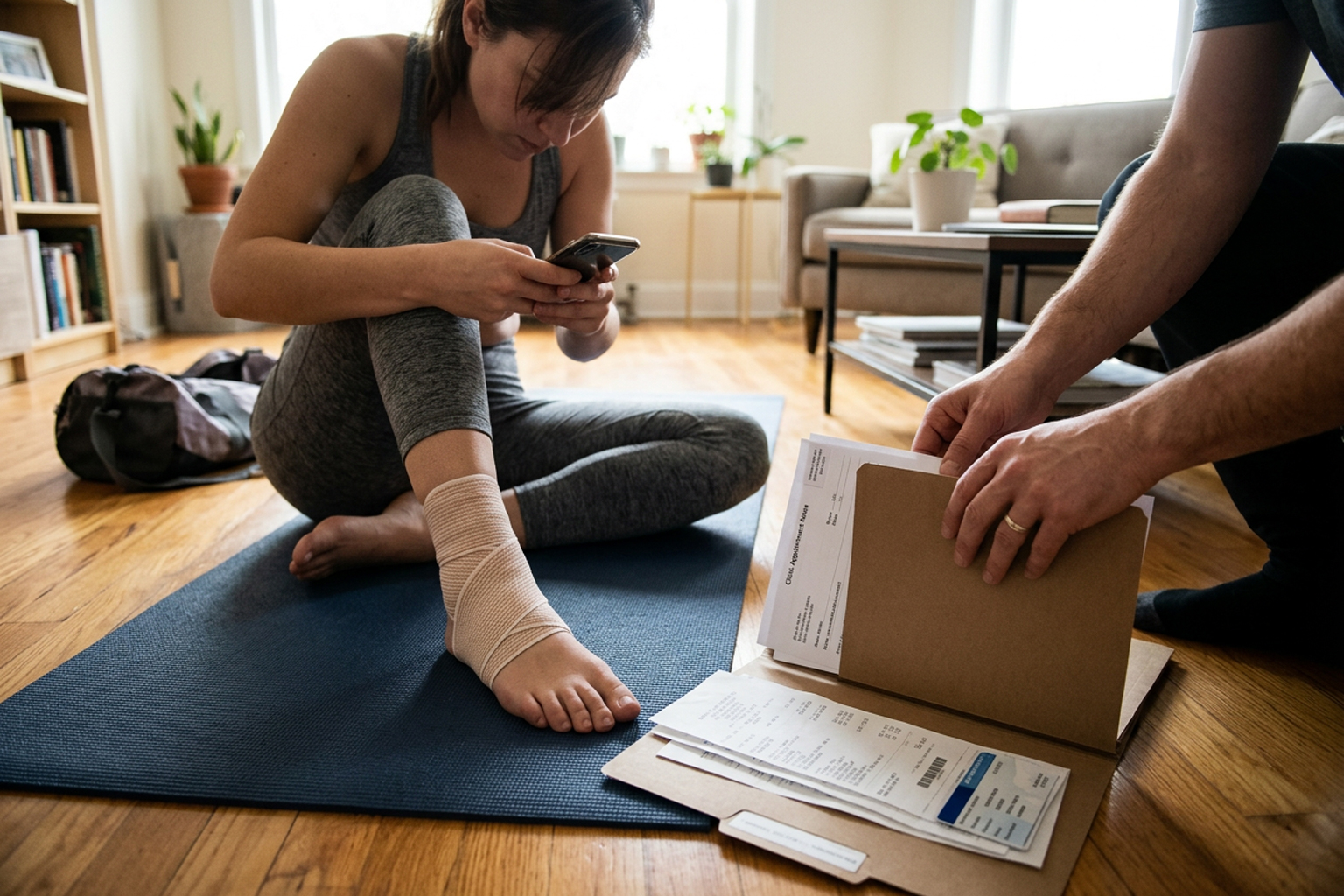
When you exercise at home, a minor incident can become an insurance question quickly. Knowing how your medical policy responds to at-home injuries reduces stress and speeds recovery. This article helps you prepare documentation, understand coverage limits, and choose appropriate care options. Being proactive about claims readiness protects your health and your finances.
Know policy limits, exclusions, and covered services
Start by reviewing your plan summary to identify limits, copayments, and service exclusions that relate to injury treatment. Many policies list what constitutes emergency versus non-emergency care, covered diagnostics, and rehabilitative services such as physical therapy. Pay attention to annual maximums and any clauses that exclude injuries from certain activities or locations. Understanding these details clarifies likely out-of-pocket costs before you need care.
Ask your insurer for a written explanation of benefits related to exercise injuries if a clause is unclear. Having a clear snapshot of covered services reduces surprises during a claim review.
Document incidents thoroughly and seek timely care
Accurate documentation is the backbone of any successful claim after a home workout incident. Record the date, time, what you were doing, and the sequence of events, and take photos of any visible injuries or the environment if relevant. Seek prompt medical evaluation when needed and obtain written medical records, diagnoses, and treatment plans from providers. These records support medical necessity and streamline communications with your insurer.
Keep copies of all receipts, prescriptions, and referral letters. Organized documentation speeds claim processing and helps if an appeal is required.
Use in-network providers and follow claims procedures
Choosing in-network clinicians and diagnostic centers usually lowers your costs and simplifies billing. If you must see an out-of-network provider, notify your insurer as soon as possible and confirm preauthorization requirements for expensive services. Learn your plan’s preferred claim submission methods and timelines to avoid denials for late filing or missing information. Familiarity with the appeals process gives you recourse if a claim is initially denied.
Keep a single folder—physical or digital—for all related correspondence and claim numbers. Clear communication and timely follow-up with both providers and your insurer often resolve issues faster.
Conclusion
Preparing for a possible home workout incident means reviewing coverage, documenting events, and following insurer procedures. These steps reduce financial uncertainty and help you get appropriate care without delay. Stay organized and proactive so you can focus on recovery and return to safe exercise.










