

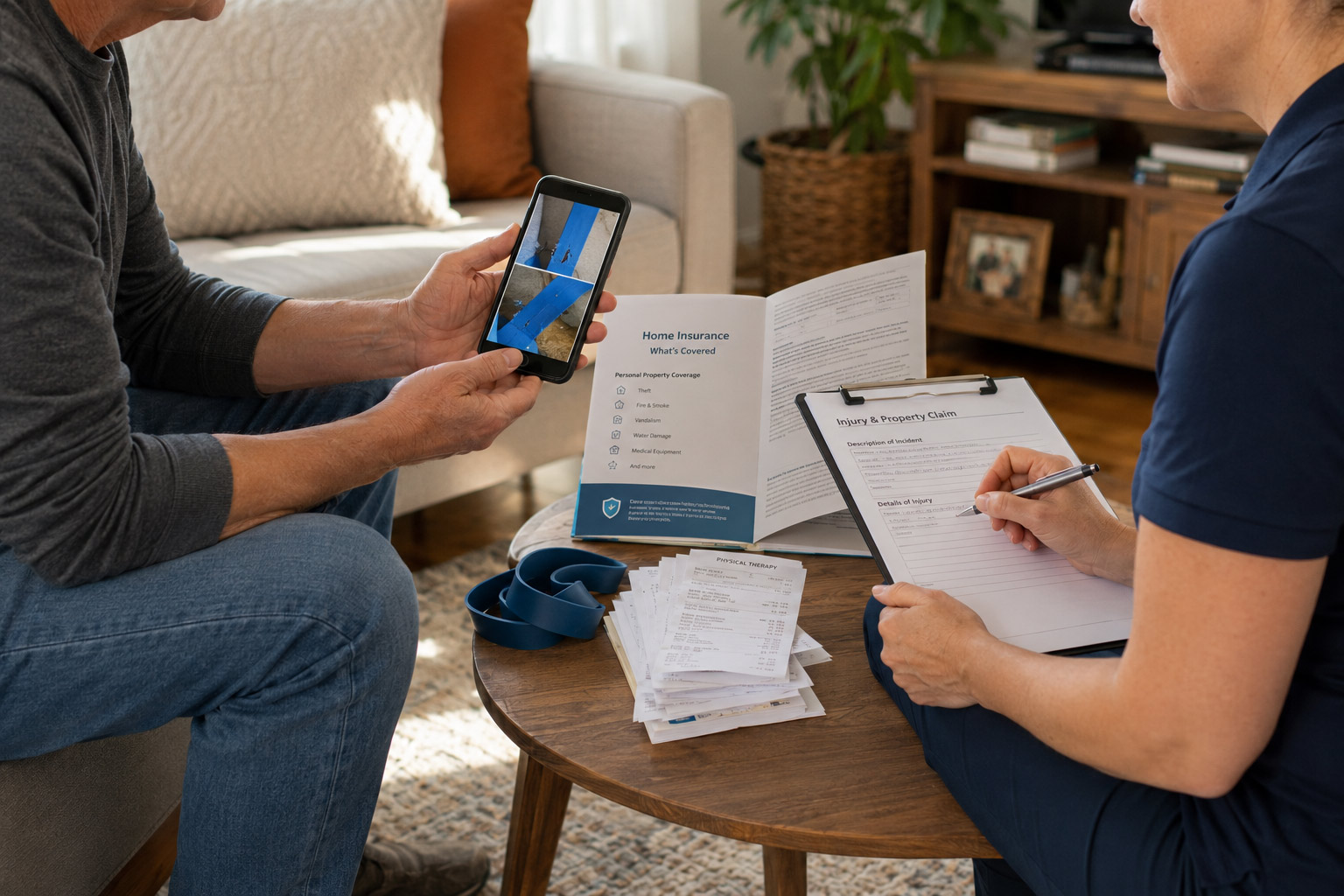
When a training session at home leads to an injury, the difference between covered care and an unexpected bill often comes down to policy exclusions.
Reading the fine print before you need it helps prevent surprises and speeds any future claim process.
This article explains how to identify common exclusions and what documentation insurers typically expect.
Following a few practical steps will make it easier to resolve coverage questions efficiently.
Understand Common Policy Exclusions
Insurers often exclude coverage for injuries arising from certain activities or equipment, and those clauses can vary widely across policies.
Look for language about professional training, high-risk sports, preexisting conditions, or non-prescribed therapies.
Some plans also limit coverage for injuries that occur during unsanctioned paid instruction or while using non-standard equipment.
Identifying these exclusions early lets you plan safer routines or consider supplemental options.
- Professional instruction or commercial activity exclusions.
- Equipment-related exclusions for non-standard or homemade gear.
- Preexisting condition or elective therapy limitations.
Once you spot likely exclusions, contact your insurer for clarification and get any verbal guidance in writing if possible.
That record will help if a claim is denied and you need to appeal.
Gather Evidence and Document Costs
Good documentation strengthens claims when exclusions are disputed or unclear.
Keep clear records of what happened, where it happened, and who was present, along with photos of the scene and any equipment involved.
Save receipts for medical visits, telehealth consultations, rehabilitation sessions, and any related out-of-pocket expenses.
Detailed notes from the day of injury are particularly persuasive during review.
Organize documents chronologically and include provider notes that describe the cause of injury as recorded by clinicians.
This approach reduces back-and-forth with claims adjusters and shortens resolution time.
Communicate With Your Insurer Promptly
Report incidents as soon as is practical and follow the insurer’s preferred claim process to avoid procedural denials.
Be transparent about the activity and equipment involved; omission or inaccurate descriptions can trigger exclusions later on.
Ask specific questions about how exclusions might apply and request written confirmation of any interpretations provided by the insurer.
If a claim is denied, ask for the precise policy language and the rationale to support an appeal.
Timely, clear communication preserves appeal rights and helps you choose next steps, whether internal review or an external appeal.
If needed, consult a licensed advisor who can interpret complex policy language.
Conclusion
Review exclusions early and document any incident carefully to avoid surprises.
Clear records and prompt communication improve the odds of a favorable claim outcome.
Take proactive steps so your coverage better aligns with your home training routine.










