Starting a regular home fitness routine is a smart move for health, but it also means understanding how your medical coverage responds to accidents and strains. Reviewing policy details before an incident can prevent surprises and speed access to care. This article outlines practical steps to assess benefits, document incidents, and manage claims efficiently. Use these recommendations to align your at-home training habits with appropriate insurance preparedness.
Why review your policy before starting home workouts
Not all health plans treat at-home accidents the same way, and coverage can vary by service, provider network, and required prior authorizations. Familiarizing yourself with emergency, urgent care, and physical therapy benefits helps you know where to seek treatment and which providers will be covered. Understanding deductible, copay, and out-of-pocket maximums also clarifies potential costs if an injury requires extended care. A proactive review reduces stress and avoids unexpected bills when you need care most.
Take time to read policy summaries and call customer service with specific scenarios. A short conversation can save money and delay during an emergency.
Key coverage areas to check
Focus on the services most likely needed after a workout incident: emergency and urgent care, imaging and diagnostics, physical therapy, telehealth consults, and durable medical equipment. Confirm whether preauthorization is required for imaging, specialist referrals, or extended rehabilitation to prevent claim denials. Check how out-of-network care is reimbursed, especially if your preferred therapist or specialist is not in-network. Knowing these details helps you make informed choices about where and when to seek care.
- Emergency and urgent care coverage and copays
- Physical therapy limits and session caps
- Telehealth availability for initial assessments
- Durable medical equipment and mobility aids
- Out-of-network reimbursement rules
Documenting coverage limits in writing and saving representative phone logs can be helpful when filing claims. Keep a list of approved providers to streamline appointments.
Documenting incidents and filing claims
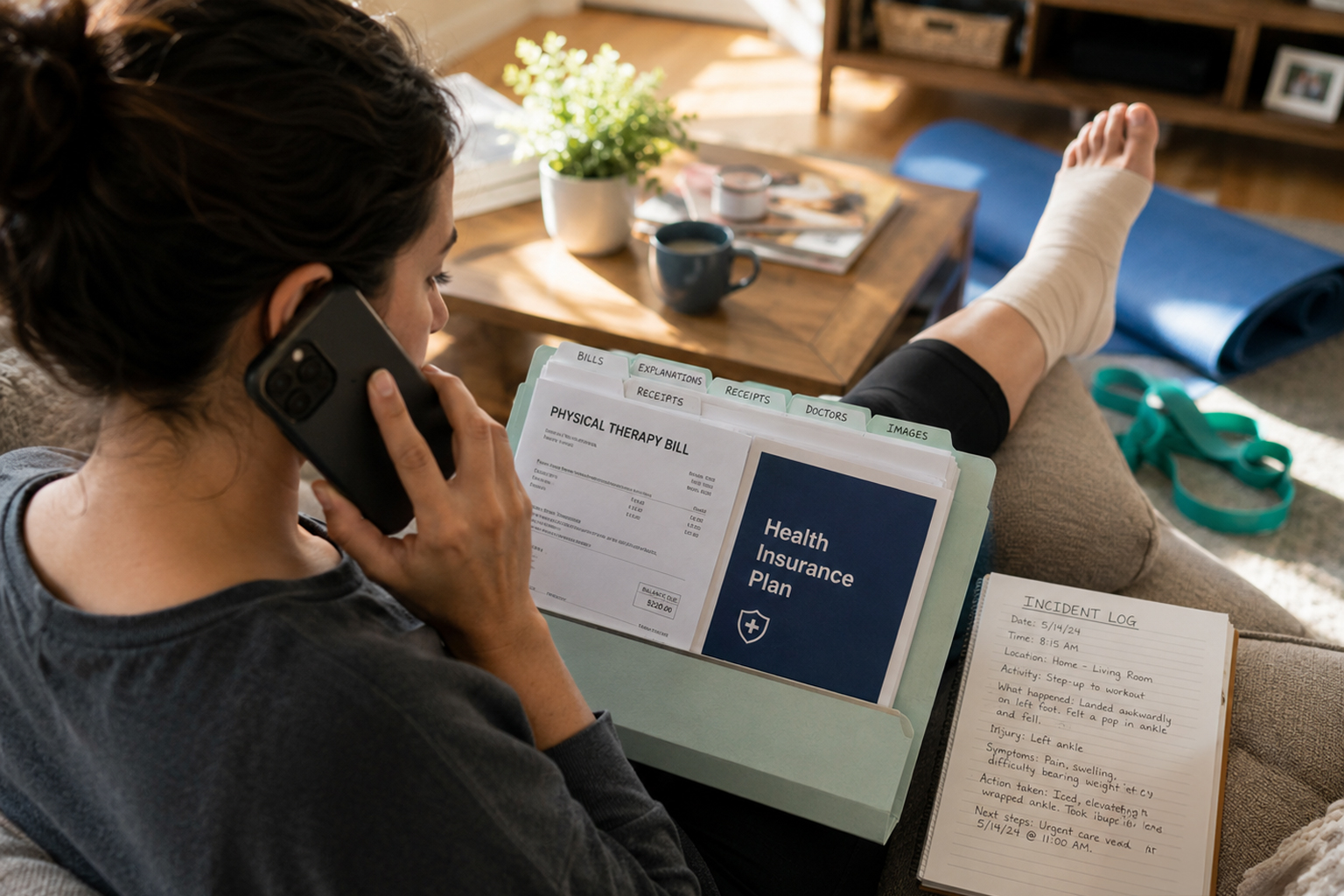
Accurate documentation is essential when a workout injury occurs. Record the date, time, activity, symptoms, and any witnesses as soon as possible to create a clear incident account. Keep copies of medical records, invoices, and correspondence with providers and insurers to support your claim. When submitting documentation, follow insurer instructions closely and include any required forms to avoid processing delays.
Maintain a dedicated folder—digital or physical—for all records related to the incident. Prompt, organized submissions improve the likelihood of a smooth claim process.
Managing costs and appeals
If a claim is partially denied or a treatment is not authorized, review the explanation of benefits to identify the reason and next steps. Many plans offer an internal appeal process; provide additional medical notes or a letter from your treating clinician to strengthen your case. Explore cost-saving options such as in-network alternatives, generic prescriptions, or payment plans for any remaining balances. If needed, seek assistance from a patient advocate or billing specialist to negotiate or clarify charges.
Appeals can take time, so continue necessary care while tracking timelines and correspondence. Persistence and clear documentation often lead to better outcomes.
Conclusion
Reviewing policy details before and after home fitness incidents reduces uncertainty and cost exposure. Keep clear records, verify coverage for key services, and follow insurer procedures when filing claims. With preparation and documentation, you can protect both your health and your finances.