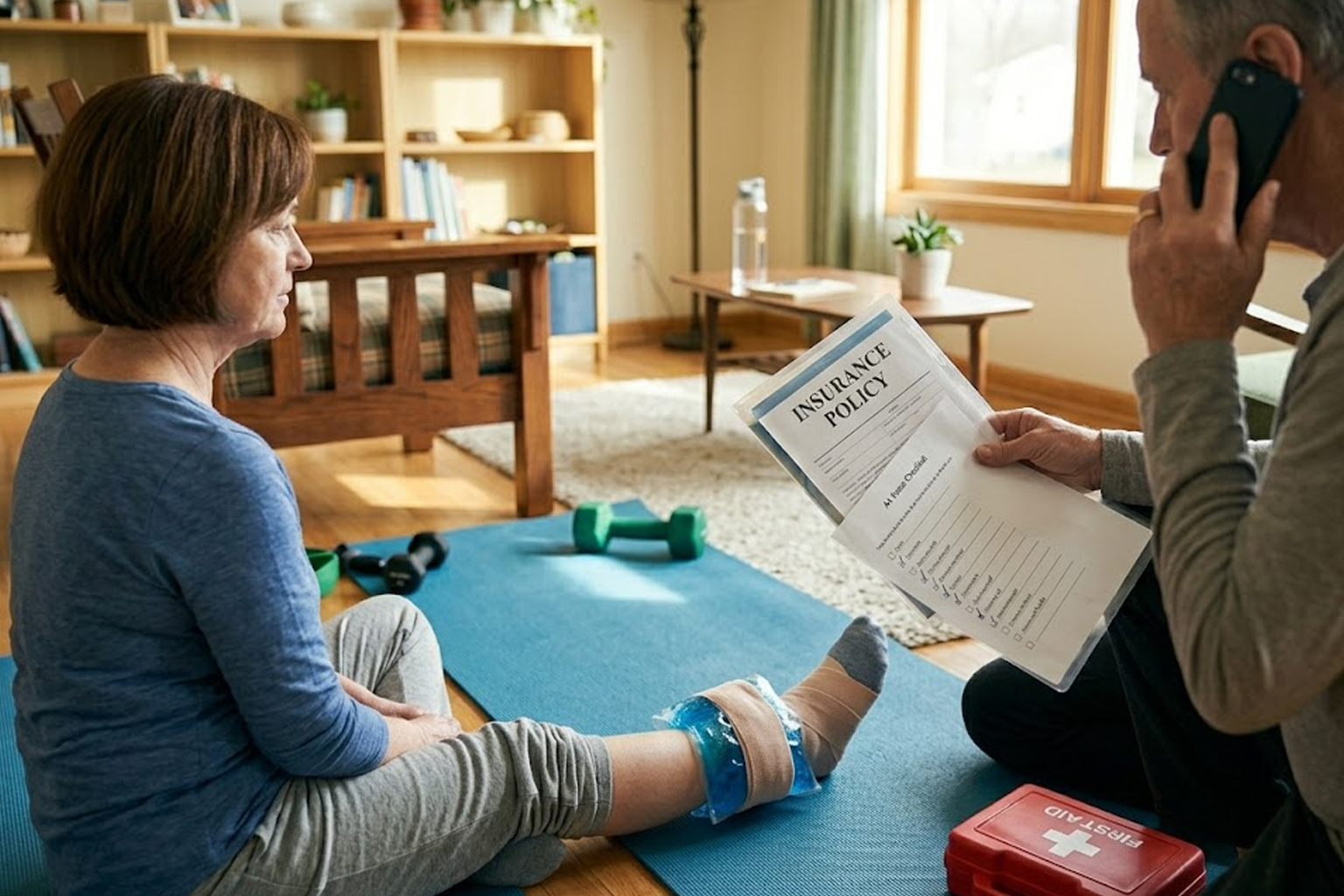
Working out at home reduces travel time and increases convenience, but injuries can still happen and catching the right care early matters. Linking a clear injury response plan to your health insurance helps you act quickly and reduce surprises when filing claims. This guide outlines practical steps to prepare, document, and coordinate care so recovery is smoother. Use these measures whether you train casually or maintain a structured home fitness routine.
Why an insurance-linked plan matters
Having a deliberate plan ensures you choose appropriate care while protecting coverage and minimizing out-of-pocket costs. Insurers may have rules about networks, prior authorization, and timelines for claims that affect which providers and treatments are covered. When you plan ahead, you avoid rushed decisions that can lead to denials or higher expenses. An integrated approach also speeds up access to rehab and follow-up services when they are needed most.
Start by reviewing your policy for emergency, urgent care, telehealth, and physical therapy provisions. Note deductible and copay levels for each care type and any requirements for preauthorization. Keep a short checklist of insurers’ contact numbers and claim submission methods. These preparatory steps make the first 24 to 72 hours after an injury simpler to navigate.
Immediate steps to take after a home workout injury
First, assess severity and prioritize safety: stop activity, stabilize the injury, and seek emergency services for life-threatening signs. For non-emergency injuries, photograph the scene, collect witness details if any, and document symptoms and when they began. Contact your insurer or use its digital portal to report the incident and ask about preferred providers and preauthorization needs. Early documentation improves claim validity and helps determine the most cost-effective care pathway.
Next, choose the care setting recommended by your plan—telehealth for initial triage, urgent care for moderate injuries, or emergency care when necessary. Keep all receipts, visit notes, and imaging or therapy orders in a single folder. Prompt communication with both your clinician and insurer reduces delays and supports smoother billing and claims handling.
Practice and maintain your plan
Run through the plan periodically so contacts and processes stay current with any policy changes. Update your provider list and note any changes in network affiliations, copays, or preauthorization rules each policy year. Practice a simple checklist drill: immediate steps, insurer contact, documentation, and follow-up scheduling. Regular reviews keep the process second nature when an actual injury occurs.
Finally, store digital and printed copies of your plan where they are easily accessible in a home gym or with first-aid supplies. Share the plan with household members and training partners so someone else can act on your behalf if needed. Simple preparation reduces stress and speeds recovery.
Conclusion
Linking your injury response to your health insurance turns uncertainty into an actionable routine and protects your coverage. With clear steps for documentation, provider choice, and insurer communication, you can focus on recovery instead of billing. Regularly review and practice the plan so it works when you need it most.