A fall, strained muscle, or equipment mishap at home can be disorienting, but the actions you take in the first hours matter for both recovery and a successful insurance claim. This article lays out clear, practical steps to preserve evidence, choose appropriate care, and communicate with your insurer. You don’t need legalese or a checklist full of jargon — just sensible, timely moves that protect your health and your wallet. Read through these guidelines before you need them so you’re prepared if an accident happens.
Secure immediate care and document medical details
Prioritize your health: if the injury appears serious, call emergency services or go to urgent care. For non-life-threatening injuries, seek prompt evaluation so a clinician documents the diagnosis, treatment plan, and follow-up needs. Ask for copies of records, a visit summary, and any imaging or test results — those notes are the backbone of a later claim. Keep receipts for copays, prescriptions, and any devices or supports purchased after the event.
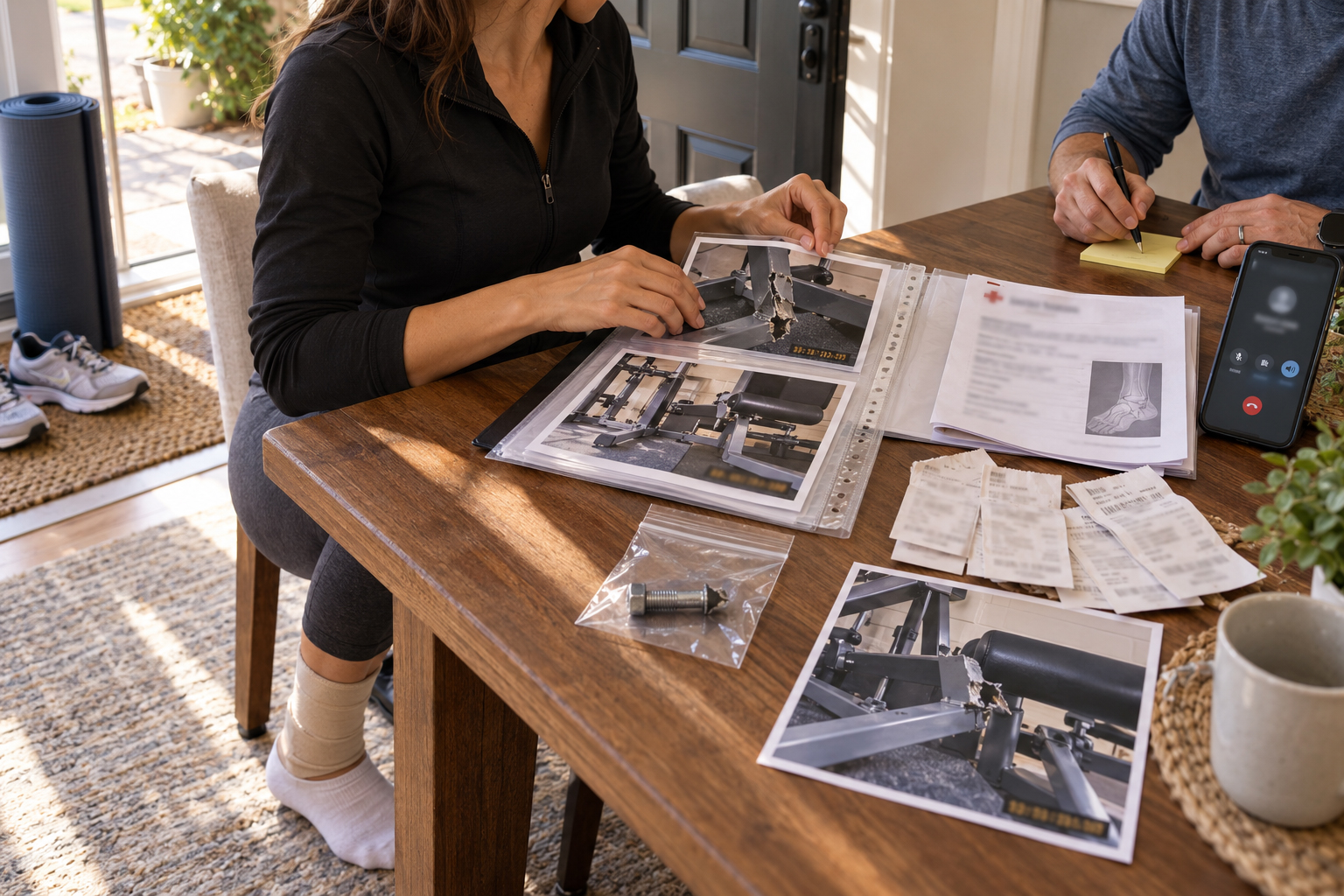
Detailed medical documentation links the incident to the treatment and helps avoid disputes over necessity or timing. Retain everything in a dedicated folder — physical or digital — for quick access.
Collect scene evidence and eyewitness accounts
Photographs and notes taken soon after an incident provide context insurers often require: where it happened, what equipment was involved, posture or setup, and any visible injuries. Capture multiple angles, the surrounding area, and the device serial number if equipment failed. If someone saw the event, ask them for a brief written statement with contact details and their recollection of what happened.
These items strengthen the factual record and reduce ambiguity about how the injury occurred. Even simple photos and a short witness note can make a meaningful difference during claim review.
Notify your insurer, follow timelines, and understand what’s covered
Report the incident to your health plan as soon as reasonably possible, following the procedure in your policy for new claims or urgent care. Ask about required documents, deadlines for filing, and whether preauthorization is needed for follow-up services like physical therapy. Clarify coverage limits, in-network requirements, and how out-of-pocket costs are handled so you can make informed choices about providers and rehab options.
Keeping a clear paper trail of calls, emails, and claim numbers helps resolve questions and keeps the process moving. When in doubt, request a written explanation of benefits after treatment.
Conclusion
Act fast, document thoroughly, and keep communication clear with both medical providers and your insurer. Those three habits improve recovery outcomes and reduce the chance of a denied or delayed claim. Being methodical after a home gym injury protects your health and your finances.