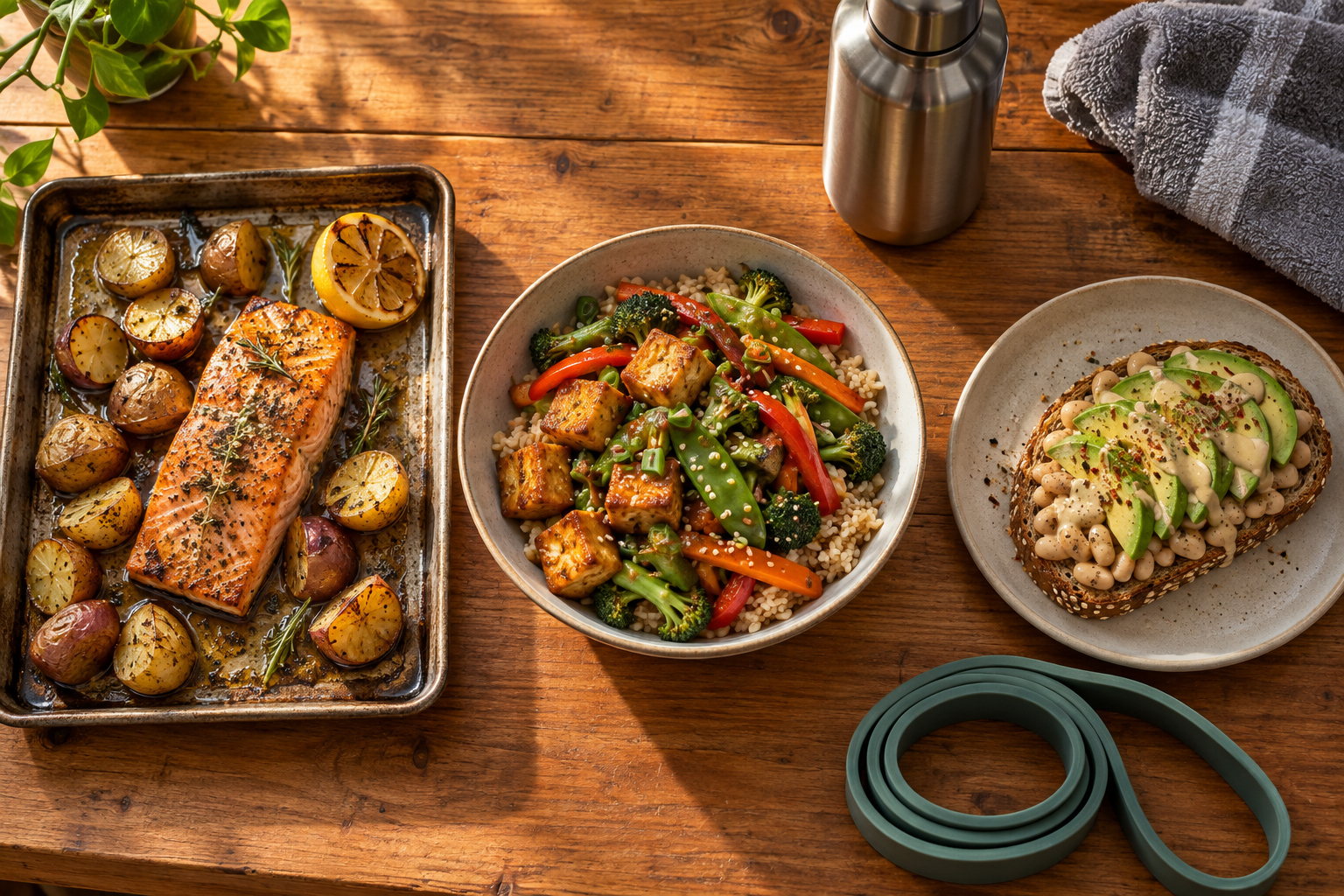
Even short home workouts create small tears in muscle fibers that need fuel and building blocks to repair. The meal you eat after training doesn’t have to be complicated, but it should combine a reliable protein source with carbohydrates and some healthy fat. Timing matters less than consistency, so aim for a solid dinner pattern most nights rather than perfect timing every day. Small changes to familiar recipes can make a big difference in how you feel the next morning.
Why a focused dinner speeds recovery
A post-workout dinner that supplies enough protein gives your body the amino acids it needs to rebuild muscle tissue and restore strength. Carbohydrates refill muscle glycogen so you can train again without dragging, and fats support hormone balance and satiety so you sleep better. Hydration and a few electrolytes also help reduce post-exercise soreness and promote overnight repair. Putting these pieces together creates a compact meal that promotes both immediate recovery and longer-term progress.
Think of dinner as a repair kit: protein to rebuild, carbs to refill, and fat to stabilize energy. A consistent approach here reduces fatigue and improves training quality over time.
Three elements to prioritize
Start with 20–40 grams of protein from sources you enjoy: poultry, fish, tofu, Greek yogurt, or a simple legume mix. Add a moderate portion of carbohydrates—potatoes, rice, whole grains, or starchy vegetables—to restore glycogen. Finish the plate with colorful vegetables and a small serving of healthy fat like olive oil, avocado, or a sprinkle of nuts to support digestion and sleep. These three elements balance repair, energy, and recovery without requiring elaborate cooking.
- Protein: grilled chicken, canned tuna, or lentil stew.
- Carbs: quinoa, sweet potato, or whole-grain pasta.
- Fats/veg: olive oil dressings, roasted broccoli, or avocado slices.
Use simple swaps to match taste and pantry items while keeping the same nutrient focus. Adjust portion sizes to match your activity level and body size.
Quick, pantry-friendly dinner builds
A one-pan salmon and potato sheet bake combines protein, carbs, and fat with minimal cleanup and steady heat that keeps the fish tender. Stir-fries are another fast option—use tofu or shrimp, toss in frozen vegetables, and serve over brown rice for a complete plate. For a no-cook evening, pair canned beans with whole-grain bread, raw salad greens, and a tahini drizzle for instant recovery-friendly fuel. These builds rely on staples most people keep on hand and work on busy weeknights.
Pick two or three go-to dinners and rotate them to avoid decision fatigue. Over time you’ll hit recovery needs consistently without extra prep stress.
Conclusion
Small, consistent dinners that pair a solid protein with carbohydrates and some healthy fat accelerate muscle repair and reduce next-day soreness. Keep recipes simple, use pantry staples, and focus on portion consistency rather than perfection. Over weeks of steady meals you’ll notice better energy and stronger training sessions.