Understanding how your medical plan responds to injuries or care related to at-home exercise reduces stress and unexpected bills.
Reading common policy terms, exclusions, and limits is a practical first step for anyone building a home workout routine.
This article outlines what typical plans cover, how to verify details, and simple strategies to limit out-of-pocket costs.
With a little preparation you can exercise confidently and handle incidents without a financial shock.
What policies commonly cover
Most medical plans focus on medically necessary services rather than fitness activities themselves, so coverage typically applies when an exercise injury requires professional care.
Emergency care, urgent care visits, diagnostic imaging, and follow-up consultations are often included if billed as treatment for injury or illness.
Rehabilitative services such as physical therapy may be covered when prescribed by a provider and deemed necessary for recovery.
Durable medical equipment can be reimbursed in some situations, but routine fitness gear is usually excluded.
- Emergency room and urgent care for acute injuries
- Prescribed physical therapy and rehabilitation
- Diagnostic tests when ordered by a clinician
Check policy definitions for terms like “medically necessary” and review benefit limits to see how long rehabilitation is covered.
Knowing these distinctions helps set realistic expectations about which services will be paid by your insurer.
How to check policy details
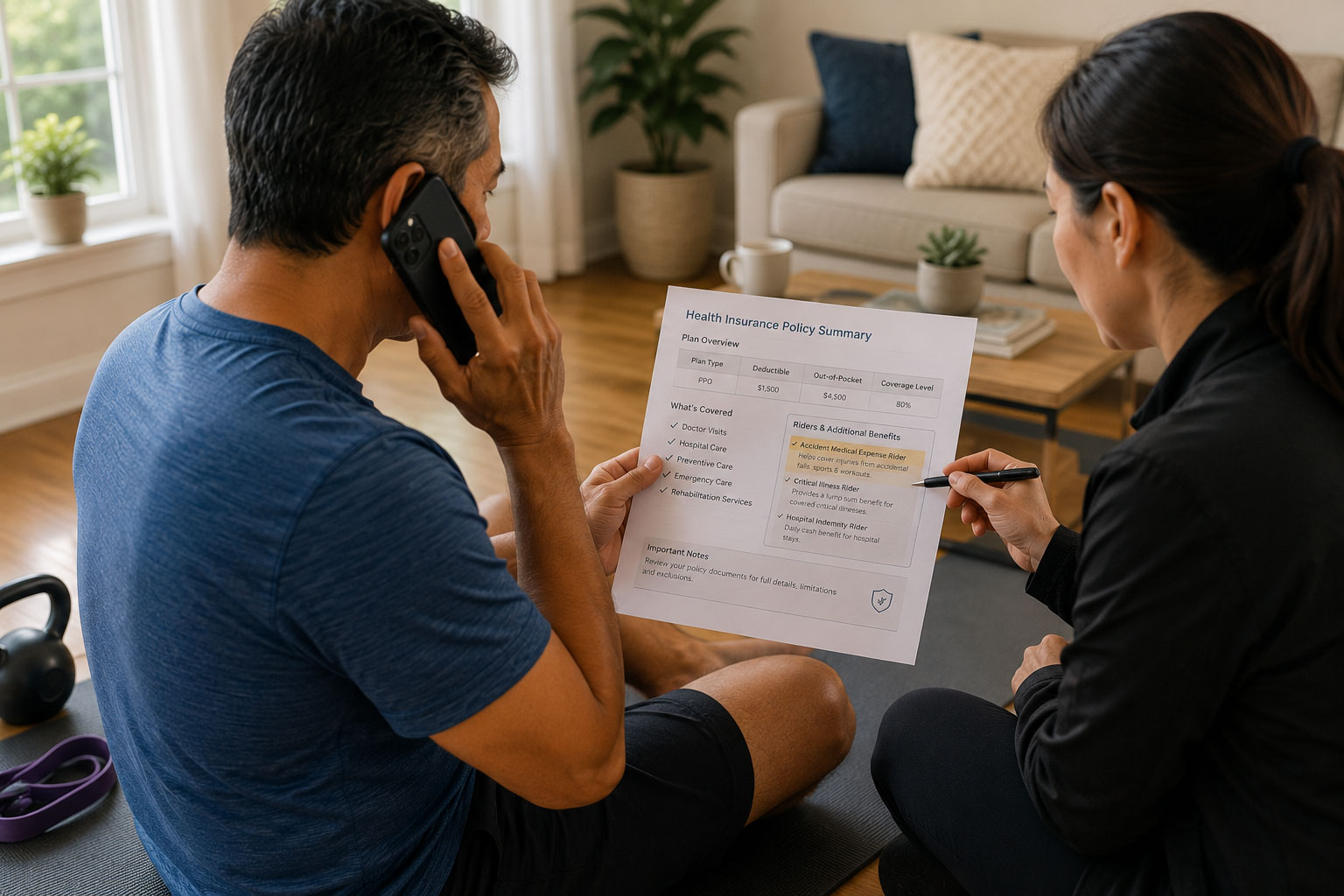
Start by locating the summary of benefits and explanation of coverage in your plan documents; these outline covered services, copays, and deductibles.
Look for specific exclusions that mention self-inflicted injuries, nonmedical equipment, or activities labeled as recreational versus therapeutic.
Call member services with targeted questions: ask whether a chosen facility or therapist is in-network and whether prior authorization is required.
Keep written records of any phone confirmations, claim reference numbers, and the names of representatives you speak with.
Comparing estimated costs for emergency versus urgent care scenarios can reveal potential savings.
A quick pre-visit check reduces the chance of denied claims later.
Reducing surprise costs for home fitness
Take proactive steps to lower financial risk associated with home workouts, starting with prevention: proper equipment, progressive programming, and routine screenings.
Document incidents carefully and seek timely medical attention when needed, since delayed care can complicate claims and increase costs.
Consider telehealth as a first contact for minor injuries to receive guidance and documentation without higher facility charges.
If you rely on regular therapy, confirm network providers and any visit caps ahead of time to avoid unexpected bills.
- Use telehealth for initial assessments
- Confirm in-network providers before scheduling
- Keep records and authorization numbers for claims
Small habits like tracking visits and verifying coverage in advance can meaningfully reduce out-of-pocket costs.
These practices also speed claim resolution when care is necessary.
Conclusion
Review your plan documents and ask clear, specific questions before an injury occurs.
Prioritize prevention, documentation, and in-network options to limit financial exposure.
With a few checks you can focus on safe, consistent home exercise without surprise medical bills.