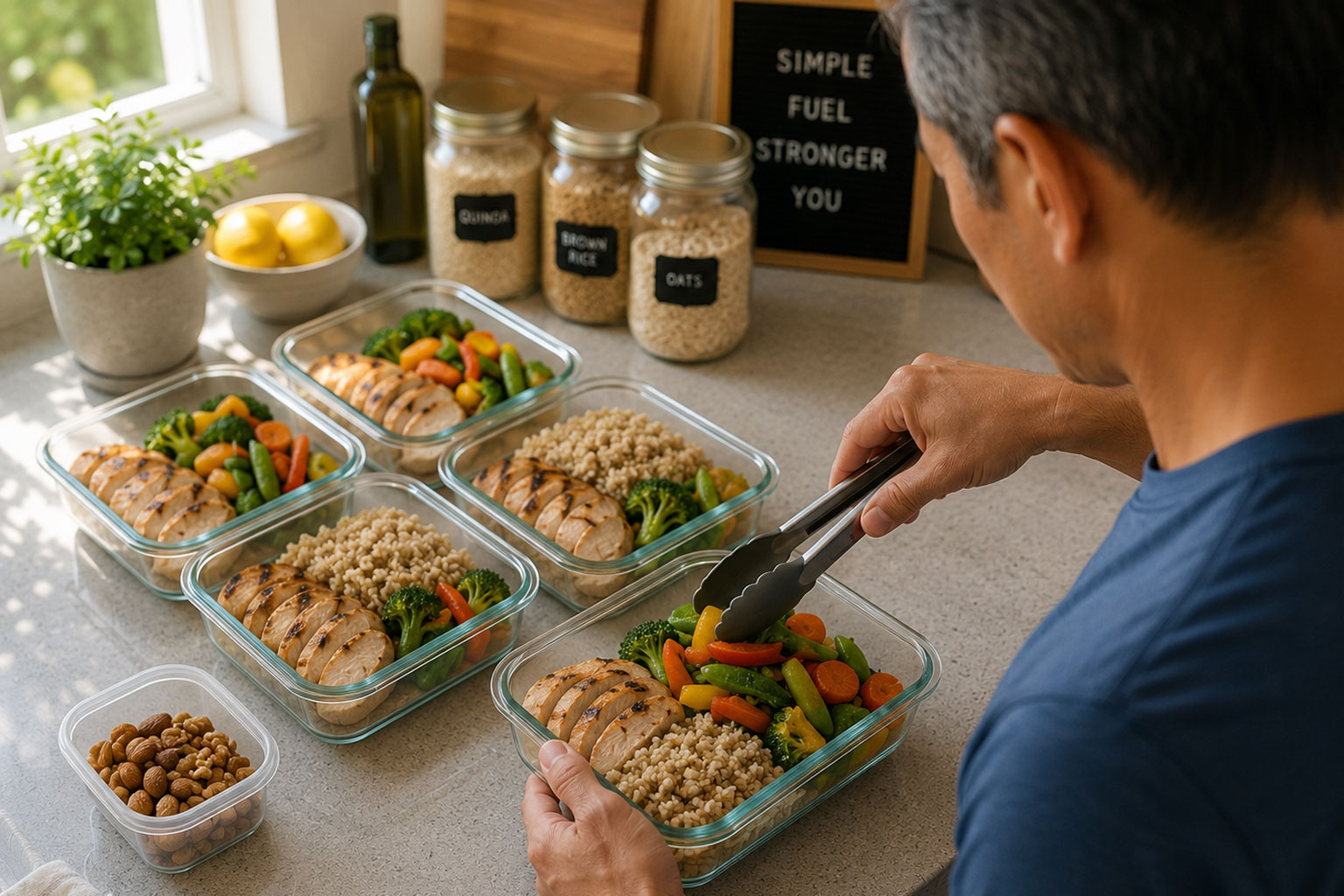
Simple, balanced meals are the backbone of consistent home fitness progress.
When workouts happen at home, predictable nutrition makes energy and recovery reliable.
You don’t need exotic ingredients to eat well; focus on structure and habit instead.
This article outlines practical templates, quick prep tips, and pantry choices that work day to day.
Why balanced meals matter
Balanced meals pair protein, carbohydrates, and healthy fats to support performance and recovery. Protein helps repair muscle after resistance or endurance sessions, while carbs refill glycogen and maintain energy. Healthy fats support hormone balance and satiety so you’re less likely to overeat later. Prioritizing whole foods and simple portions reduces decision fatigue and improves adherence. It also helps with appetite control across the day.
That framework makes meal planning easier and more effective. Small tweaks like upping protein by a palm-sized portion can yield meaningful differences. Consistency compounds over weeks, so small changes matter.
Practical meal templates
Use straightforward templates so you can mix and match ingredients without guessing portions. A good template fills half your plate with vegetables, a quarter with lean protein, and a quarter with whole grains or starchy vegetables. Snacks follow a similar pattern: protein plus fiber or a small healthy fat to stabilize blood sugar. Templates reduce the time needed to decide what to eat and keep calories aligned with goals. Simple portion cues like a cupped hand of carbs help pace portions.
- Grilled chicken, brown rice, and mixed greens.
- Chickpea salad, quinoa, and roasted vegetables.
- Greek yogurt, berries, and a small handful of nuts.
Rotate foods within each template to keep meals interesting. Batch-cook components to make assembling meals fast. Even minimal weekly planning reduces impulse choices.
Prep and pantry habits to keep
Keep versatile staples on hand: canned beans, frozen vegetables, whole grains, canned fish, and a selection of spices. Prep proteins and grains in bulk once or twice a week so meals come together in minutes. Use storage containers to portion meals for grab-and-go ease and consistent serving sizes. Keep a few flavorful sauces or spice blends to refresh basic meals. Freeze portions for long-term convenience.
Regularly audit your pantry to replace stale items and restock essentials. Small, repeatable habits in shopping and prep save time and support better choices. A short weekly review of what was eaten guides smarter shopping.
Conclusion
Building simple, repeatable meals powers consistent home fitness results.
Focus on balanced plates, practical templates, and a stocked pantry.
Start with one template and refine it to fit your routine.