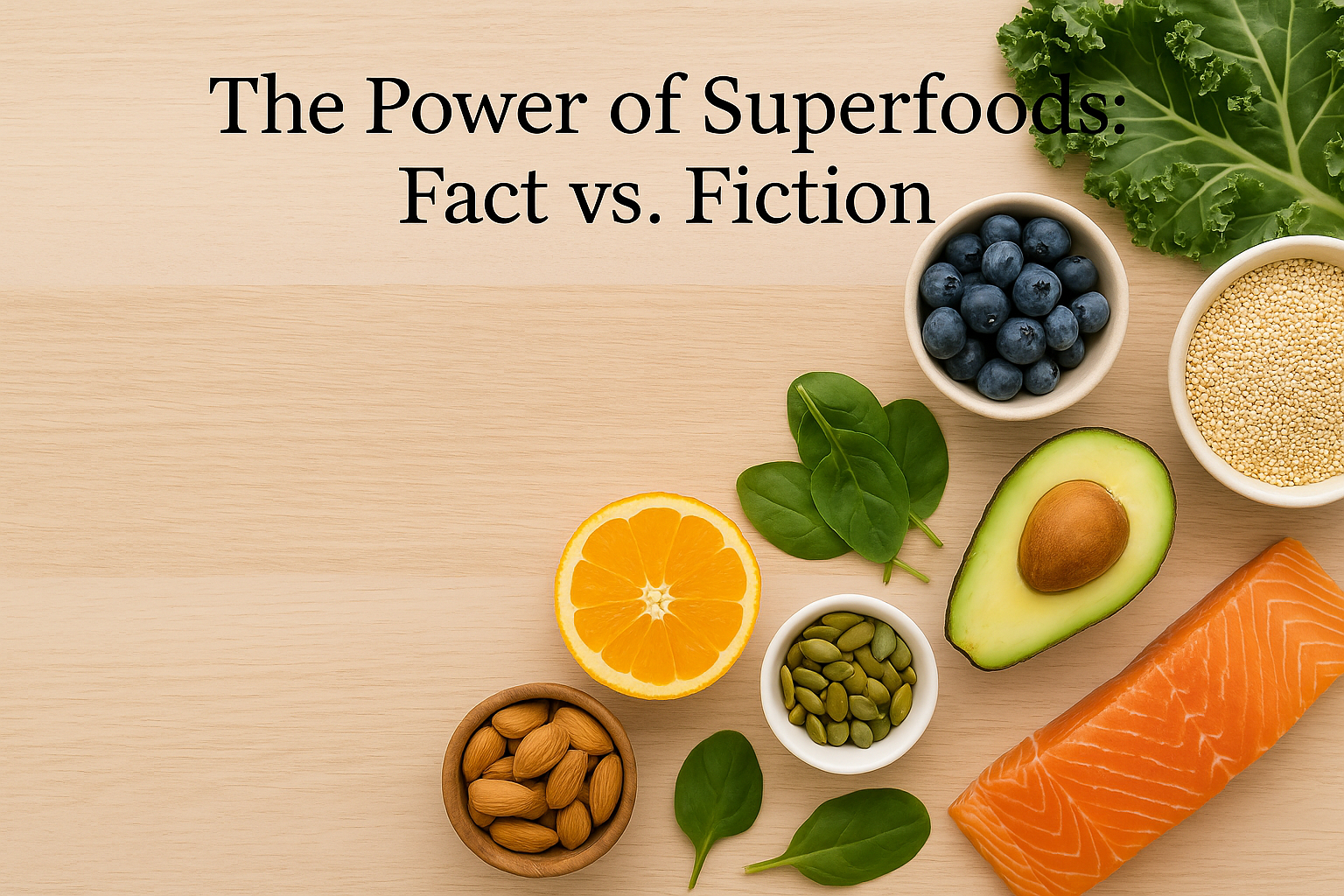
The term “superfood” has become a buzzword in the world of nutrition, often associated with miraculous health benefits and quick fixes. From kale and chia seeds to blueberries and quinoa, these foods are marketed as the ultimate keys to wellness. But are superfoods truly as powerful as they seem—or is it mostly hype? Understanding the facts behind these claims can help you make smarter, healthier choices for your diet.
1. What Are Superfoods, Really?
Superfoods are nutrient-dense foods rich in vitamins, minerals, antioxidants, and healthy fats. They support overall health and may help prevent chronic diseases. Common examples include berries, leafy greens, nuts, and fatty fish. However, there’s no official scientific definition for a “superfood.” The term is more of a marketing label than a medical one, meaning not all foods branded as superfoods live up to their reputation.
2. The Science Behind the Hype
Many superfoods do have proven health benefits. For instance, blueberries are rich in antioxidants that protect cells from damage, while salmon provides omega-3 fatty acids essential for heart and brain health. However, no single food can provide all the nutrients your body needs. A balanced diet that includes a variety of fruits, vegetables, proteins, and whole grains is still the best approach to long-term wellness.
3. Myths and Misconceptions
One common myth is that eating more superfoods alone can compensate for an unhealthy diet. In reality, no food—no matter how nutritious—can undo the effects of poor lifestyle habits like lack of exercise or excessive sugar consumption. Another misconception is that imported or exotic foods are better for you. In truth, local produce like spinach, oranges, and lentils can be just as beneficial and often fresher.
4. The Role of Marketing and Trends
The rise of social media and influencer culture has fueled the popularity of superfoods. Many companies market them as “must-have” ingredients, often at inflated prices. While it’s great to explore new foods, it’s important to remain skeptical of exaggerated claims. Always check scientific sources rather than relying on marketing buzz.
5. Building a Truly Super Diet
Instead of focusing on a few “miracle” foods, aim for dietary diversity. Combine nutrient-rich foods—whole grains, lean proteins, colorful vegetables, and healthy fats—for balanced nutrition. Regular exercise, hydration, and sufficient sleep also play vital roles in overall health.
Conclusion
Superfoods can indeed boost your nutrition, but they’re not magic bullets. The real power lies in consistency and balance, not in trends. By understanding the facts behind the hype, you can make mindful food choices that nourish your body and support long-term well-being. In the end, every healthy meal—not just one ingredient—contributes to a truly super diet.