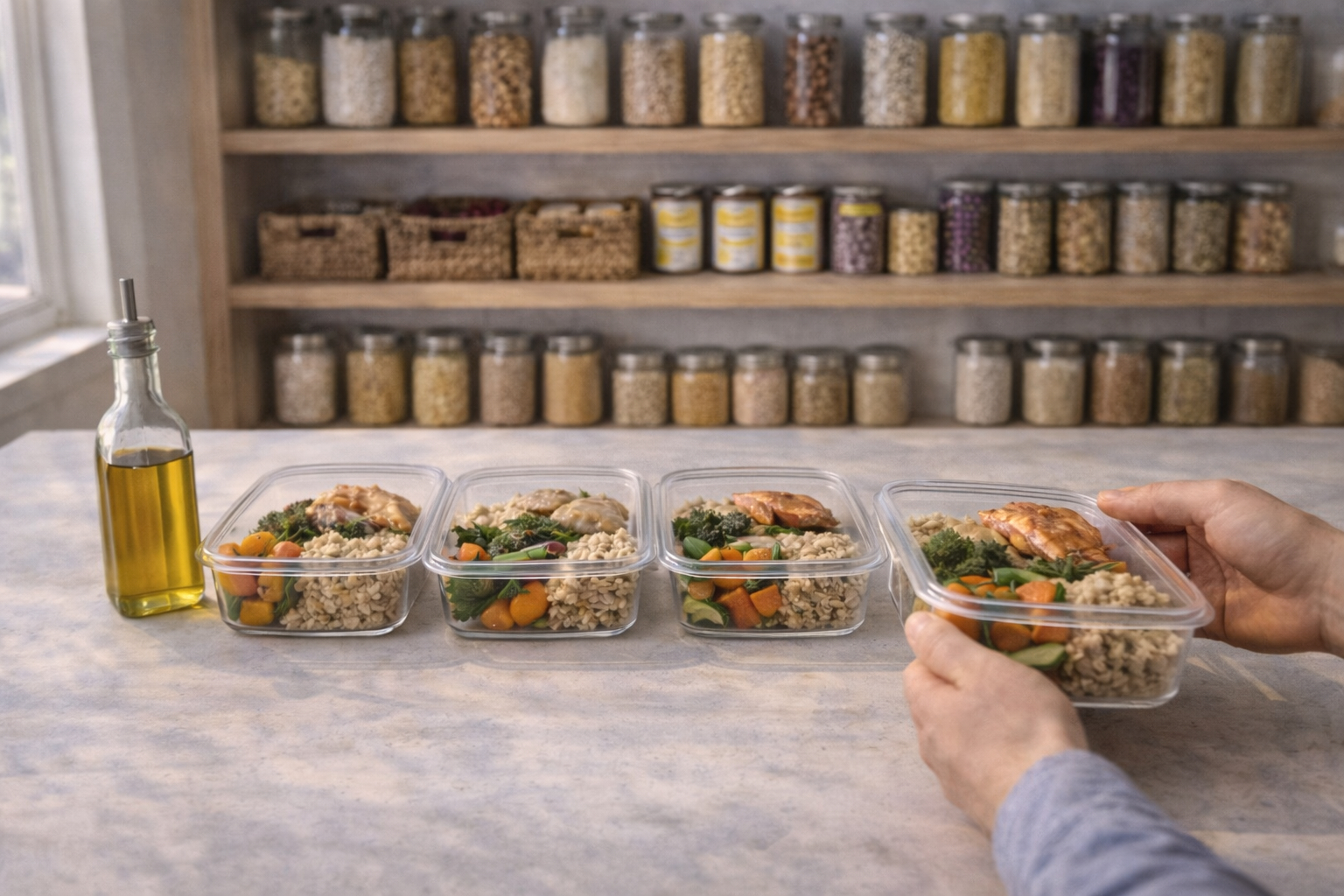
Creating a pantry system focused on wholesome staples makes healthier eating at home straightforward and sustainable. By organizing ingredients and prioritizing versatile, nutrient-dense items, you reduce decision fatigue and minimize last-minute unhealthy choices. A small set of reliable foods supports quick, balanced meals that align with fitness goals and daily energy needs. This article outlines practical pantry strategies, simple batch-prep ideas, and plate-building rules you can apply immediately.
Pantry Foundations
Start by auditing what you already have and removing expired or rarely used items to free space and attention. Stock a balance of whole grains, canned proteins, legumes, healthy fats, and long-lasting produce such as onions and winter squash. Include quick-cooking staples like rolled oats, brown rice, and canned tomatoes to turn simple recipes into satisfying meals. Keep a small list of preferred spices and a quality oil to improve flavor without extra effort.
Keeping staples visible helps you plan meals better and reduces impulse buys. Group similar foods together and label containers to speed up decision-making during busy days. A well-planned pantry is an active tool in daily nutrition, not just storage.
Batch Prep and Storage
Reserve a block of time once or twice a week for batch cooking to create ready components: cooked grains, roasted vegetables, and a protein source. Use airtight containers to portion servings, and cool items before refrigerating to maintain quality and safety. Efficient storage saves time at mealtime and encourages portion control, which supports consistent training progress and recovery. Simple labeling with dates prevents waste and keeps your rotation fresh.
- Cook 2–3 types of grains and freeze single portions.
- Roast a sheet pan of mixed vegetables for easy add-ins.
- Prepare a versatile sauce or dressing to change flavors quickly.
Batch prep turns the pantry into a launchpad for meals rather than a last-minute scavenger hunt. Small investments in storage solutions pay off in less stress and more consistent nutrition.
Meal Composition Made Simple
Build meals around a simple template: a grain or vegetable base, a lean protein, healthy fat, and a colorful vegetable. This framework ensures macronutrient balance and micronutrient variety with minimal thought. Rotate items from your pantry to keep meals interesting while staying efficient—swap different beans, grains, or dressings to create variety. Aim for portion control and include fiber-rich choices to maintain fullness and steady energy.
Using the pantry as a foundation reduces reliance on packaged convenience foods while keeping preparation time low. Over time, this consistency supports fitness goals and overall well-being.
Conclusion
Organizing a pantry around versatile, nutritious staples simplifies daily choices and supports healthier eating habits.
Batch prep and clear storage systems make balanced meals achievable even on busy days.
Small, consistent pantry habits compound into better nutrition and sustained fitness progress.