Consistency in eating supports progress when you train at home and want measurable results.
Small, sustainable meal habits reduce decision fatigue and keep energy steady throughout the day.
This article outlines practical planning, pantry choices, and cooking strategies tailored to home fitness routines.
Adopting a few repeatable steps can save time and improve nutrition without a major lifestyle overhaul.
Plan Your Weekly Menu
Start each week by choosing three to five go-to breakfasts, lunches, and dinners that match your activity level and goals. Pick recipes that share core ingredients so you minimize waste and simplify shopping. Aim to balance protein, vegetables, and a whole-grain or healthy-fat source in every plate to support recovery and steady energy. Schedule a short planning session on the same day each week to keep this habit consistent.
When planning, allow for one flexible night to use leftovers or try something new. This makes the system more adaptable and reduces the pressure to be perfect every day.
Build a Fitness-Focused Pantry
A well-stocked pantry makes it easier to assemble meals that support training and recovery. Keep shelf-stable proteins, whole grains, healthy fats, and simple sauces on hand so you can prepare nourishing plates quickly. Fresh produce and frozen vegetables both play a role: fresh for immediate use and frozen for reliable backups. Investing in a few versatile staples prevents last-minute poor choices when time is limited.
- Staples: canned beans, lentils, quinoa, brown rice.
- Proteins: canned tuna, shelf-stable tofu, nut butters.
- Healthy fats: olive oil, seeds, avocado oil.
- Quick veg: frozen mixed vegetables, spinach, bell peppers.
Rotate items seasonally and check dates periodically to maintain freshness. A tidy pantry speeds meal assembly and keeps your week predictable.
Simple Cooking and Portion Strategies
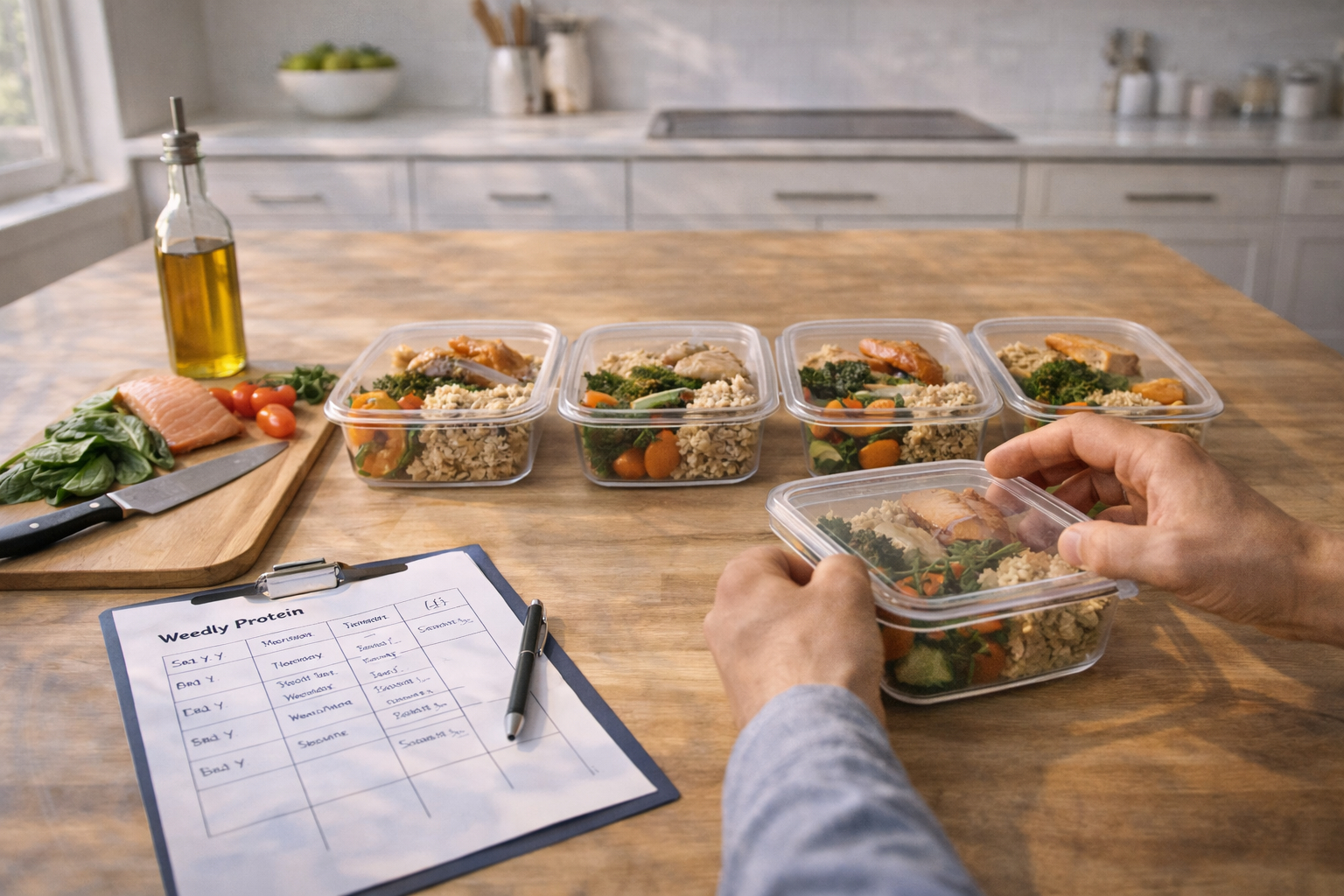
Batch-cook components rather than full meals to increase flexibility and reduce repetition. Prepare proteins, grains, and roasted vegetables in larger quantities and combine them in different ways across the week. Use clear containers and portion sizes that match your caloric needs to avoid guessing. Prioritize simple seasoning and versatile sauces to keep flavors interesting without extensive prep.
- Technique: roast a tray of mixed vegetables for quick sides.
- Portion: measure protein portions once and store in single servings.
- Mix-and-match: combine bases with different toppings for variety.
Adopting these cooking habits reduces time in the kitchen and helps maintain consistent nutrition. Small, repeatable routines deliver outsized benefits for home fitness.
Conclusion
Implementing weekly planning, a purposeful pantry, and batch-cooking routines makes nutritious eating easier and more reliable.
These habits reduce friction, support training demands, and free mental energy for workouts and recovery.
Begin with one change this week and build gradually for lasting results.