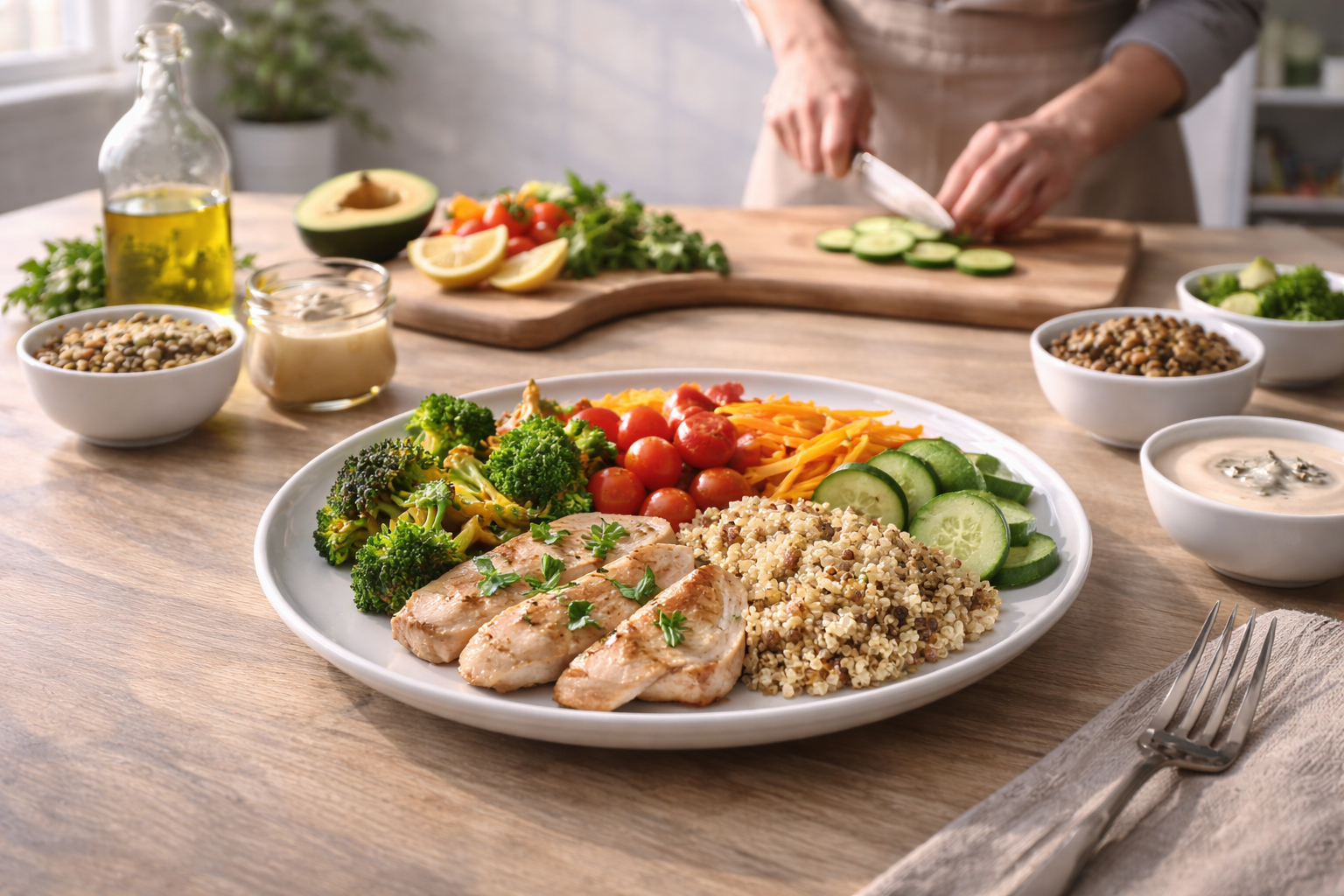
Building balanced meals at home doesn’t require complicated recipes or long shopping lists.
A few simple principles help you combine nutrients, control portions, and enjoy flavor.
This approach supports steady energy, satiety, and variety without overwhelming your week.
Use the balanced plate as a flexible framework to guide everyday cooking choices.
Core Principles
Start with a proportion-based plate: aim for half vegetables and fruits, one quarter lean protein, and one quarter whole grains or starchy vegetables.
Prioritize minimally processed foods, seasonal produce, and a mix of colors to maximize vitamins and minerals.
Pay attention to cooking methods—grilling, roasting, steaming, and quick sautéing preserve flavor and nutrients.
Keep portion sizes practical and tune them to activity level and hunger cues.
Include varied textures and flavors to increase satisfaction and reduce the urge for extra snacks.
- Better nutrient balance across meals
- Easier planning and grocery shopping
- Fewer impulsive, less nutritious choices
These principles make healthy choices more automatic and less time-consuming.
Start with one meal pattern and adapt it to your tastes and schedule.
Practical Meal Components
Build meals around versatile staples you enjoy, such as legumes, whole grains, lean proteins, and a broad variety of vegetables.
Incorporate healthy fats like olive oil, nuts, or seeds for satiety and improved nutrient absorption.
Flavor with herbs, spices, citrus, and acids rather than relying on excess salt, sugar, or heavy sauces.
Batch cook components—grains, roasted vegetables, and cooked proteins—to speed up assembly on busy days.
Keep small jars of dressings and condiments to transform simple ingredients into enjoyable meals.
- Legumes and beans for fiber and protein
- Whole grains like brown rice or quinoa
- Seasonal vegetables for color and nutrients
Having these components on hand reduces decision fatigue at mealtime.
Simple swaps, like whole grains instead of refined ones, improve fiber and fullness with minimal effort.
Putting It Into Practice
Plan a few base recipes you can remix—roasted vegetables, grilled protein, grain bowls, and simple sauces provide endless combinations.
Use leftovers intentionally: turn them into wraps, salads, or stir-fries to reduce waste and save time.
Keep a flexible shopping list focused on produce, proteins, and pantry basics so you can adapt to sales or seasonal picks.
Track one small habit at a time, such as adding a vegetable to every plate, to build lasting change.
Schedule a weekly cooking session or stagger short prep tasks through the week to maintain momentum.
Small, repeatable habits compound more effectively than dramatic overhauls.
Experiment with flavors and textures to keep meals interesting and satisfying.
Conclusion
A balanced plate simplifies healthy home cooking and makes good choices routine.
Small, consistent changes accumulate into reliable nutrition without stress.
Begin with one meal, build on it, and let practical habits become the foundation of your kitchen routine.