After a home workout the right evening meal helps muscles recover and helps you sleep better. Choosing modest portions with focused nutrients is often more effective than overeating. You don’t need complicated recipes—reliable combinations from the pantry and fridge will do the job. This short guide lays out what matters and a few practical meal ideas you can make tonight.
What to prioritize in a repair-focused dinner
Aim for three things: a solid protein source, some minimally processed carbohydrates to refill glycogen, and colorful vegetables for micronutrients and antioxidants. Protein supports muscle repair; carbohydrates restore energy stores and help protein do its work. Healthy fats are useful but keep servings moderate so total calories don’t interfere with sleep. Hydration and a touch of salt after a sweat-heavy session also speed recovery.
These priorities let you assemble meals from simple staples without overthinking portions. Focus on single-plate balance rather than exact macros. Small tweaks can make a big difference over time.
Three quick dinner formulas you can assemble
Use repeatable templates so cooking becomes automatic: pick one protein, one carbohydrate, and one vegetable, then finish with a flavor element and modest fat. These formulas keep meals satisfying while delivering the nutrients your body needs to rebuild between sessions. Keep ingredients interchangeable so shopping and prep are predictable. Each option below can be cooked in 20 minutes or less and scaled up or down for appetite.
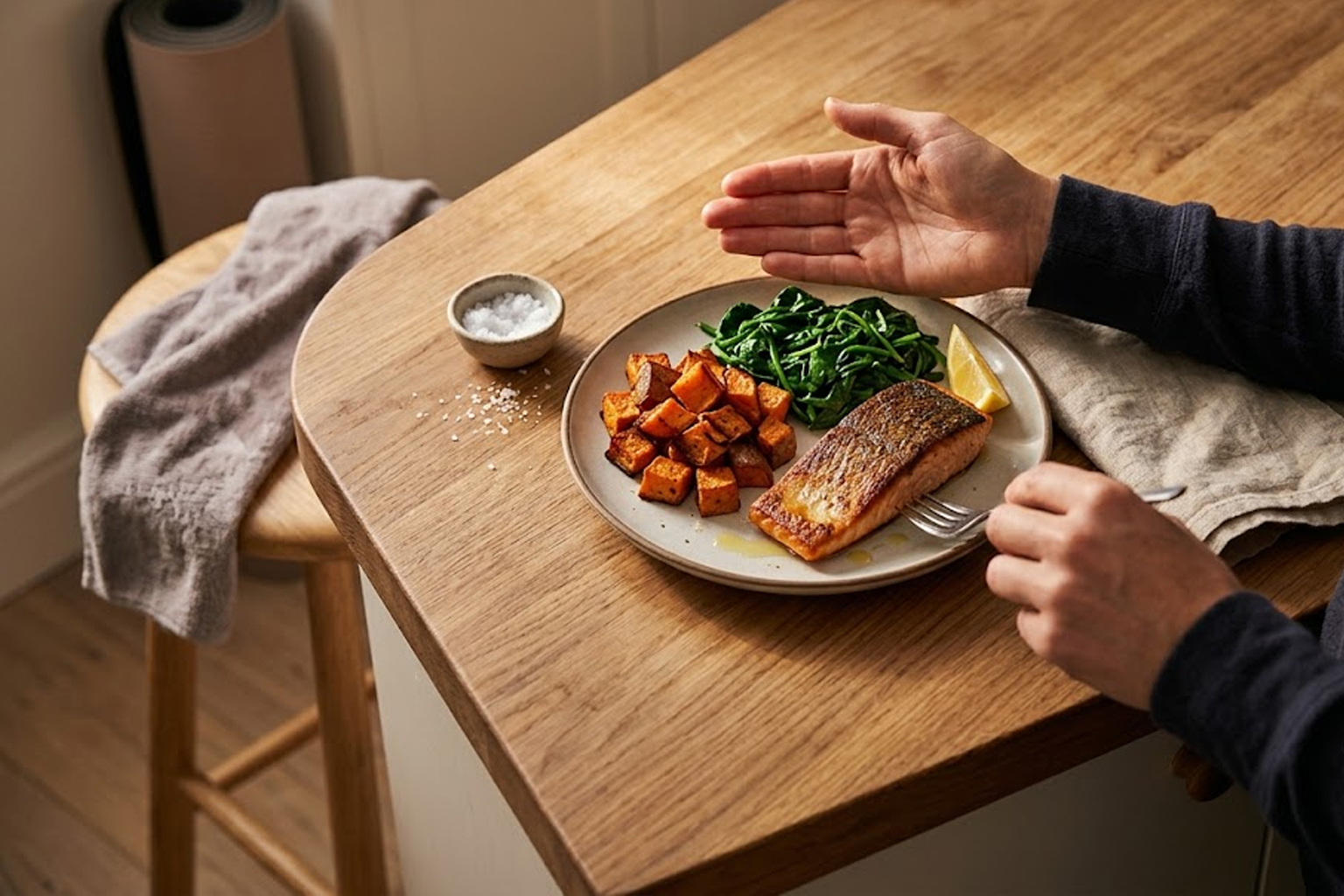
- Grilled or pan-seared lean protein, roasted sweet potato, steamed greens with lemon.
- Stir-fried tofu or chicken, brown rice, mixed peppers and spinach, splash of soy or tamari.
- Omelet with cottage cheese or feta, whole-grain toast, side salad with olive oil.
Rotate these patterns across the week to avoid menu fatigue. Small, frequent changes keep meals interesting without sacrificing recovery goals.
Timing, portions, and simple swaps
If your workout was intense, eat within 60 to 90 minutes to maximize repair; lighter sessions allow a later meal. For portioning, think palm-sized protein, a cupped-hand portion of carbs, and two handfuls of vegetables for most people. Swap in beans, lentils, or canned fish if fresh protein is scarce. If evening appetite is low, split dinner into a small plate now and a snack later that follows the same balance.
Simple swaps and sensible timing prevent under- or over-eating and help you feel ready for the next session. Routine, not perfection, produces consistent recovery benefits.
Conclusion
Small, balanced evening meals with protein, carbs, and vegetables speed repair after home workouts.
Choose repeatable plate formulas so cooking stays simple and consistent.
Over time these practical habits support better recovery and steadier performance.