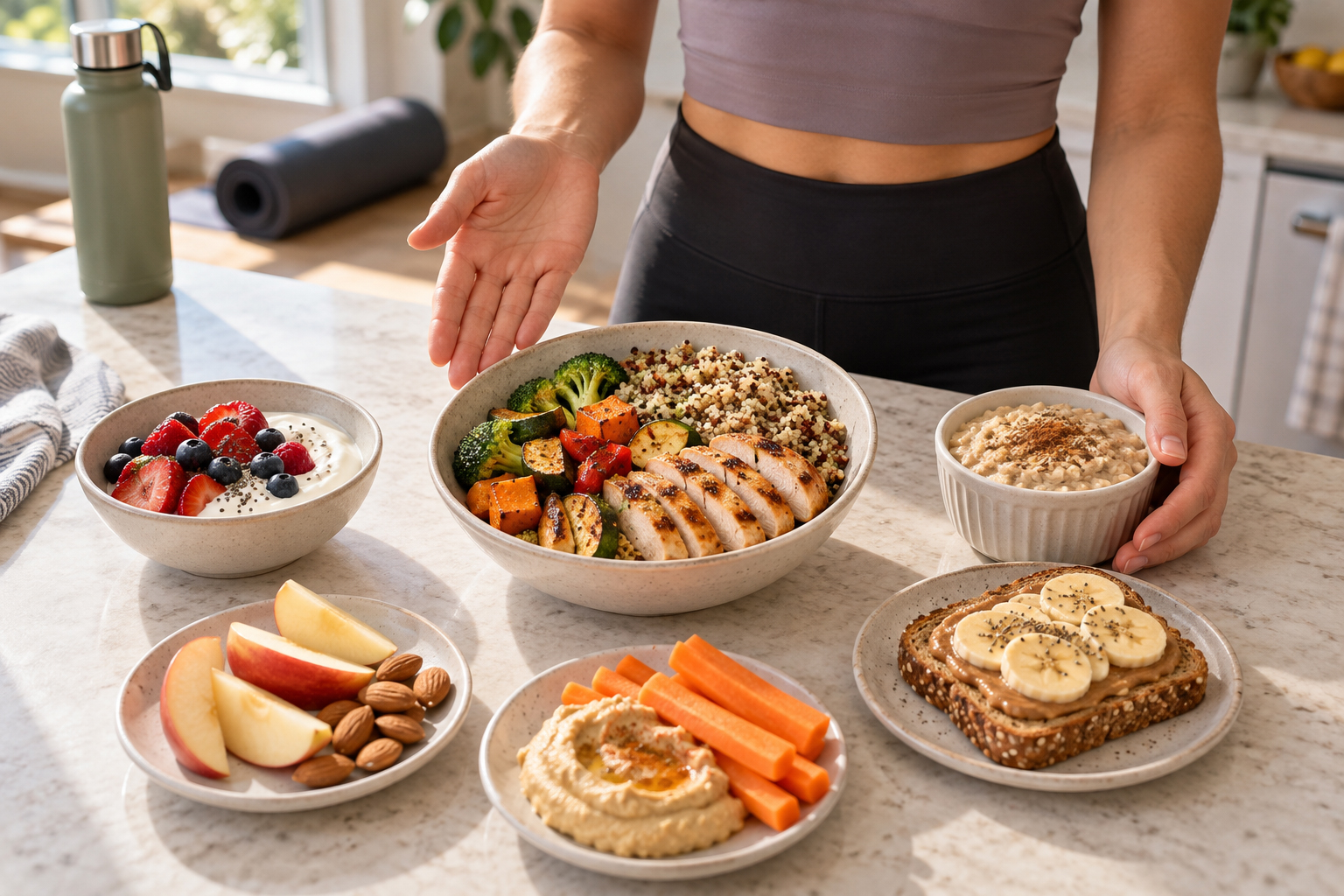
Short home workouts respond best to straightforward, dependable meals that are easy to prepare. You don’t need exotic ingredients or long cook times to support energy, strength, and recovery. Prioritize a clear balance: a solid protein source, modest carbohydrates, and a touch of healthy fat. Below are practical pre- and post-workout ideas, portion cues, and snack swaps you can use on busy evenings.
Pre-Workout Choices
For sessions under an hour, aim for a light meal 30–90 minutes before you start so digestion doesn’t feel heavy. Good combos include yogurt with fruit, a slice of whole-grain toast with nut butter, or a small bowl of oats topped with banana. These provide quick carbohydrates and a bit of protein to stabilize blood sugar and sustain effort. Keep servings modest—think palm-sized protein and a cupped-hand portion of carbs—to avoid sluggishness.
- Greek yogurt + berries
- Whole-grain toast + almond butter
- Half-cup oats + sliced banana
Small portions let you train comfortably while still getting usable fuel. Adjust the timing: if you eat closer to the workout, choose simpler, lower-fiber options to reduce stomach distress.
Post-Workout Meals
The goal after training is to repair and replenish: a stronger emphasis on protein and some carbs helps muscle repair and restores energy stores. Aim for 20–35 grams of protein in the first hour if possible, paired with vegetables and a source of carbohydrates like rice, potatoes, or whole-grain pasta. Quick dinners that work include a grilled chicken bowl with roasted veggies and quinoa or a scrambled-egg and vegetable wrap with a side of fruit. Hydration matters too—replace fluids lost through sweat with water or an electrolyte beverage if you were sweating heavily.
Simple mixers—canned tuna on a salad, a cottage cheese bowl, or a tofu stir-fry—mean less time cooking and more reliable recovery. Keep seasoning and herbs on hand to make these options enjoyable without extra work.
Smart Snacks and Portions
When workouts are shorter or spaced throughout the day, snacks become important for maintaining steady energy. Think of snacks as mini-meals: pair one protein with one carbohydrate or fruit to slow digestion and keep you satisfied. Common, portable choices include a small handful of nuts with an apple, a hard-boiled egg and a rice cake, or hummus with carrot sticks. Portion control is simple: use your palm for protein, a cupped hand for carbs, and a thumb-sized amount for fats like nut butter.
- Apple + 10–12 almonds
- Hard-boiled egg + rice cake
- Hummus + carrot sticks
These snack templates are easy to scale depending on how hungry you are and how demanding the workout will be. Keep a few pre-portioned options in the fridge to avoid overdoing it when you’re tired.
Conclusion
Small, consistent meals beat big nutritional swings for regular home training.
Choose simple protein-plus-carb combos that fit your timing and appetite.
Make a couple of staple meals and snacks the foundation for steady energy and recovery.