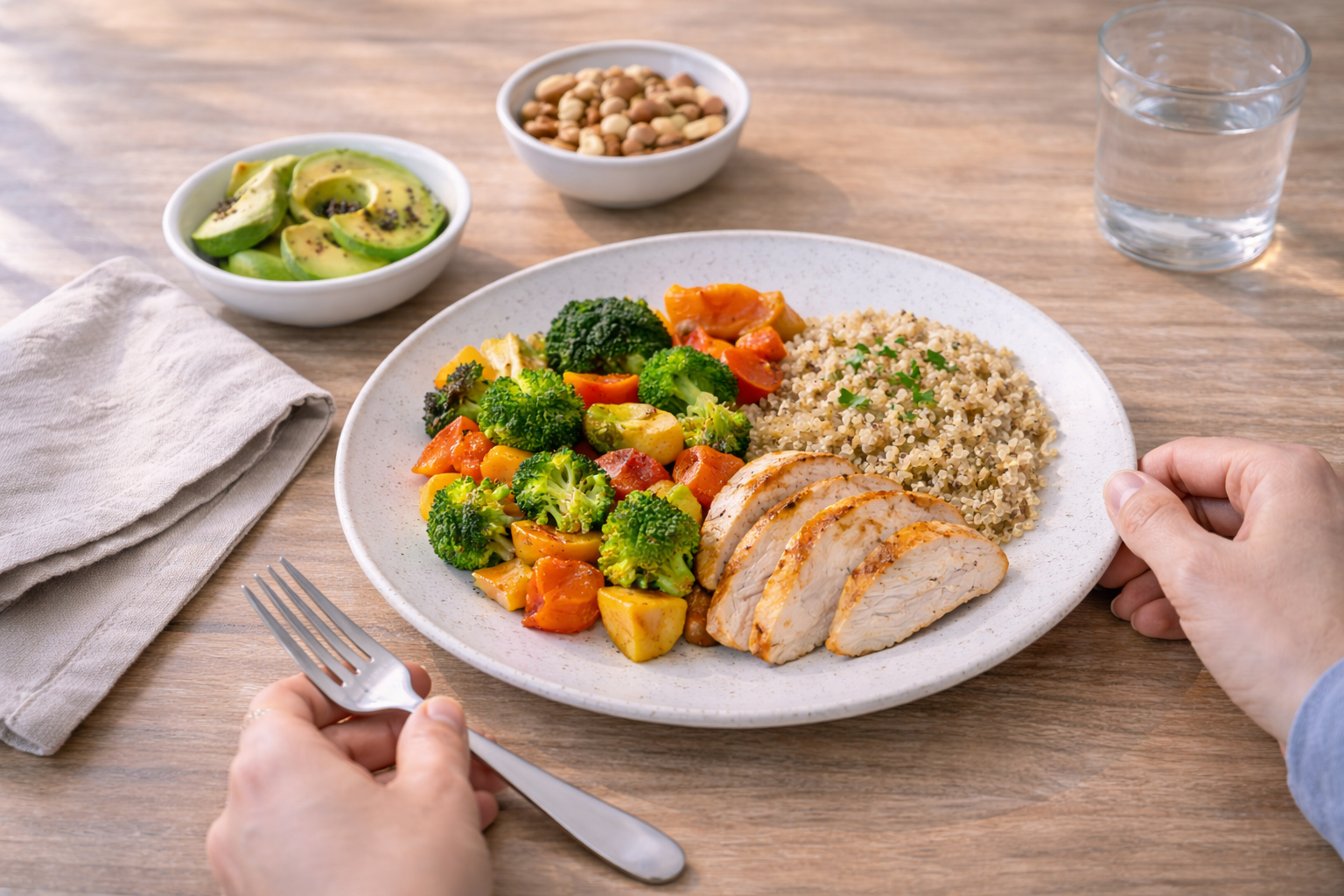
Eating well at home doesn’t require radical changes or expensive ingredients. Small adjustments to how you assemble each plate can influence energy levels, recovery after workouts, and mental focus throughout the day. This article presents practical, easy-to-adopt strategies for building balanced meals that support an active lifestyle. Use these ideas to simplify choices and make steady improvements without overhauling your routine.
Assess Your Daily Plate
Start by looking at a typical meal and ask whether it includes protein, fiber-rich carbohydrates, and healthy fats. Protein supports muscle repair and satiety, while fiber slows digestion and helps maintain steady energy. Including vegetables or fruits adds micronutrients and volume without excess calories. Aim for color and variety so meals are both nutrient-dense and satisfying.
Use a simple plate rule as a baseline: half vegetables, a quarter protein, a quarter whole grains or starchy vegetables. This visual approach reduces decision fatigue and keeps portions balanced. Over time, it becomes an intuitive pattern that supports consistent energy.
Smart Ingredient Swaps
Small substitutions can improve the nutrient profile of familiar dishes without changing flavor much. Swap refined grains for whole grains to increase fiber; choose lean proteins or plant-based options to lower saturated fat; and add nuts, seeds, or avocado for essential fats that enhance fullness. Simple swaps also make it easier to meet micronutrient needs through everyday meals.
- Choose brown rice, quinoa, or barley instead of white rice.
- Replace sugary snacks with fruit plus a handful of nuts.
- Use Greek yogurt or cottage cheese as a protein-rich topping.
These small changes stack up quickly and can be tailored to budget and taste. Experiment with one swap per week to make the transition manageable.
Meal Rhythm and Portions
Consistent meal timing supports steady blood sugar and reliable energy. Whether you prefer three square meals or smaller frequent plates, keep protein present at each eating occasion to reduce mid-day slumps. Watch portion sizes of calorie-dense foods like oils, nuts, and cheese while prioritizing vegetables and whole grains. Mindful eating helps recognize true hunger signals and prevents overeating when stress or fatigue is mistaken for appetite.
Plan simple, repeatable templates to simplify grocery shopping and cooking. Prepping components in advance cuts morning decision-making and makes healthy choices the default option.
Conclusion
Small, consistent plate strategies make healthy home eating sustainable and effective. Focus on balanced combinations of protein, fiber, and healthy fats while favoring whole ingredients. Over time these habits improve energy, recovery, and overall wellbeing.