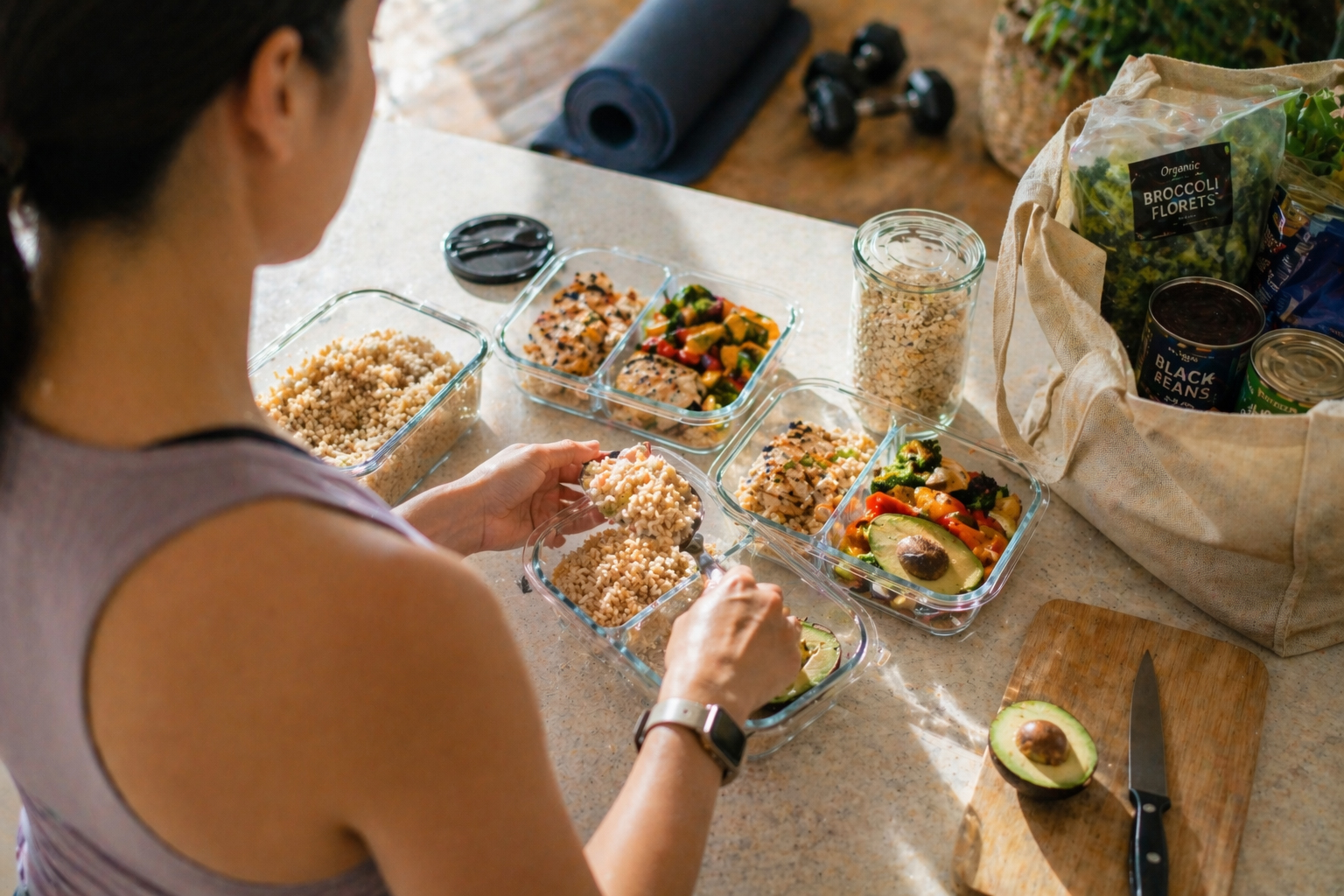
Decent results from home workouts start before you step onto the mat: they begin at the grocery cart and the kitchen counter. A few consistent shopping and meal habits make it easier to eat for energy, recovery, and steady progress without overcomplicating your week. Focus on versatile staples, simple plate balance, and predictable snack options so food supports training rather than competing with it. This approach reduces decision fatigue and keeps nutrition consistent alongside your exercise routine.
Plan a weekly grocery loop
Build a short list of reliable staples you can rotate through each week so shopping is predictable and efficient. Choose a mix of proteins, whole grains, fresh or frozen vegetables, healthy fats, and a couple of fruit options to vary flavors. Buying some items frozen or canned reduces waste and ensures you always have backup options for quick meals. Keeping a planned loop saves time and helps you stick to meal intentions even on busy days.
- Proteins: eggs, canned beans, lean poultry or tofu
- Carbs/fibers: brown rice, whole-grain bread, oats
- Veggies/fats: frozen greens, olive oil, avocado
Rotate these staples into different recipes across the week to avoid monotony. Simple repetition makes it easier to meet nutrient needs without elaborate shopping trips.
Build balanced plates around workouts
Think in blocks: a portion of protein, a serving of carbohydrate, and vegetables or fiber at most meals. For pre-workout meals choose lighter carbs paired with a moderate protein to fuel energy and preserve muscle. After training prioritize protein plus carbohydrates to support recovery and glycogen replenishment. Hydration matters too; pair meals and snacks with regular fluid intake to maintain performance.
Adjust portion sizes based on workout length and intensity, but keep the plate pattern consistent. This predictable structure supports both energy levels during sessions and recovery afterward.
Prep small, consistent meals and snacks
Rather than long cooking sessions, focus on small, repeatable preparations: batch grains, roast a pan of vegetables, and portion proteins for a few days. Keep ready-to-eat snacks like yogurt, nuts, or cut fruit available to avoid skipping fuel before or after short at-home sessions. Small, consistent meals help sustain energy and simplify adherence over time, especially when motivation fluctuates.
Use containers to portion meals for the week and set simple reminders to eat around your training times. Consistency beats perfection when building sustainable habits for home fitness.
Conclusion
Simple grocery loops, balanced plate patterns, and easy prep create a sustainable food routine that complements home workouts. Small, repeatable habits make it easier to fuel performance and recovery without complex meal plans. Start with a short staple list and one weekly prep session to keep nutrition working for your training.