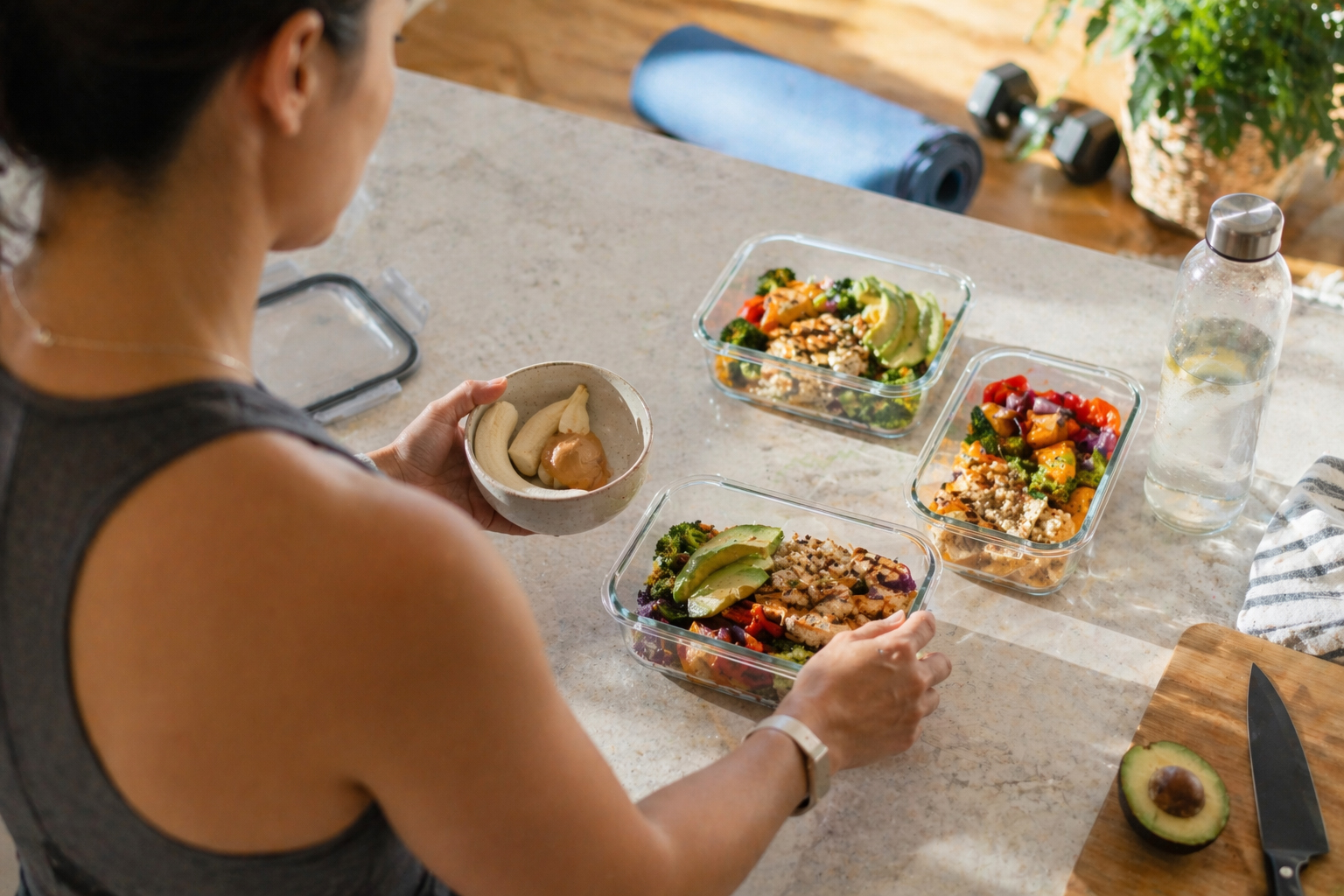
Consistent energy and recovery for home workouts begin with simple, repeatable meal routines.
Small adjustments in portion balance and timing often have a bigger impact than one-off strict plans.
This piece focuses on clear, flexible strategies you can adapt to your schedule and food preferences.
Use these ideas to create meals that support steady performance and faster recovery over time.
Planning Balanced Meals
Aim to include protein, carbohydrates, and healthy fats in most meals to support energy and muscle repair. Protein helps with recovery, carbohydrates provide fuel for higher-intensity sessions, and fats sustain satiety between workouts. Vegetables and modest portions of whole grains or starchy vegetables round out micronutrient needs and fiber. Keep portion sizes aligned with your activity level—larger portions on heavier training days and lighter ones on rest days.
- Example: Grilled tofu, quinoa, and roasted mixed vegetables.
- Example: Omelet with spinach, whole-grain toast, and avocado slices.
- Example: Lentil salad with olive oil, roasted sweet potato, and kale.
Plan meals around your workout windows so food supports performance and recovery. Preparing versatile components in advance makes balanced choices easier throughout the week.
Smart Snack Timing and Choices
Snacks bridge long gaps between meals and top up fuel before or after workouts. Choose snacks with a mix of carbohydrates and protein when exercising within two hours, such as yogurt with fruit or a small turkey sandwich. For quick energy before a short session, a banana or whole-grain cracker can be enough. After training, prioritize a protein source plus carbs within an hour to aid muscle repair and refill glycogen stores.
- Pre-workout: banana with a tablespoon of nut butter.
- Post-workout: cottage cheese with berries or a small protein shake with fruit.
Keep portable, portioned snacks accessible so you avoid overly large meals too close to training times. Regular, predictable snack habits reduce energy dips during the day.
Hydration and Recovery
Hydration affects how you feel during a workout and how quickly you recover afterward. Sip water throughout the day and consider electrolytes for longer or very sweaty sessions. Pair sleep and active recovery days with lighter meals that focus on protein and vegetables to support repair. Gentle stretching and short walks can complement nutritional recovery habits and reduce soreness.
Consistent hydration and recovery routines enhance the benefits of smart meal planning. Small daily actions compound into better performance and fewer setbacks.
Conclusion
Simple, repeatable meal routines power steady energy and better recovery for home workouts.
Focus on balanced plates, timely snacks, and consistent hydration to support training adaptations.
These modest, sustainable changes help maintain motivation and improve long-term results.