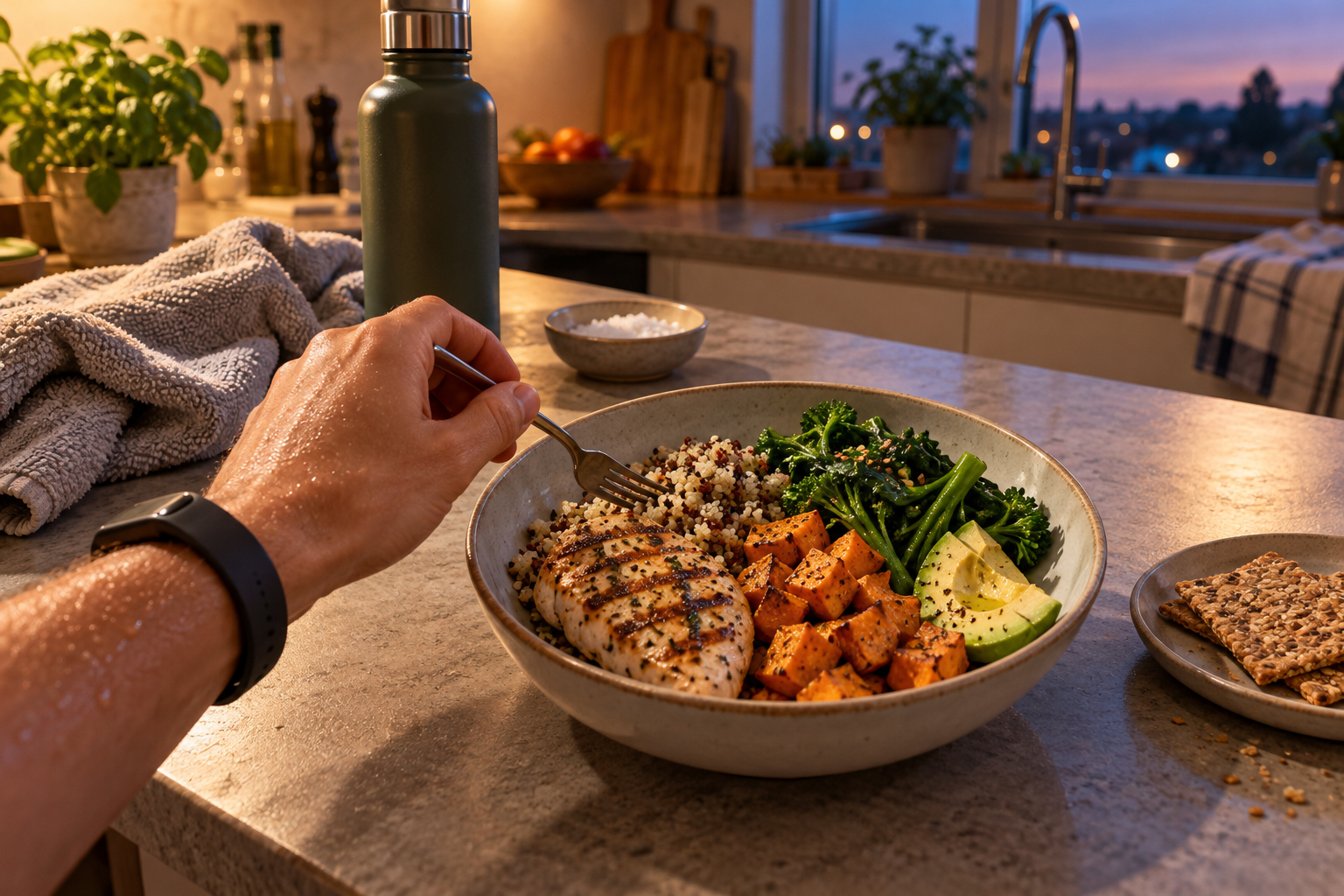
Even a short home workout nudges your body toward repair and recovery, and what you eat that evening matters more than you might think. Small, consistent dinner habits can speed muscle repair, replenish energy stores, and support better sleep without radical cooking or complicated shopping lists. This piece focuses on realistic swaps and simple plate patterns you can adopt tonight to get more out of your training. No extreme rules — just practical adjustments that work with busy evenings.
Why dinner timing and composition matter
Evening meals serve two quick jobs after exercise: replace what you used and provide building blocks for repair. Protein supplies amino acids for muscle synthesis, while carbohydrates refill glycogen — the stored fuel muscles use during your next session. Hydration and a touch of sodium can help restore fluid balance lost to sweat, which supports recovery and sleep quality. The combination you choose sets the tone for how quickly you feel ready for the next workout.
Think of dinner as short-term maintenance rather than a grand culinary project; that mindset makes consistent choices much easier. Small, repeatable plates beat occasional elaborate meals when it comes to steady progress.
What to put on the plate
Start with a protein source roughly the size of your palm: lean meat, fish, tofu, tempeh, or a generous scoop of Greek yogurt or cottage cheese. Add a moderate portion of whole grains or starchy vegetables for carbohydrates — about a cupped handful — to top up glycogen. Include a colorful portion of vegetables for micronutrients and fiber, and finish with a healthy fat like olive oil, avocado, or a small handful of nuts to support satiety and nutrient absorption. Season simply and aim for variety over the week rather than perfection at every meal.
These elements cover the essentials: repair, refuel, and micronutrient support. Keep portions flexible based on how hard or long you trained.
Quick swaps and small habits to try tonight
Swap a skimpy salad for a balanced bowl: toss cooked quinoa, roasted vegetables, and shredded chicken with a drizzle of tahini. Replace plain rice with sweet potato wedges alongside a protein and steamed greens. If you’re short on time, pair a rotisserie chicken or canned fish with whole-grain crackers and a side of pre-washed salad greens. These swaps cut prep time while improving nutrient balance.
- Handy plate: 1 palm protein, 1 cupped carbs, 1 fist veg, 1 thumb fat.
- Nightcap: a small dairy snack or soy pudding provides casein-like protein for overnight repair.
Pick one swap this week and make it routine; consistency matters more than variety in any single night.
Conclusion
Small, deliberate dinner choices can noticeably improve how you recover and feel the next day. Focus on a reliable protein source, some carbs, vegetables, and a bit of healthy fat. Over time, those modest habits add up to better performance and steadier training progress.