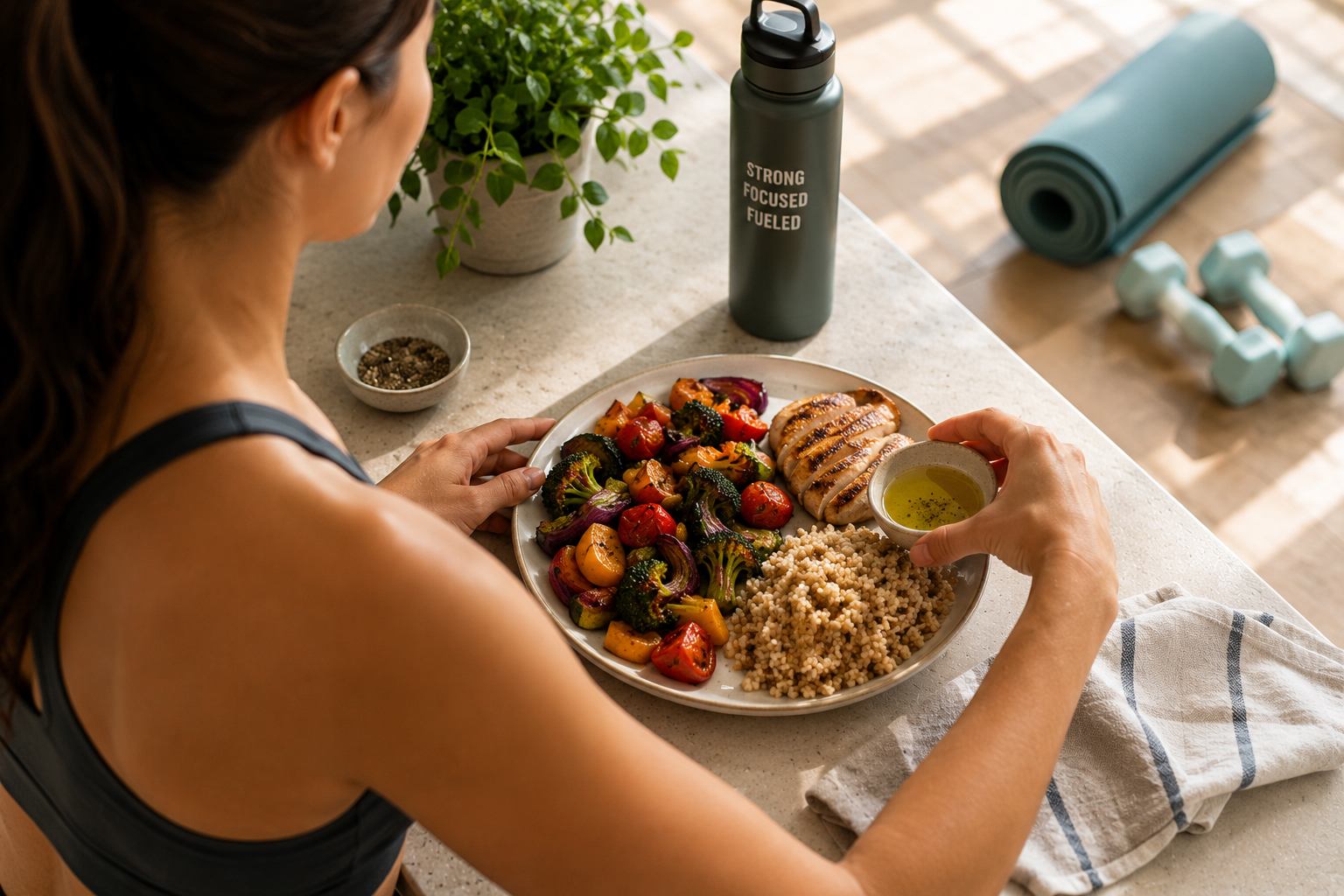
Eating with intent helps steady energy and supports progress when training at home.
Simple meal patterns reduce decision fatigue and make consistent fueling realistic.
This article outlines approachable plate rhythms you can adopt around workouts.
The aim is practical guidance you can apply across busy days and changing schedules.
Why balanced meals matter for home training
Balanced meals combine carbohydrate, protein and healthy fats to sustain effort and recovery. Carbohydrates supply the immediate fuel your muscles use during higher-intensity bouts while protein supports repair and adaptation after sessions. Healthy fats contribute to satiety and steady energy between meals without large blood sugar swings. Prioritizing these macronutrients at each major meal reduces energy dips and helps keep training quality high.
When meals are predictable, planning workouts and recovery becomes easier. You will likely feel fewer energy crashes and be more willing to stick to a routine.
Practical plate templates you can use daily
Use a simple visual template: half the plate vegetables, one quarter protein, one quarter carbohydrate, and a small serving of fat. This layout keeps portions reasonable while delivering the nutrients needed for performance and recovery. Swapping specific foods within that template makes the plan flexible and tailored to taste, time of day, and calorie needs.
- Vegetables: leafy greens, roasted vegetables, or quick salads.
- Proteins: eggs, legumes, Greek-style yogurt, or lean cuts.
- Carbs: whole grains, starchy vegetables, or fruit portions.
These templates scale up or down: double the carbohydrates before a long session, or emphasize protein and vegetables on lighter days. The goal is consistency, not perfection.
Snack and hydration strategies to maintain momentum
Simple snacks can bridge the gap between meals and prevent sluggishness before a workout. Aim for a mix of protein and carbohydrate such as a small yogurt with fruit, a nut butter toast, or a hummus and vegetable plate. Hydration is equally important; mild dehydration reduces endurance and cognitive focus, so sipping fluids regularly is practical and effective.
Set routines for pre-workout, intra-day, and post-workout fueling to remove guesswork. Keeping a few go-to snack recipes and a water bottle handy supports adherence.
Conclusion
Adopting clear plate rhythms simplifies everyday nutrition and supports consistent home training.
Small, repeatable choices add up faster than occasional strict patches of discipline.
Focus on balanced meals, sensible snacks, and steady hydration to sustain progress.