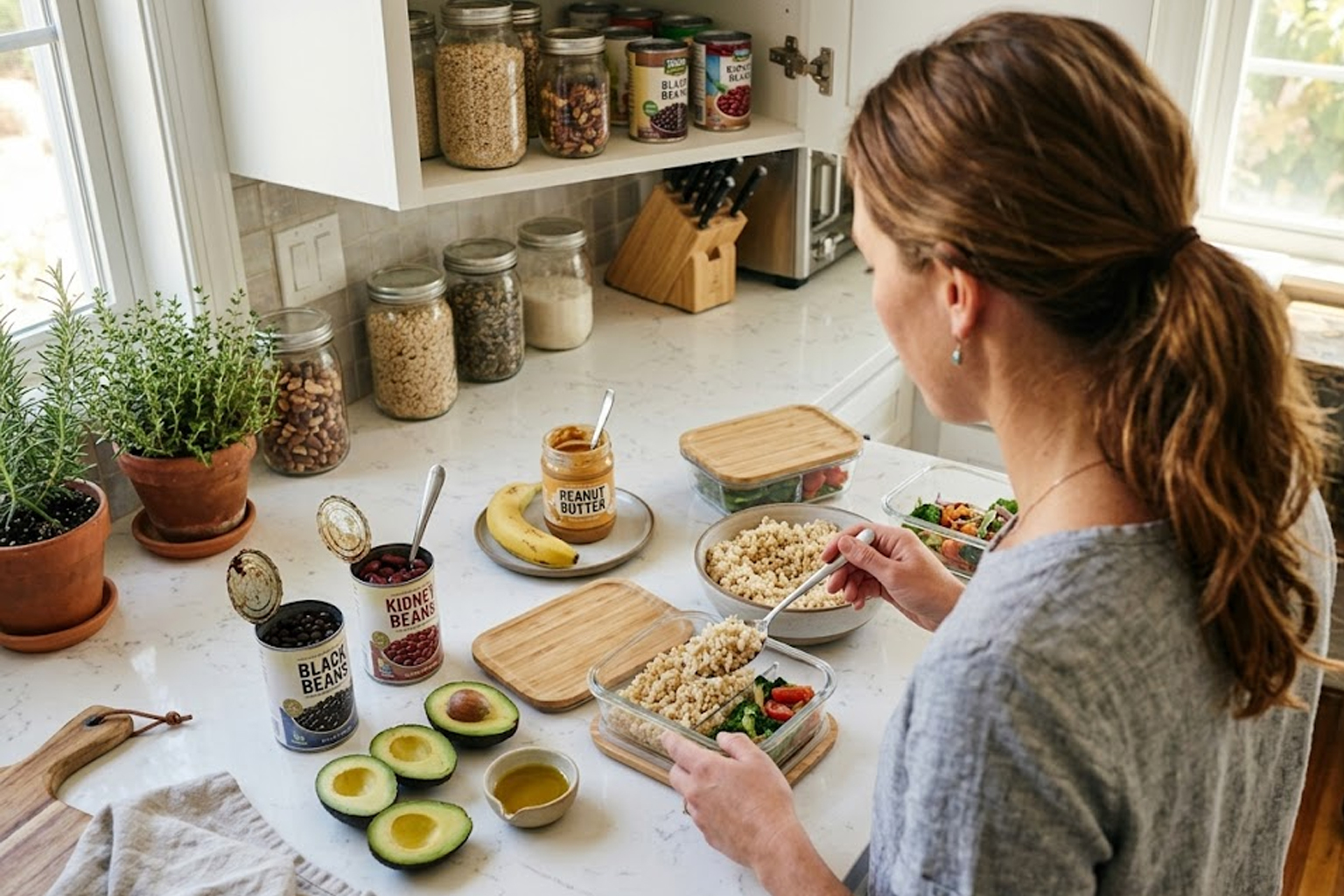
Consistent workouts need consistent fueling from meals that are simple to prepare at home. Small shifts in composition and timing create steady energy without complex recipes or special ingredients. This guide outlines easy plate structures, snack timing, and batch-friendly steps you can use this week. The approach focuses on balance, convenience, and ingredients commonly found in a modest pantry.
Three-part meal framework
Build each main meal around three components: a protein source, a fiber-rich carbohydrate, and a healthy fat. Examples include canned tuna or beans for protein, brown rice or sweet potato for carbs, and olive oil or avocado for fats. Combining these components stabilizes blood sugar and supports both endurance and strength sessions. Prioritize portion sizes that match your goals: more carbs around longer or higher-intensity workouts, more protein when recovery or muscle gain is the focus.
Use plate visuals to estimate portions quickly without a scale. Small, consistent adjustments over time matter more than perfection.
Snack and timing strategies
Timing small snacks about 60–90 minutes before moderate exercise helps avoid hunger while keeping digestion comfortable. Choose snacks that pair carbohydrate with a touch of protein or fat, such as a banana with peanut butter or yogurt with oats. After training, aim for a recovery snack within 45 minutes that contains protein and easily absorbed carbs. Hydration matters: plain water supports most sessions, and a modest electrolyte boost can help on longer or sweat-heavy workouts.
Adjust timing to how your stomach responds and the workout intensity. Experiment with small portions until you find a reliable routine.
Batch cooking and smart swaps
Batch-cook staples like grains, roasted vegetables, and a protein base to assemble meals quickly during the week. Keep a jar of mixed nuts, canned beans, and quick-cook grains as backup components for fast plates. Simple swaps—Greek yogurt for sour cream, canned salmon for fresh—save time while maintaining nutrient density. Use herbs, citrus, and fermented condiments to add flavor without extra calories or effort.
Label and date containers to minimize waste and speed choices. Over time these small habits free up energy for training and recovery.
Flavor and seasoning hacks
A few pantry staples can transform simple plates into meals you’ll want to repeat. Keep options like dried spices, chili flakes, soy or tamari, vinegar, and mustard on hand. Bright ingredients—lemon or lime juice, pickles, or a small spoon of fermented relish—lift flavors with little effort. These touches also encourage variety so you stick with the plan longer.
Swap sauces and herbs to adapt plates to different tastes. Rotate a few favorites so weekly prep stays interesting.
Conclusion
Small, repeatable meal patterns power consistent home workouts. Focus on three components, smart snack timing, and practical batch steps to reduce friction. With minimal prep and a few pantry staples you can support energy, recovery, and progress.