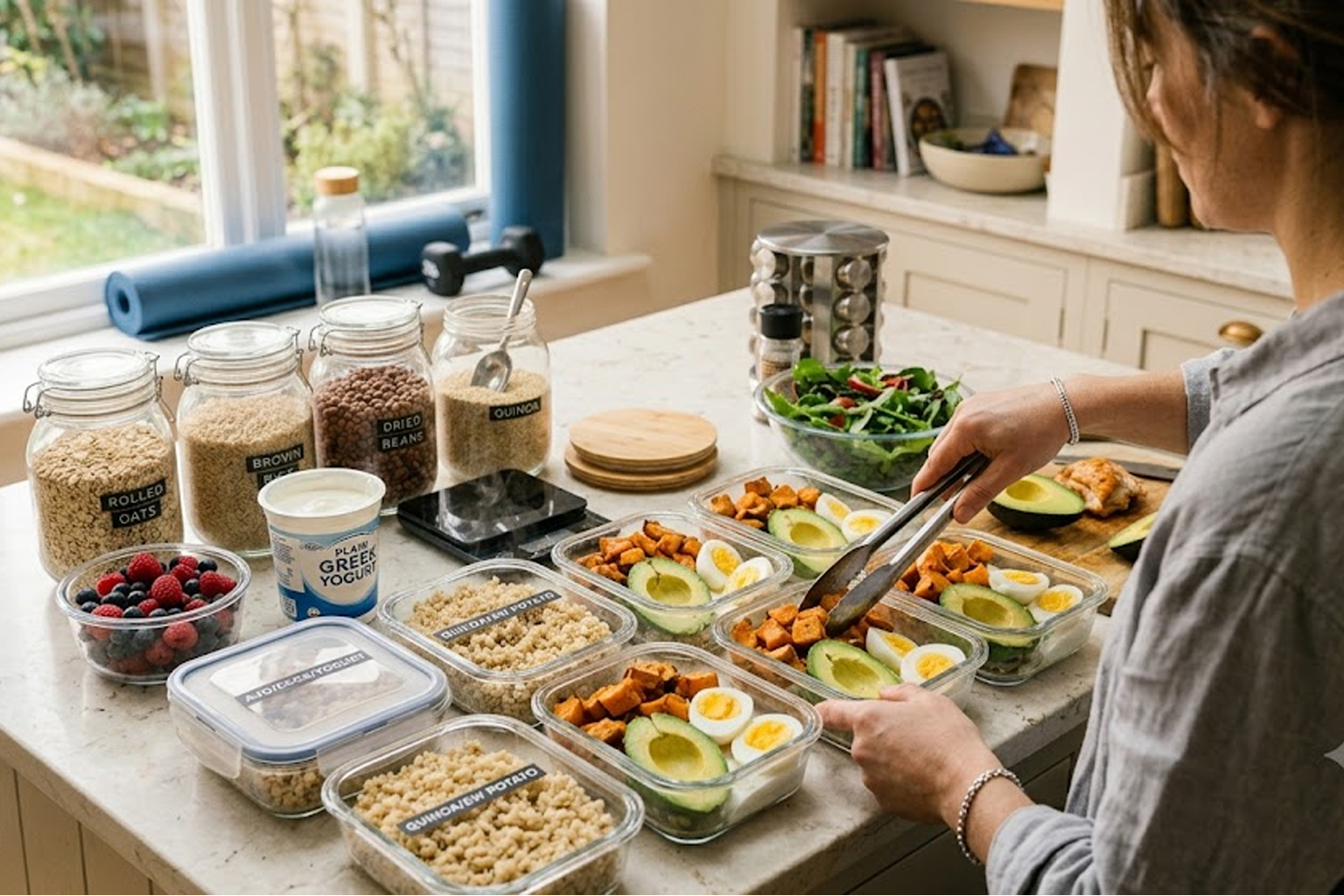
Fueling home workouts doesn’t need to be complicated or time consuming. By focusing on whole foods and consistent routines you can support energy, recovery, and daily performance. Small, repeatable choices reduce decision fatigue and make healthy eating sustainable alongside training. This article outlines practical meal patterns and examples to fit busy at-home fitness lifestyles.
Key Components of Home-Workout Meals
Meals that support home training combine three core elements: quality protein to repair muscle, complex carbohydrates for steady energy, and vegetables or fruit for micronutrients and fiber. Healthy fats are included in moderation to support satiety and nutrient absorption. Prioritize minimally processed ingredients and balance portion sizes to match your activity level. Hydration and simple electrolytes matter, especially on longer or intense training days.
- Protein: eggs, legumes, yogurt, lean meats, or plant-based alternatives.
- Carbs: oats, brown rice, sweet potatoes, quinoa, or whole-grain bread.
- Veggies & fats: leafy greens, colorful vegetables, avocado, nuts, and olive oil.
Focusing on these building blocks helps you assemble meals quickly from pantry staples and fresh produce. Over time, you’ll learn portion patterns that match your personal goals and workout intensity.
Daily Meal Routines That Simplify Choices
Create a simple daily framework: a balanced breakfast, a sustaining lunch, a performance-focused pre- or post-workout snack, and a nutrient-dense dinner. Keeping each meal predictable allows faster prep and easier grocery shopping. Batch-cook a grain, roast a tray of vegetables, and prepare a couple of protein options to mix through the week. This reduces time spent deciding and increases the likelihood of eating well consistently.
- Breakfast template: whole grain + protein + fruit or veggies.
- Lunch template: grain or greens base + protein + roasted vegetables.
- Dinner template: protein + two vegetables + healthy fat.
Adjust portions and timing based on morning or evening workout schedules to ensure energy when you need it. Consistency in patterns often produces better results than occasional perfect meals.
Snacks, Timing, and Practical Tips
Smart snacking bridges energy gaps and supports recovery without requiring large meals. Aim for a mix of protein and carbs within 30–90 minutes after workouts to aid muscle repair and glycogen replenishment. Keep quick options on hand such as yogurt with fruit, a nut butter and banana on whole-grain toast, or a hummus and veggie plate. These choices are portable and require minimal prep.
- Pre-workout: small banana or toast with almond butter for quick energy.
- Post-workout: yogurt or cottage cheese with berries, or a smoothie with protein and spinach.
- On busy days: trail mix, boiled eggs, or pre-portioned hummus packs.
Rotate favorite combinations so meals remain enjoyable and sustainable. Use simple swaps to vary flavor without disrupting the routine.
Conclusion
Adopt a few reliable meal templates and stock easy whole-food options at home. Consistency and simple prep habits are the real keys to supporting regular workouts. Small, repeatable choices compound into better energy, recovery, and performance over time.