Consistent, simple meals are the foundation of steady progress for anyone training at home. Focusing on whole foods, balanced macros, and reasonable portioning helps support energy and recovery without complicating daily routines. Small habits around planning and batch-cooking reduce decision fatigue and keep nutrient intake reliable. This article outlines practical approaches that fit busy schedules and varied skill levels.
Planning Balanced Meals
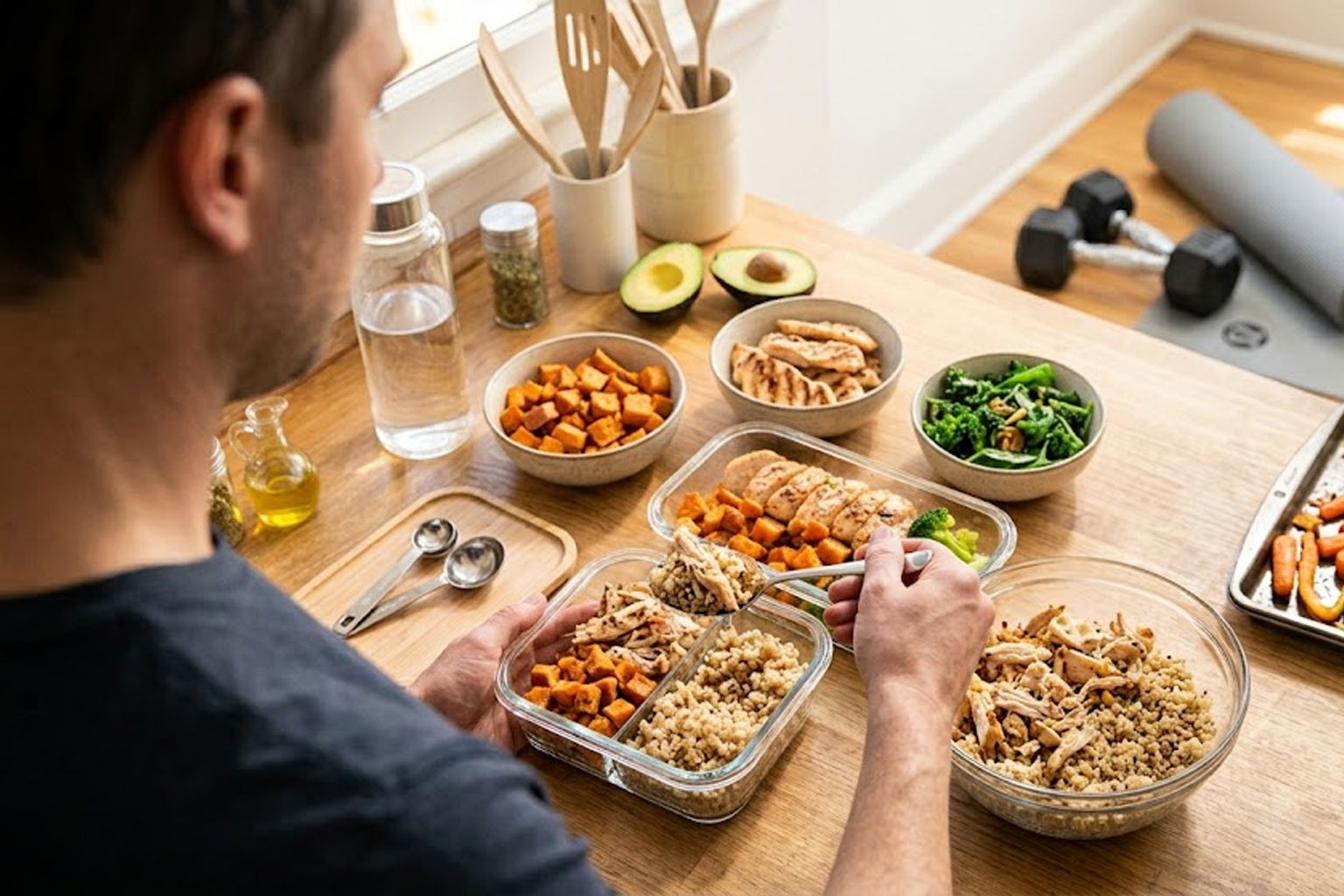
A balanced meal centers on protein, quality carbohydrates, healthy fats, and vegetables to supply sustained energy and repair. Aim to include a palm-sized portion of protein, a cupped-hand serving of carbs, two fist-sized portions of vegetables, and a thumb-sized amount of fat at each main meal. Planning three to five core recipes that rotate through the week simplifies shopping and prevents reliance on processed convenience foods. Consistency in these building blocks ensures training days and rest days both get adequate nutrition.
When you prepare a shopping list, prioritize versatile ingredients like eggs, legumes, whole grains, seasonal produce, and a few lean proteins. Prepping components rather than complete dishes allows flexibility across meals and avoids monotony.
Quick Cooking Techniques
Simple cooking methods save time and preserve nutrients: roasting, stir-frying, steaming, and one-pot meals are especially efficient. Use sheet-pan dinners or slow-simmered stews to make larger batches that refrigerate or freeze well for later. Cooking in batches for two to four days reduces weekday stress and helps maintain portion control. Spices, acid (like lemon or vinegar), and fresh herbs deliver flavor without adding excess calories.
Invest in a few multi-use tools such as a good skillet and a sheet pan; they expand your options and streamline cleanup. Timing your prep to fit into existing routines increases the chance you’ll keep it up.
Snack and Hydration Strategies
Smart snacks keep energy steady between meals and can complement training sessions when timed correctly. Choose combinations of protein and carbohydrate for post-workout recovery and simple snacks like nuts, yogurt, fruit, or whole-grain crackers for quick sustenance. Consistent hydration supports performance and appetite regulation; aim to sip water throughout the day rather than waiting until you feel thirsty. Tracking simple habits—water bottle refills, a midday snack, or a prepped yogurt—builds resilience against skipped meals.
- Example snacks: Greek yogurt with berries, apple with nut butter, hummus and carrot sticks.
- Post-workout: a rice bowl with beans and a lean protein or a smoothie with protein and banana.
Keeping snacks accessible and pre-portioned reduces impulse choices and helps keep calories aligned with goals. Small, repeatable actions create long-term consistency.
Conclusion
Building simple, repeatable meals supports home fitness by removing friction and improving nutrient quality. Focus on balanced plates, efficient cooking, and accessible snacks to maintain energy and recovery. Over time, these practical habits compound into measurable fitness gains.