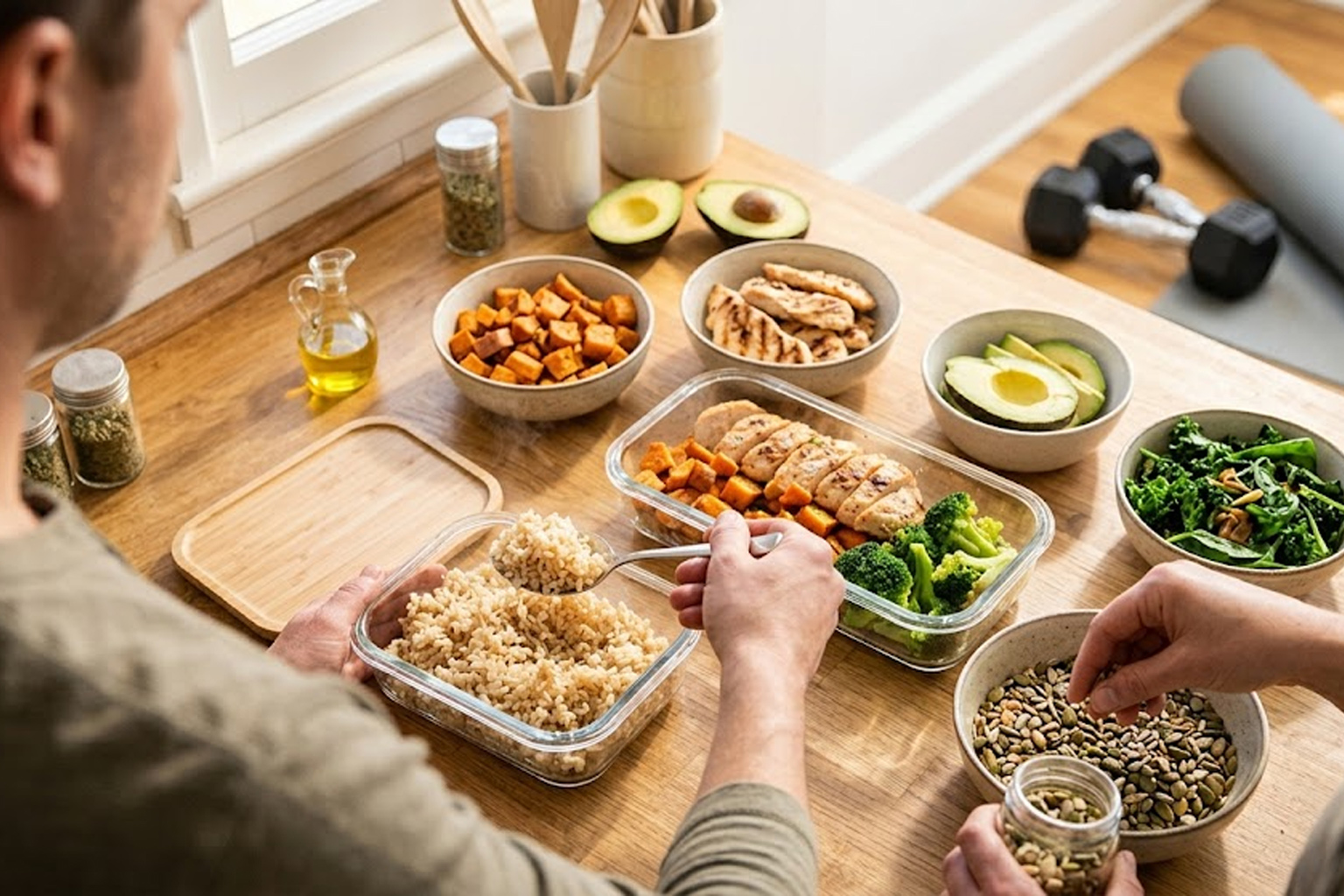
Creating balanced meals at home is one of the most effective ways to support consistent workout progress and daily energy. When workouts happen in the living room or garage, food choices should be simple, nutrient-dense, and easy to prepare. This article outlines core meal components, quick templates, and pantry swaps that make eating well manageable without complicated shopping lists. Use these practical strategies to feel energized for training sessions and recover well between workouts.
Core Components of a Balanced Home-Workout Meal
A balanced post- or pre-workout plate pairs lean protein, complex carbohydrates, and healthy fats to deliver sustained energy and support muscle repair. Protein from eggs, yogurt, canned fish, or plant-based sources helps preserve lean mass, while whole grains and starchy vegetables refill glycogen. Fats from nuts, seeds, avocado, or olive oil slow digestion slightly and keep you satiated between sessions. Include colorful vegetables or fruit for micronutrients and fiber to aid digestion and immune function.
- Protein: eggs, Greek yogurt, canned tuna, lentils.
- Carbs: brown rice, sweet potato, oats, whole-grain bread.
- Fats: olive oil, nuts, avocado, tahini.
Aim for portion sizes that match your activity level and hunger cues. Simple swaps and balanced components are the key.
Quick Meal Templates and Timing
Templates reduce decision fatigue: a protein source plus a carb and a vegetable plus a small fat is an easy blueprint for most meals. For morning workouts, prioritize easily digested carbs with moderate protein to avoid discomfort while training. After workouts, emphasize a recovery meal within 30–90 minutes that contains both protein and carbohydrates to support glycogen replenishment. Evening meals can be slightly higher in vegetables and fiber while keeping portions moderate to support sleep.
- Breakfast: oatmeal with milk, banana, and nut butter.
- Lunch: grain bowl with chicken, roasted veg, and olive oil drizzle.
- Snack: yogurt with fruit and a handful of nuts.
Keep timing flexible to match personal tolerance and schedule. Consistency matters more than perfection for fueling progress.
Smart Pantry Swaps and Prep Tips
A well-stocked pantry makes healthy choices the default when time is limited. Stock canned beans, whole-grain pasta, frozen vegetables, nut butters, and canned protein for versatility and shelf stability. Batch-cooking grains and proteins on a weekend saves time and reduces reliance on processed convenience foods. Labeling containers and rotating older meals forward keeps variety and freshness high.
Small adjustments like swapping refined snacks for whole-food alternatives add up over time. Focus on practical steps you can maintain week to week.
Conclusion
Consistent, balanced meals that combine protein, carbohydrates, fats, and vegetables support energy, recovery, and long-term progress. Use simple templates, sensible timing, and smart pantry choices to reduce friction around eating well. Small, repeatable habits will yield better results than sporadic strict diets.