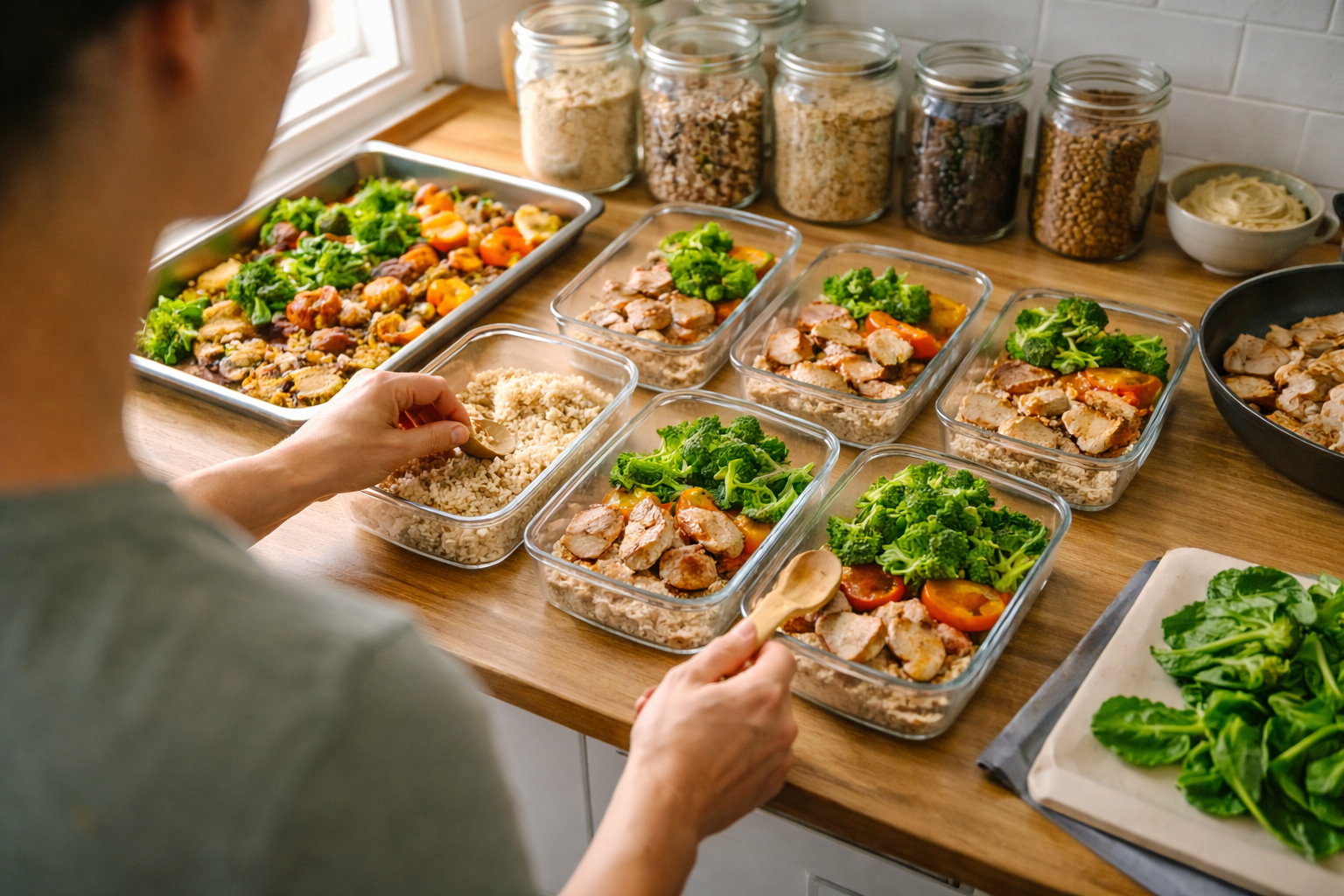
Creating reliable meal patterns at home supports energy, focus, and consistent progress toward fitness goals. Small changes to pantry choices and plate composition make daily decisions simpler and healthier. When meals are predictable and balanced, they reduce decision fatigue and make it easier to stick with nutritious habits. This article outlines practical approaches for planning, preparing, and arranging meals that fit busy schedules and varied tastes.
Build a pantry that simplifies healthy choices
A well-stocked pantry reduces cooking time and removes barriers to choosing nutritious options. Keep a rotation of long-lasting staples like canned beans, whole grains, nut butters, and shelf-stable tuna to combine quickly with fresh ingredients. Spices, vinegars, and a quality oil expand your options without adding complexity, letting you turn simple items into satisfying dishes. Having protein-rich, fiber-forward basics makes it easier to assemble balanced meals on short notice.
- Staples: brown rice, quinoa, canned beans, oats.
- Quick proteins: canned legumes, shelf-stable fish, nuts, seeds.
Rotate staples every few weeks and replace items as you use them to keep the pantry functional. This habit prevents waste and keeps meal preparation friction low.
Construct balanced plates in three simple parts
Think of each meal as three components: protein, vegetables or fruit, and a source of fiber or healthy carbohydrates. Proteins support satiety and recovery, vegetables supply micronutrients and volume, and whole grains or starchy vegetables provide steady energy. Combining these elements in moderate portions creates meals that leave you energized rather than sluggish. Aim for variety across the week to cover different vitamins and textures.
- Example plates: grilled chicken + quinoa + roasted broccoli.
- Vegetarian option: lentil stew + brown rice + mixed greens.
- Quick bowl: canned tuna + chickpeas + spinach + whole grain bread.
Keeping a handful of go-to combinations reduces planning time and ensures nutrient balance. Over time, you can swap ingredients without changing the overall structure.
Establish a weekly rhythm that fits your life
Consistent habits make healthy eating sustainable, so choose a meal rhythm that matches your schedule. Block a short session for prepping one or two components ahead—grain batches, roasted vegetables, or cooked proteins—to speed evening assembly. Use simple rules like “vegetables at every meal” or “two meals per week from leftovers” to guide choices without rigid menus. Flexibility within a framework prevents burnout and keeps meals enjoyable.
Track what works for a few weeks and adjust portions or prep times accordingly. Small experiments help identify the best routines for energy and enjoyment.
Conclusion
Simple patterns, a practical pantry, and predictable plate structure make healthy home meals achievable every day. Small weekly habits like batch cooking and go-to combinations reduce decision fatigue and support steady energy. Adopt one change this week and build from there to create sustainable benefits for fitness and daily life.