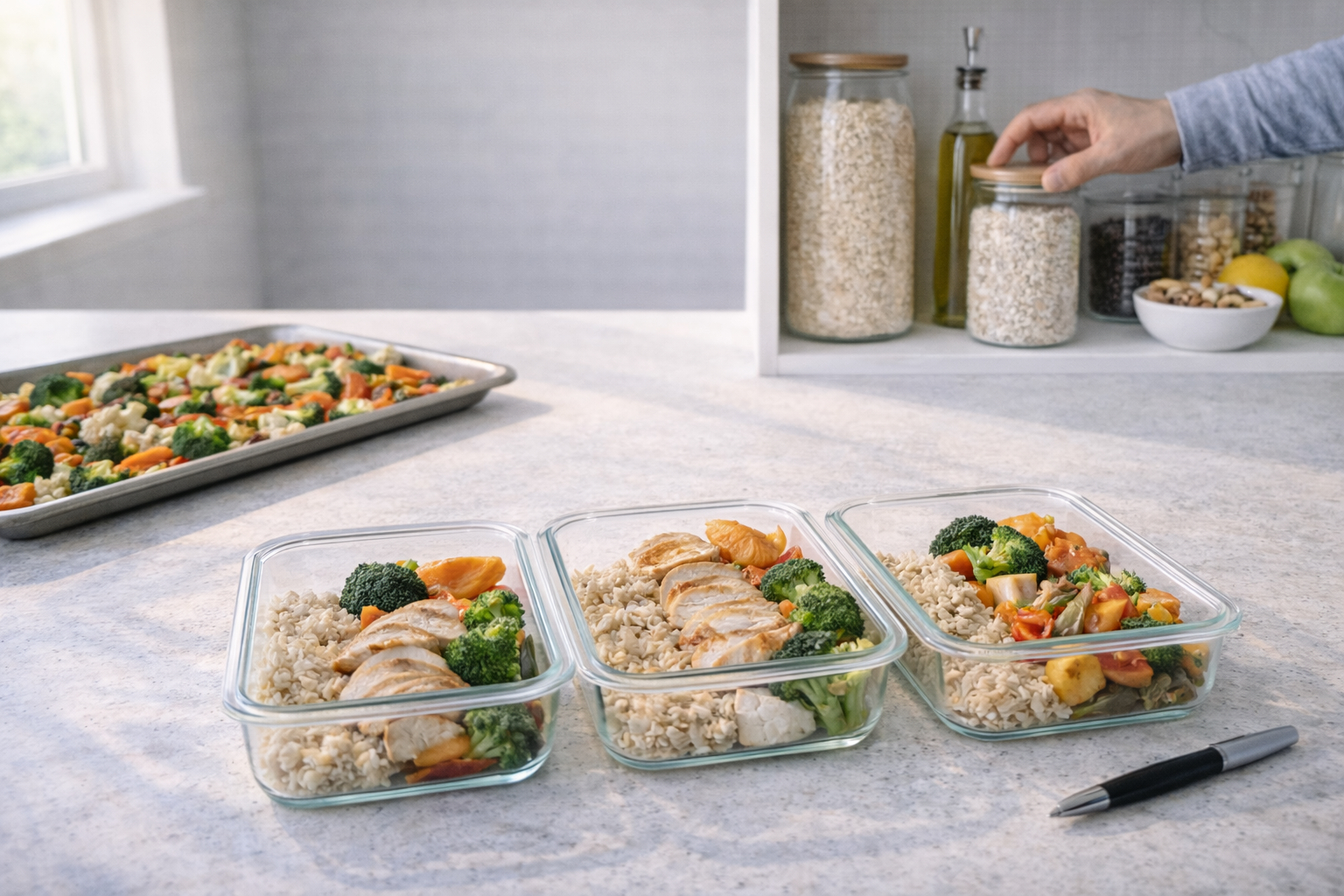
Eating well at home doesn’t have to be complicated to support fitness, concentration, and everyday energy. Small, consistent meal habits create steady blood sugar, better recovery after workouts, and clearer mental focus through the day. This article outlines manageable strategies you can adopt in a typical kitchen to plan, prepare, and enjoy balanced meals. No extreme rules — just practical choices that fit a busy lifestyle.
Start with Simple Plate Patterns
Use a basic template to assemble meals quickly and consistently. Aim for a balance of protein, fiber-rich carbohydrates, and healthy fats at each sitting to sustain energy and support muscle maintenance. Vegetables supply micronutrients and volume without many calories, helping you feel satisfied longer. Focus on portion cues rather than strict measurements to make the habit stick.
- Protein: eggs, beans, yogurt, lean meats
- Carbs: whole grains, potatoes, fruit
Apply this plate pattern to breakfasts, lunches, and dinners to reduce decision fatigue. Over time you’ll build an intuitive sense of what fuels your body best.
Plan Around Realistic Prep Routines
Batch cooking and quick prep windows reduce time barriers and increase the chance you’ll eat well. Identify two or three go-to recipes and prepare components like grains, sauces, and roasted vegetables in one session. Keep prep sessions short and focused, using tools such as a sheet pan or pressure cooker to save hands-on time. Consistency matters more than complexity when building a sustainable routine.
Set a weekly rhythm that matches your schedule, whether it’s two large prep sessions or daily 15-minute assembly. These routines make nutritious choices the easy option.
Smart Pantry Choices and Snacking
Stocking a resilient pantry simplifies meal assembly and prevents reliance on processed convenience foods. Prioritize shelf-stable proteins, whole grains, canned vegetables, and healthy fats so you can combine them into balanced meals quickly. Thoughtful snacks like nuts, fruit, and yogurt maintain steady energy between meals without undoing your progress. Rotate items and use the oldest first to minimize waste and keep variety in your eating pattern.
Having reliable staples reduces friction when you’re tired or busy and supports consistent nutrient intake. Small stocking habits compound into meaningful improvements for fitness and daily focus.
Conclusion
Build small, repeatable meal patterns that align with your routines and energy needs. Prioritize balance, simple prep, and a well-stocked pantry to make healthy eating easier at home. Over time these practical habits deliver more consistent energy, better recovery, and improved focus.