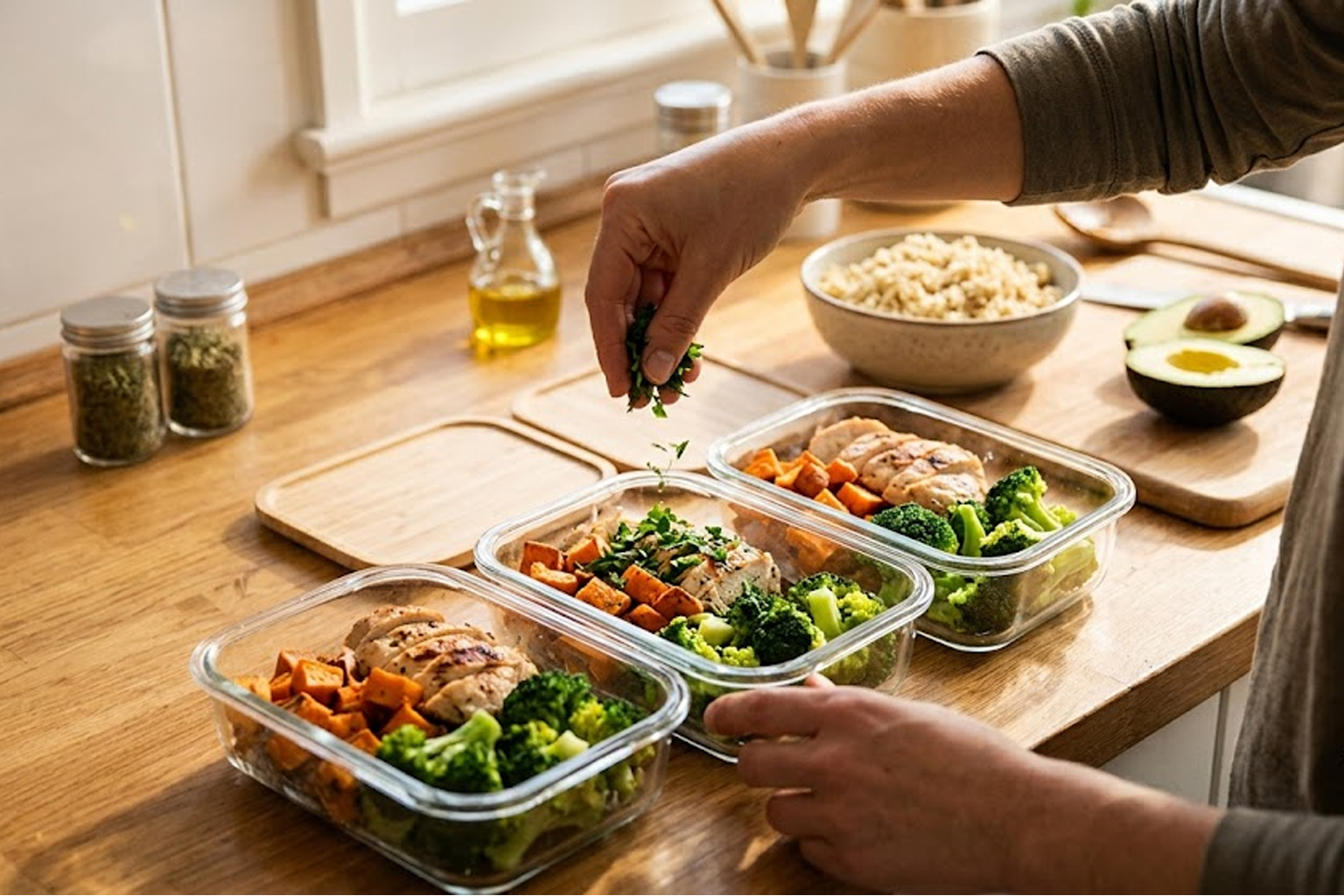
Consistent, simple meals are the backbone of steady progress when training at home. Choosing whole foods and predictable plate patterns reduces decision fatigue and helps maintain energy across workouts. With a few core combinations you can cover protein, carbs, healthy fats, and vegetables without spending hours in the kitchen. This article outlines practical meal foundations and quick examples you can rotate daily.
These ideas emphasize accessibility and flexibility so they fit grocery shelves and small kitchens. They are appropriate for a range of goals, from maintaining strength to improving recovery.
Meal Foundations
A reliable meal template pairs a quality protein, a fibrous vegetable, and a source of carbohydrate with a small healthy fat. Proteins build and repair muscle while carbs replenish glycogen for energy; fiber and fats support digestion and satiety. Aim for palm-sized portions of protein, a cupped-hand of carbs, and at least a fist of vegetables to create balanced plates. This simple ratio helps tailor portions to individual needs without complex tracking.
Rotate proteins across the week and vary vegetables to ensure micronutrient coverage. Small tweaks to preparation—grilling, roasting, or quick sautés—keep meals interesting.
Quick Balanced Plate Examples
For busy days, use templates that require minimal cooking: grilled chicken with roasted sweet potato and steamed broccoli, or canned tuna mixed with quinoa and a side salad dressed with olive oil. Vegetarian options work equally well: lentil bowls with brown rice and roasted vegetables, topped with a drizzle of tahini. These plates can be assembled in under 20 minutes when ingredients are prepped or using ready items like canned legumes and pre-washed greens. Simple sauces and herbs lift flavors and encourage consistency.
Batch-cooking staples like grains and roasted vegetables at the start of the week saves time and supports adherence to healthy patterns.
Pantry Staples and Simple Swaps
Stocking a short pantry of versatile items reduces meal friction and supports quick nutrition decisions. Key staples include canned beans, canned fish, whole grains, nuts, seeds, olive oil, and a few dried herbs or spice blends. These items pair with fresh produce to create balanced meals in minutes and keep costs manageable. Changing a grain or swapping a veg can refresh a dish without needing a new recipe.
- Canned beans or lentils
- Quinoa, brown rice, or whole-grain pasta
- Canned tuna or salmon
Keep a targeted grocery list focused on these basics to simplify shopping and meal planning.
Nighttime and Recovery Snacks
After evening workouts or on recovery days, choose snacks that balance protein and carbohydrates to support muscle repair and replenish energy. Options like Greek-style yogurt with fruit, a small turkey and avocado wrap, or a smoothie with protein powder and a banana work well. Keep portions moderate so snacks complement rather than replace main meals. Hydration and a little sodium after intense sessions can also help with recovery.
Regular, balanced snacks prevent large energy dips and maintain steady progress toward training goals.
Conclusion
Adopting simple whole-food plate templates makes nutritious eating sustainable for home trainers.
Small routines, consistent staples, and quick assembly techniques reduce barriers to healthy meals.
Over time, these choices compound into better energy, performance, and recovery.