Short, focused dinners make it easy to refuel after a home workout.
You don’t need elaborate recipes or hours in the kitchen to support recovery.
Aim for a balance of protein, carbohydrates, and a little healthy fat to restore energy.
Below are quick dinner plans and kitchen tricks that take about twenty minutes from stovetop to plate.
Why 20 minutes is enough
After a brief or moderate training session the body benefits most from straightforward, nutrient-dense food rather than a long, complicated meal. Quick cooking methods—stir-frying, pan-searing, tossing a bowl—preserve texture and maximize flavor without much fuss. Ready-to-use ingredients like pre-cooked grains, canned legumes, or frozen vegetables cut active time dramatically. With a clear template and a hot pan you can assemble a balanced plate before hunger pushes you toward less helpful choices.
Keeping the approach simple reduces decision fatigue and makes consistent post-workout eating realistic. Once you have a few reliable dinners they become automatic and worth repeating on training days.
Three 20-minute dinner templates
Templates give structure so you can mix and match ingredients without following strict recipes. They speed decision-making and make weeknight cooking predictable. Each template centers on an easy cooking technique and a handful of interchangeable components.
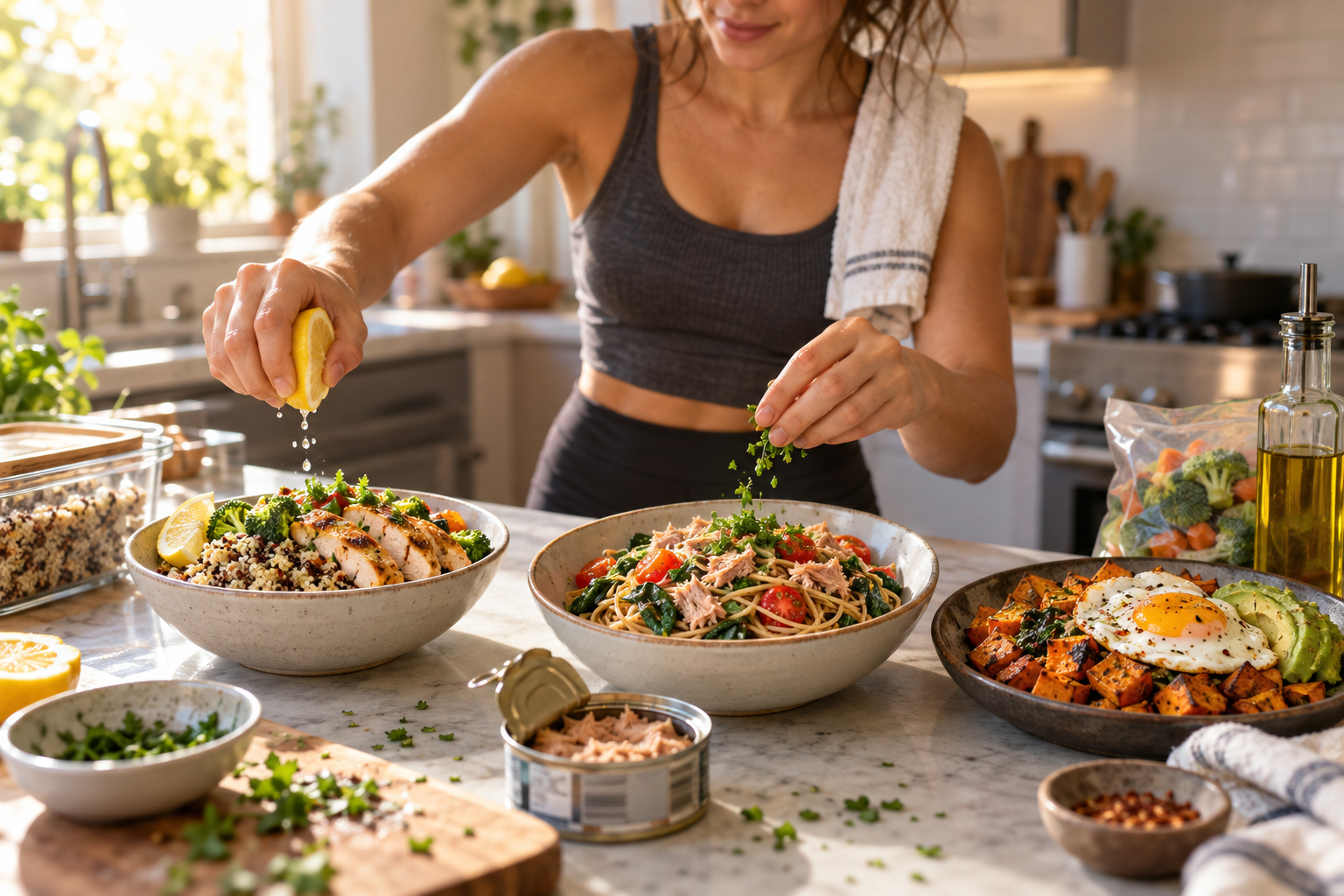
- Grain bowl: quick-cooking rice or quinoa, grilled or pan-seared chicken or tofu, roasted or steamed vegetables, a squeeze of lemon or a simple dressing.
- Pasta toss: whole-grain or regular pasta, canned tuna or white beans, cherry tomatoes and spinach, olive oil and garlic.
- Skillet plate: sweet potato or regular potato cubes, a fried egg or turkey slices, sautéed greens and a smear of yogurt or avocado.
Rotate proteins, swap vegetables, and change dressings to keep each template feeling fresh. These building blocks work whether you cook for one or batch for multiple meals.
Prep and pantry shortcuts
Little habits save big time: cook a pot of grains on the weekend, portion them into containers, and freeze or refrigerate for fast use. Stock the pantry with canned beans, tomatoes, and quality oils; keep frozen vegetables and pre-chopped produce on hand. A few cooked proteins—rotisserie chicken, canned salmon, or marinated tofu—make assembling dinners nearly effortless.
Minimal prep reduces resistance to eating well. When ingredients are ready, the 20-minute window becomes routine rather than a stressor.
Timing and portioning for recovery
Try to eat within an hour or two after a workout while balancing what your day requires and your appetite. Aim for a sensible portion of protein, a serving of carbohydrate to replenish energy, and some fiber-rich vegetables for digestion. Adjust portions based on how hard you trained and your personal goals rather than following strict rules.
Hydration matters too: a glass of water with dinner helps recovery and supports digestion. Keep meals flexible so they match training days without adding complexity.
Conclusion
Fast dinners can markedly improve how you recover and feel after training.
Choose a few reliable templates and stock the pantry with interchangeable staples.
Cook when you can, simplify when you must, and make short meals part of your routine.