Using a home gym is convenient, but insurance language isn’t always so simple.
Before you start lifting or streaming classes, it’s worth knowing how your health plan responds when an injury happens.
Small clauses about networks, prior authorization and rehab can change what you pay and where you get treated.
Read these key areas to avoid surprise bills and speed any claim.
Deductibles, Networks and Emergency Care
Check how your deductible and out-of-pocket maximum apply to emergency room visits versus urgent care or telehealth. Some plans treat ER visits differently, which can lead to large bills if a visit wasn’t strictly emergent. Verify in-network urgent care centers and whether telemedicine covers initial assessment after a home workout injury. Also check co-insurance percentages after deductible and whether balance billing is possible when you use an out-of-network facility. If you’re unsure, run a hypothetical claim through customer service using a sample diagnosis to see likely costs.
Calling your insurer before non-urgent visits can save money and reduce paperwork. Note phone numbers and online portals for faster authorization. Use telehealth triage if available to determine the right care setting.
Rehab, Physical Therapy and Prior Authorizations
If you need physical therapy after a strain or sprain, coverage varies widely. Many plans require prior authorization or a referral to cover multiple therapy sessions. Find out limits on session counts, therapist types and whether home-based rehab services are included. Confirm whether you can see a physical therapist without a physician referral and whether network therapists include specialists like sports PTs. Also check coverage for related services such as prescription braces or therapeutic massage.
Ask about copays and whether a deductible applies per visit or per episode of care. Save authorization emails and reference numbers. Track the CPT codes and claim IDs for each session in case you need to appeal.
Exclusions, Liability and Documentation
Some policies exclude injuries tied to hazardous activities or home-based businesses; a personal workout rarely fits those labels but check for wording. If a piece of equipment fails and a guest is injured, different parts of your coverage—homeowner’s liability versus your health policy—may apply. Understand which insurer handles what to avoid denials. Talk to your homeowner’s insurer about medical payments coverage, which can pay small bills for guests regardless of fault. When both homeowner and health insurers could apply, coordinate filings so you avoid duplicate denials.
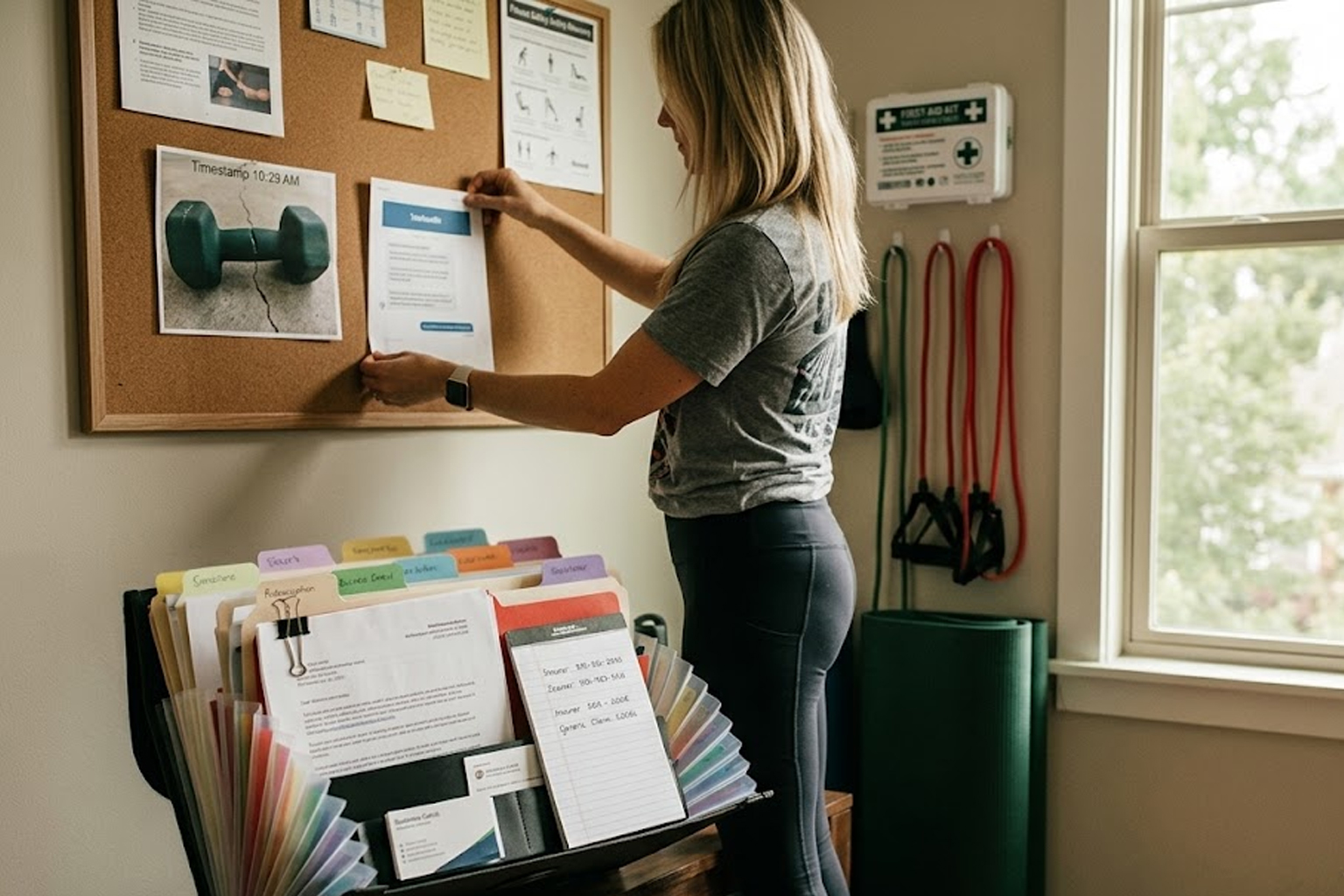
Document everything: time, symptoms, photos of equipment and any witness statements. Good records make claims smoother and support appeals if a denial comes. Keep receipts for equipment maintenance or replacement to show negligence or defect if relevant.
Conclusion
Review these six clause areas when you pick or renew a plan.
Keep contact numbers, authorizations and clear records handy.
That preparation limits surprises and speeds care when a home workout goes wrong.