Fine-tuning what you eat at dinner can make an outsized difference for how you recover from evening training and how you sleep overnight. Small changes to portion balance, meal timing, and ingredient choices help muscles rebuild without turning dinner into a complicated project. This piece focuses on practical, repeatable plate tweaks that fit a busy home-cooking routine. You don’t need specialty foods—just a few reliable swaps and timing moves.
Balance carbs and protein without overthinking it
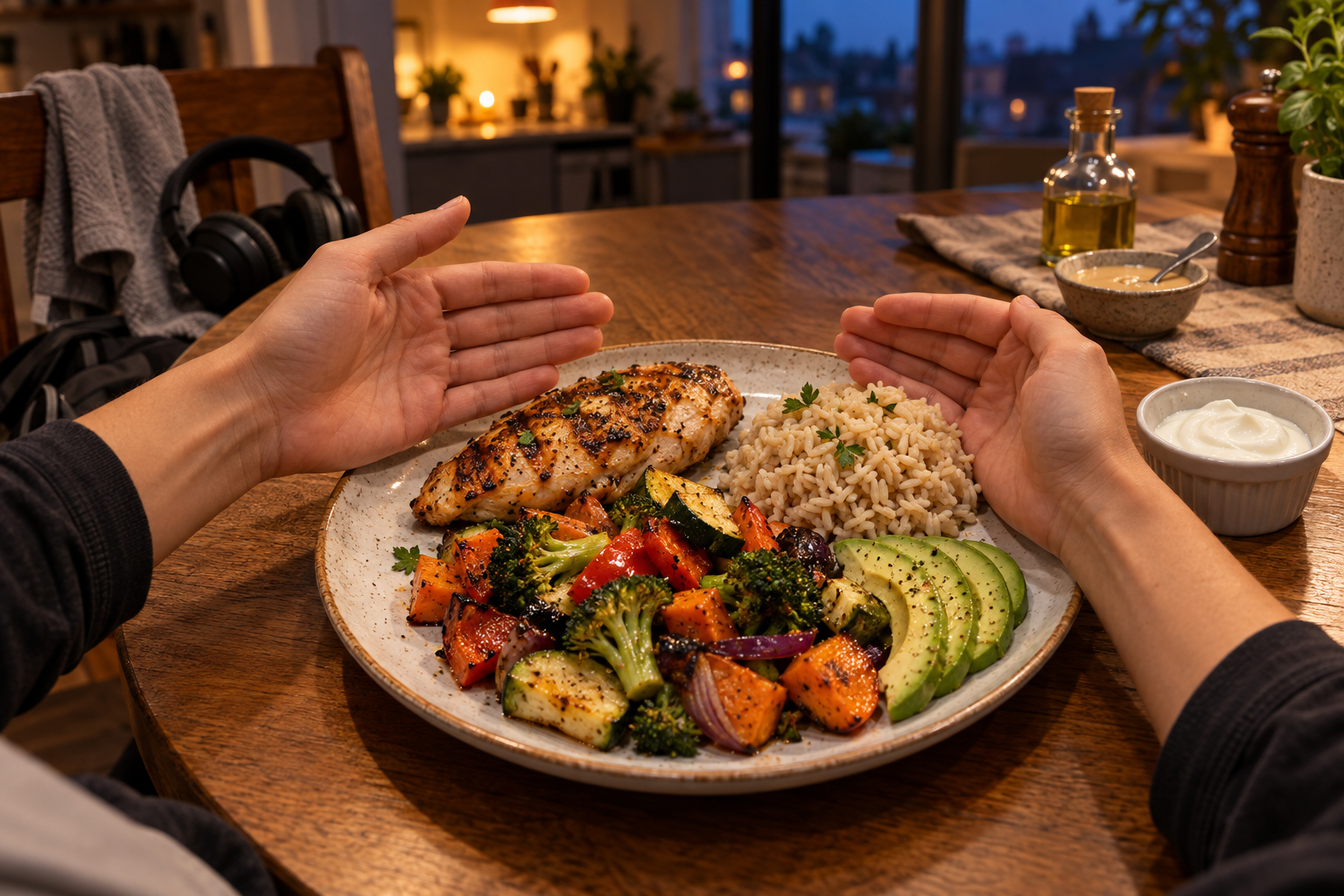
The easiest improvement is to aim for a compact, balanced plate: a palm-sized portion of protein, a cupped-hand serving of starchy carbs, and a fist of vegetables. Protein supports muscle repair, while carbohydrates replenish glycogen so your body doesn’t raid amino acids overnight. Vegetables add fiber and micronutrients that support recovery processes and help digestion before bed. Keep portions realistic to avoid late-night fullness that can interfere with sleep.
Think in blocks rather than grams—protein, carbs, veg—and build meals from those pieces. That approach keeps dinner both nourishing and simple to prepare on worknights.
Choose proteins and fats that aid repair and sleep
Select proteins that are easy to pair with carbs and vegetables: eggs, canned fish, lean poultry, tofu, or Greek-style yogurt. These options digest reasonably well and supply the essential amino acids most useful for repair. Pair them with a modest amount of healthy fat—olive oil, avocado, or a few nuts—to slow digestion just enough to avoid a blood-sugar spike without making you too full. Avoid large greasy portions late at night; heavy fat loads can disrupt sleep and slow recovery.
When you can, include a small dairy or dairy-alternative serving after training. The combination of casein and carbs is particularly helpful for overnight repair but isn’t required every night.
Evening meal templates and quick swaps
Keep a short list of go-to plates so dinner prep stays practical: a grain bowl with roasted vegetables and a protein, a stir-fry over a small scoop of rice, or a salad topped with warm protein and a whole-grain roll. Those formats allow one-pan cooking and easy reuse of leftovers. Prefer complex carbs like sweet potato, quinoa, or brown rice over simple sugars at night to steady energy and support glycogen restoration.
-
- Swap sugary sauces for tahini or yogurt-based dressings.
- Trade fried protein for baked or grilled versions.
-
- Replace late-night candy with a small fruit and nut combo.
These swaps are quick to implement and keep flavor without compromising recovery goals.
Conclusion
Small, consistent plate changes make recovery and sleep more reliable after home workouts. Aim for balanced portions, digestible proteins, and modest healthy fats at dinner. Those habits add up over weeks to improve how you feel the next day.