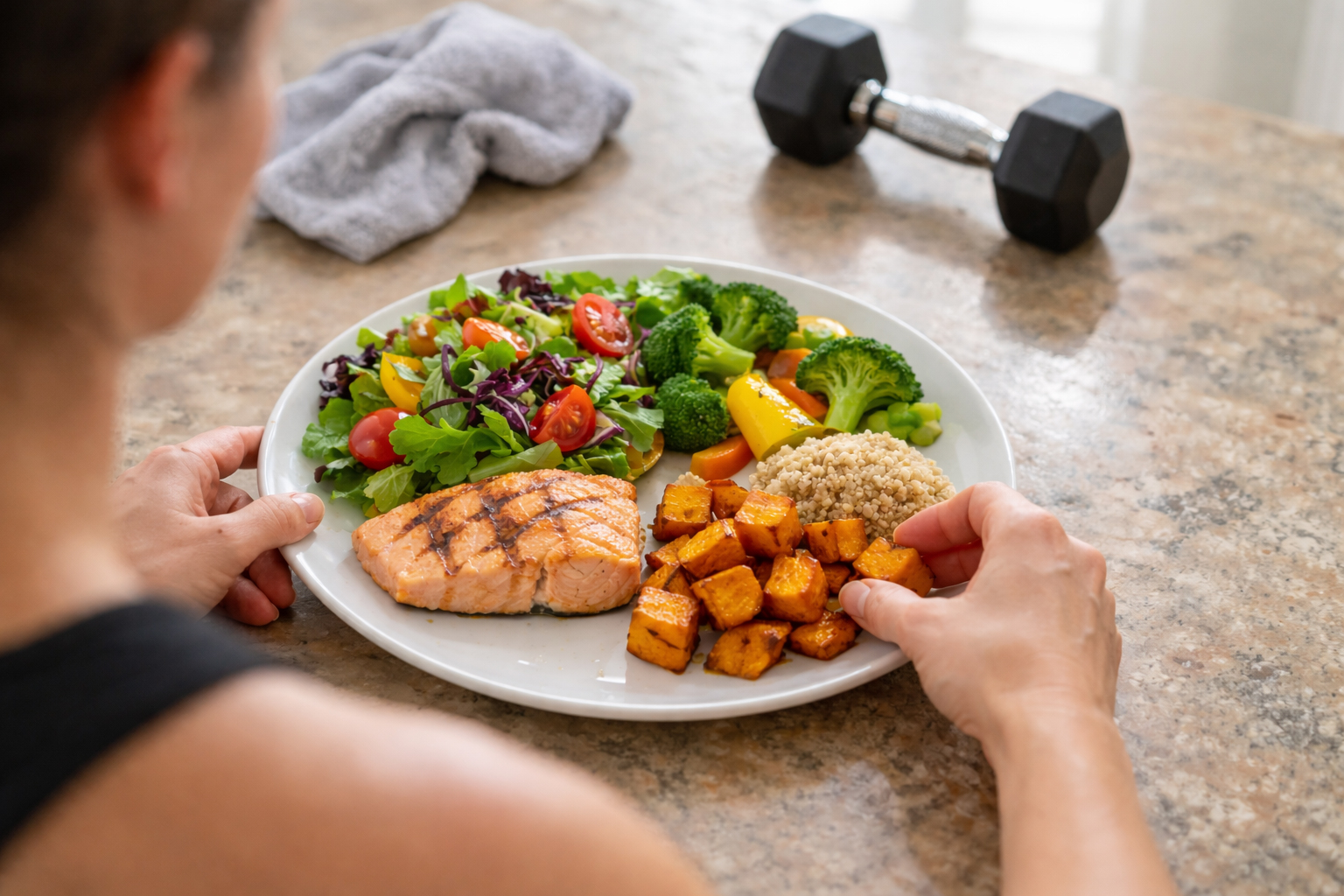
Good plate balance is a small change with big effects for people who train regularly at home. Thoughtful combinations of carbohydrates, protein and healthy fats support energy, performance and recovery between sessions. Focusing on whole foods and sensible portions reduces midday energy crashes and speeds repair after workouts. This article outlines practical plate-building techniques you can use at each meal to get measurable benefits.
Why balanced plates matter for training
Balanced meals supply steady energy and the nutrients your muscles need to recover and grow. Carbohydrates restore glycogen for future sessions, while protein provides amino acids for repair and adaptation. Healthy fats support hormonal function and slow digestion to keep energy levels consistent. Together these macronutrients help maintain strength and reduce fatigue across a weekly routine.
Beyond macros, micronutrients and fiber matter: vegetables, fruits and minimally processed grains fill gaps and aid digestion. Small changes in plate composition compound over weeks to improve overall training quality.
Simple steps to build better plates
Start each meal by filling half the plate with colorful vegetables or salad to increase volume and micronutrient density. Allocate a quarter of the plate to a lean protein source such as legumes, dairy, eggs or modest portions of lean meat. Use the remaining quarter for a starchy carbohydrate or whole grain to top up glycogen and support energy for subsequent workouts.
- Swap refined grains for whole grains like brown rice or quinoa to extend energy release.
- Replace sugary snacks with fruit plus a handful of nuts to combine carbs and healthy fats.
- Choose Greek yogurt or cottage cheese as an easy high-protein option at breakfast or snacks.
These simple swaps are easy to implement and work with busy schedules. Over time they help stabilize energy and reduce cravings that derail consistency.
Timing and portion tips for practical gains
Aim to eat a balanced meal within two hours after a challenging workout to support recovery and muscle protein synthesis. If a full meal isn’t possible, a small snack combining protein and carbohydrate, such as a smoothie with protein powder and fruit, is effective. Pay attention to portion sizes: slightly larger meals on heavy training days and modest ones on rest days keep calorie balance aligned with goals.
Hydration and sleep complement nutrition; both influence how efficiently your body uses the food you eat. Treat plate balance as one reliable tool among several that support consistent progress.
Conclusion
Building balanced plates is a practical, sustainable way to boost energy and recovery for regular training. Focus on vegetables, a reliable protein source and sensible carbohydrates while adjusting portions by workout intensity. Small, consistent changes to what you eat will improve performance and make training feel easier over time.