

Consistent nutrition transforms home workouts into lasting progress.
This article focuses on simple, sustainable eating strategies for people fitting exercise into tight days.
You’ll get guidance on meal timing, portion control, energy-boosting choices, and easy meal prep.
Practical tips below help you move from good intentions to reliable habits without complicated recipes.
Why Balanced Meals Matter
Nutrition supplies the building blocks your body needs to adapt to exercise and recover effectively. A balanced meal blends protein, carbohydrates, healthy fats, and vegetables to support performance and repair. Neglecting one macronutrient can leave you fatigued, slow recovery, or undermine strength gains over time. Prioritizing whole foods and adequate protein at each meal makes each home session more productive.
Timing and Portion Guidance
Meal timing influences your energy levels and recovery when you exercise at home. A light meal or snack 60–90 minutes before a session helps sustain intensity without discomfort. After workouts, aim to eat a protein-focused meal within two hours to support muscle repair. Portion control should match your goals—slightly larger if building muscle, more moderate if prioritizing fat loss.
Smart Food Choices for Energy
Choosing nutrient-dense foods keeps energy stable and reduces the urge to reach for sugary, low-nutrient snacks. Complex carbohydrates like whole grains and starchy vegetables provide steady fuel while lean proteins sustain fullness. Healthy fats from nuts, seeds, and oils support satiety and micronutrient absorption, especially around longer sessions. Incorporating colorful vegetables ensures vitamins and minerals that aid recovery and immune health.
– Pre-workout: banana with nut butter or yogurt and berries.
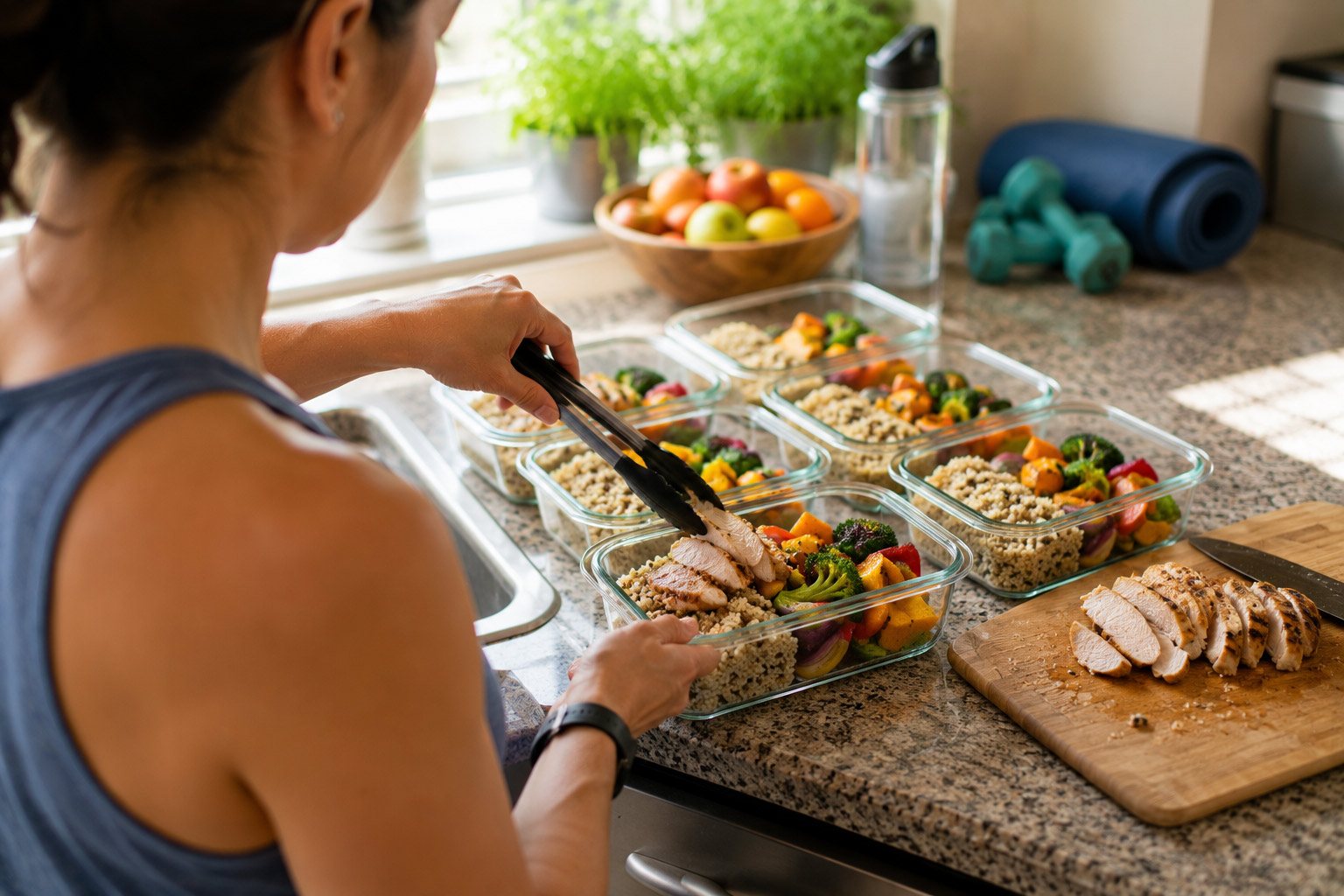
– Post-workout: grilled chicken, quinoa, and roasted vegetables.
– Snack options: hummus with carrots or a small handful of almonds and fruit.
Rotate these choices to keep meals interesting and to cover a broader nutrient profile. Small adjustments in portion size will tailor the plan to your individual energy needs.
Practical Meal Prep Tips
Simple meal prep reduces decision fatigue and keeps healthy options within easy reach on busy days. Batch cooking proteins, chopping vegetables, and pre-portioning grains frees up time on workout days. Invest in a few storage containers and a weekly plan rather than elaborate recipes to maintain consistency. Even minimal prep—like pre-washing greens or making a large batch of roasted vegetables—boosts adherence.
– Set aside 60–90 minutes once a week for batch cooking and portioning.
– Keep a rotating list of 4–6 go-to meals to simplify shopping and choices.
Start small with one prep habit and build from there to avoid overwhelm. Over time, these habits compound into dependable nutrition that supports your home fitness goals.
Conclusion
Consistent, balanced eating is the foundation that makes home workouts more effective.
By focusing on timing, nutrient-dense choices, and simple meal prep you create reliable support for progress.
Start with one change this week and measure how your energy and recovery improve over time.










