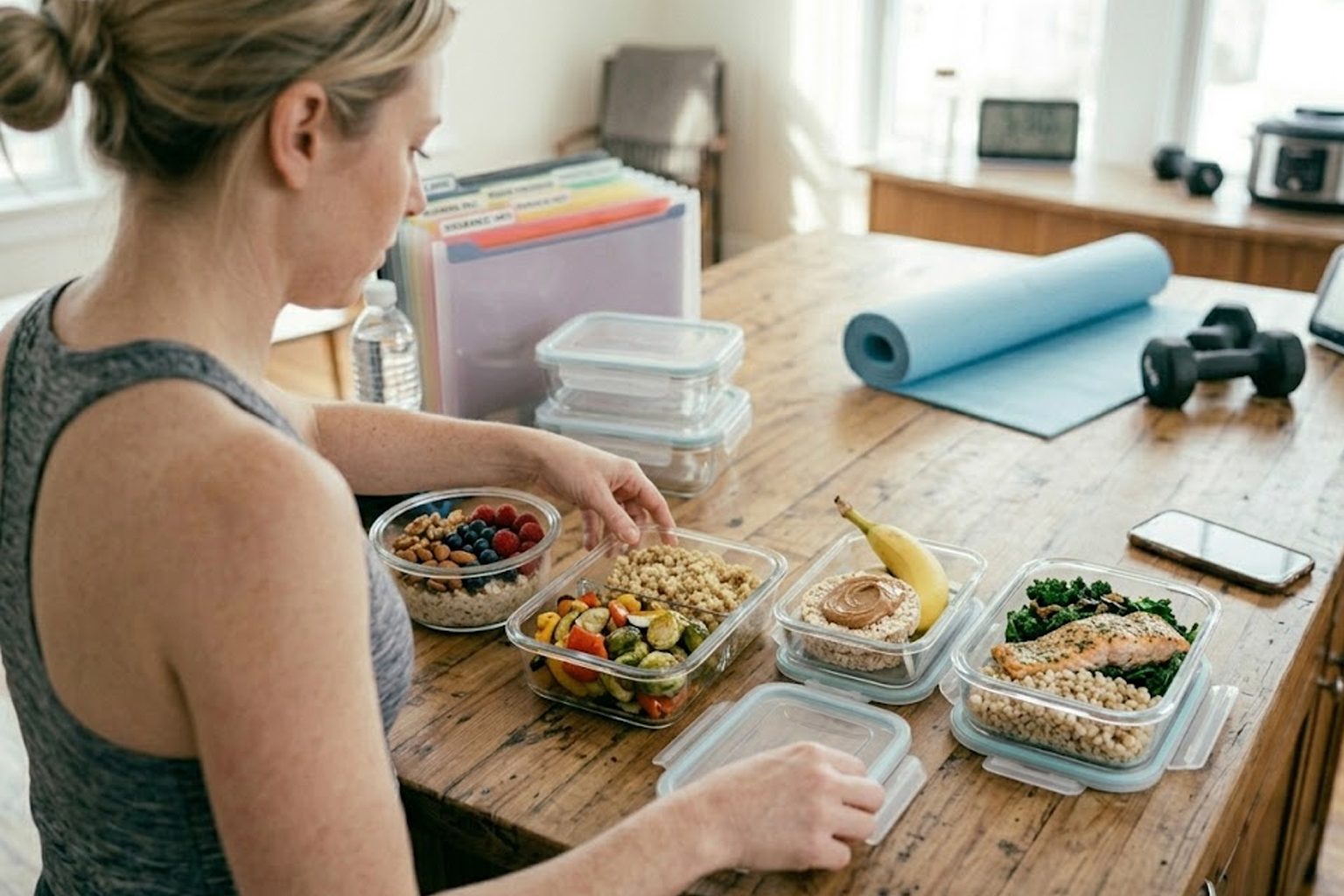
Four balanced meal templates make it easier to plan food around home workouts.
They focus on macronutrient balance, timing, and straightforward preparation.
Use these templates to keep energy steady during sessions and to speed recovery afterward.
Each template is flexible, practical, and fits busy daily routines.
Template 1: Energizing Breakfast
Start the day with a mix of slow carbohydrates, lean protein, and a touch of healthy fat to avoid mid-morning crashes. A portion of oats or whole-grain toast provides sustained energy, while eggs or Greek-style yogurt add protein for muscle support. Add fruit or vegetables for fiber and micronutrients, and include a small portion of nuts or avocado to slow digestion. This combination balances blood sugar and sets a steady foundation for morning training or activity.
Simple swaps make this template adaptable: swap oatmeal for a whole-grain waffle or yogurt for cottage cheese. The goal is consistent macros rather than exact meals.
Template 2: Midday Plate for Steady Energy
For lunch, aim for a plate divided between vegetables, a complex carbohydrate, and a lean protein source to sustain afternoon workouts. Vegetables supply volume and vitamins without excess calories, while brown rice, quinoa, or sweet potato keep glycogen stores topped. Include a modest serving of beans, fish, or poultry for lasting amino acids and fullness. This template supports cognitive focus and energy for evening training sessions.
Make leftovers into bowls to save time and keep portion sizes consistent across the week. Preparing components in bulk simplifies sticking to this pattern.
Template 3: Pre-Workout Snack
A light snack 30–90 minutes before exercise should prioritize easy-to-digest carbs with a little protein to prevent hunger. Think a banana with nut butter, a rice cake with cottage cheese, or a small smoothie made from fruit and yogurt. Avoid heavy fats or fiber right before intense sessions to reduce digestive discomfort. Timing and portion size depend on personal tolerance and workout intensity.
Practice different pre-workout options to learn what feels best; consistency helps performance. Keep portions small and familiar.
Template 4: Post-Workout Recovery Dinner
After training, combine protein for repair, carbohydrates to replenish glycogen, and vegetables for nutrients and hydration. A balanced plate might include grilled fish, roasted vegetables, and a grain like quinoa or barley to restore energy. Including a source of anti-inflammatory fats, such as olive oil or fatty fish, can support recovery and general health. Aim to eat within two hours of finishing exercise for the most benefit.
Adjust portion sizes based on activity level and overall daily calories. Prioritize simple meals you can prepare consistently.
Conclusion
Using four clear meal templates simplifies daily decisions and improves consistency.
They help match food to training demands without complicated recipes or strict rules.
Apply these patterns flexibly to support steady energy and reliable home workout progress.