Building steady progress with at-home workouts is as much about consistent eating patterns as it is about exercise. Choosing meals that match your energy needs and daily rhythm reduces fatigue and supports recovery. Simple, repeatable habits make it easier to stick with both training and nutrition over the long term. This article outlines practical meal frameworks that fit busy schedules and varied fitness goals.
Prioritize Balanced Macronutrients
Start meals with a clear balance of protein, carbohydrates, and healthy fats to support performance and recovery. Protein helps preserve and build muscle when paired with resistance training, while carbohydrates refill glycogen for energy and mental focus. Adding sources of healthy fats supports satiety and micronutrient absorption without slowing digestion excessively before workouts. Aim for portion consistency across meals to maintain steady energy and avoid large highs and crashes.
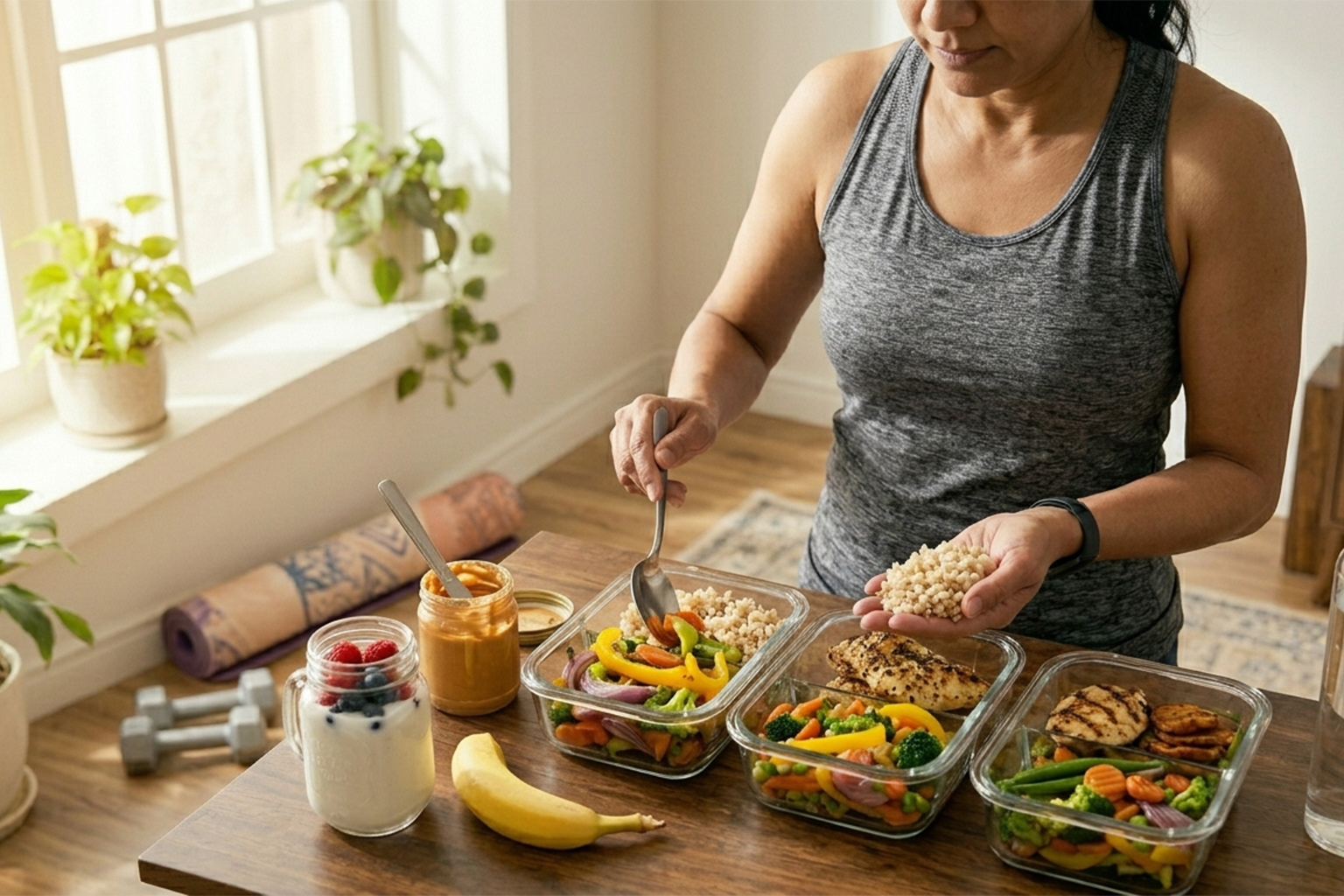
When time is tight, choose a lean protein, a whole-grain or starchy vegetable, and a vegetable or fruit at each plate. This pattern simplifies grocery shopping and meal assembly while covering core nutrient needs.
Eat Around Workouts with Purpose
Timing meals relative to training can be flexible but purposeful: include a digestible mix of carbs and protein before workouts to fuel performance and reduce muscle breakdown. After exercise, prioritize protein and some carbohydrates within a couple of hours to support repair and restore energy stores. Hydration matters as well; include fluids and electrolytes if workouts are long or intense, and monitor thirst and urine color as simple cues.
Small, practical pre-workout snacks like yogurt with fruit or a nut butter toast work well for many people. Post-workout meals can be similar to regular meals but slightly higher in protein and carbs when needed.
Plan Simple, Repeatable Meals
Designing a short rotation of go-to breakfasts, lunches, dinners, and snacks reduces decision fatigue and makes adherence realistic. Batch-cook a protein source and a grain, roast a mix of vegetables, and keep quick options like canned beans, frozen vegetables, and eggs on hand. Use herbs, spices, and simple sauces to vary flavors without adding complexity.
- Cook once, eat multiple times: roast a tray and portion for the week.
- Keep portable snacks handy for busy training days.
Repetition creates predictability, which helps maintain nutrient intake across training cycles and prevents poor last-minute choices.
Conclusion
Consistent, flexible meal patterns make home training more productive and sustainable. Focus on balanced plates, mindful timing around workouts, and simple repeatable meals you enjoy. Small, steady changes compound into lasting fitness momentum.