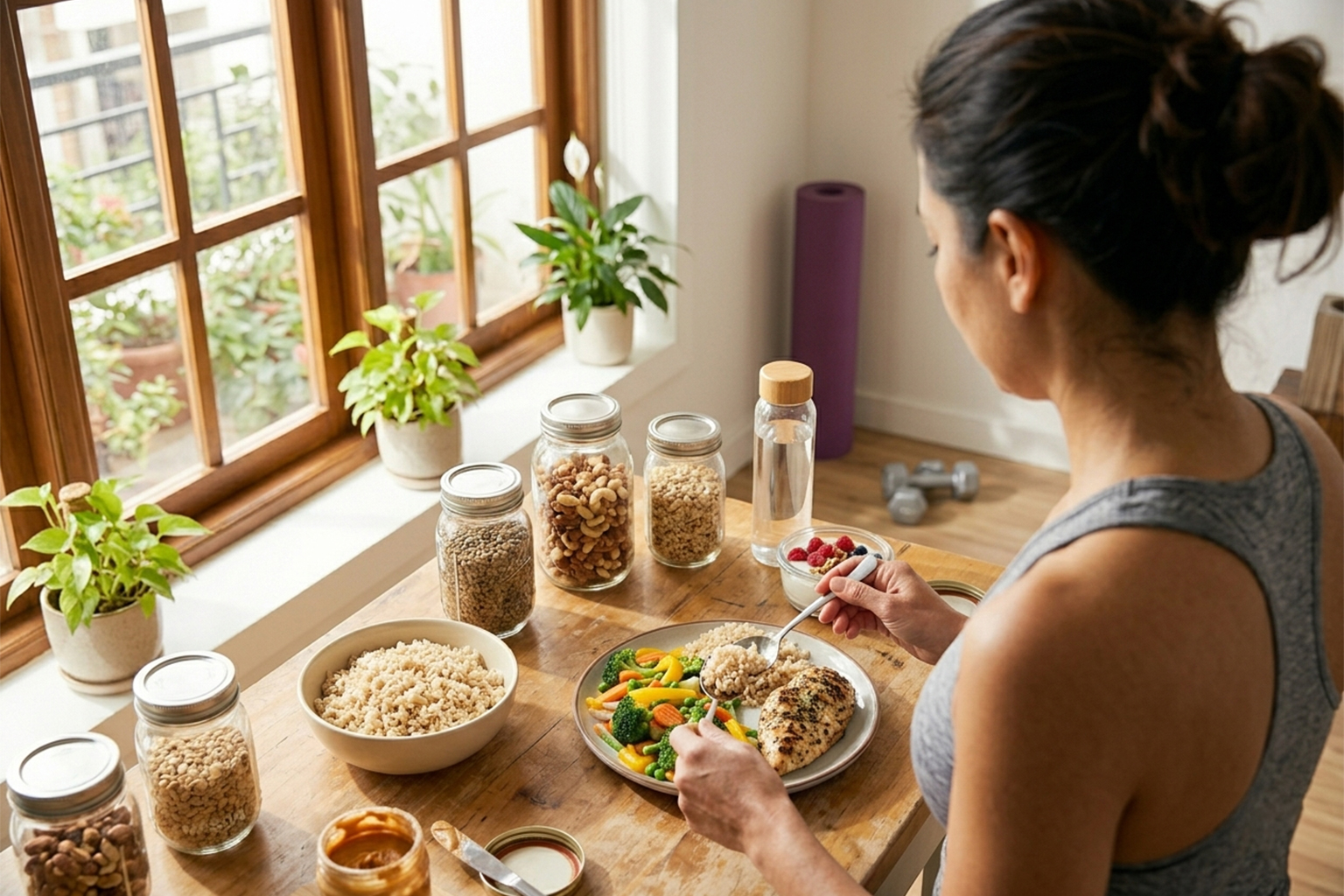
Good nutrition is the foundation for consistent progress when you train at home. Small changes to meals and snacks affect energy levels, recovery, and overall motivation. This piece provides practical, time-friendly food habits that pair well with home workouts. Follow these steps to simplify eating decisions and support steady fitness gains.
Focus on balanced plates
Construct meals that combine protein, complex carbohydrates, and colorful vegetables to keep energy stable and recovery efficient. Protein supports muscle repair and can be achieved with lean meats, eggs, dairy, or plant-based sources like legumes and tofu. Complex carbs such as whole grains, starchy vegetables, and legumes provide sustained fuel for both strength and cardio sessions. Vegetables add fiber, micronutrients, and volume to meals without excess calories.
Aim to fill roughly half your plate with vegetables, a quarter with protein, and a quarter with whole grains or starchy vegetables. This visual approach simplifies choices and keeps portions sensible even on busy days.
Timing and portion habits
Align meal timing with your training schedule to maximize performance and recovery without rigid rules. Have a balanced snack or small meal 60–90 minutes before higher-intensity workouts, and prioritize a protein-rich meal within two hours after exercising. Smaller, frequent meals can help some people maintain steady energy and prevent overeating in the evening. Monitor portions by using your hand as a guide: palm-sized proteins, cupped handfuls of carbs, and fist-sized vegetables.
Consistent portioning reduces decision fatigue and makes it easier to track progress over weeks. Adjust portions gradually based on how your body responds to training intensity and recovery needs.
Smart pantry swaps and quick meals
Stocking a few versatile staples transforms busy nights into nutritious opportunities that support workouts. Keep canned beans, frozen vegetables, whole-grain pasta, oats, eggs, and a lean protein option on hand for fast, balanced plates. Simple swaps—Greek yogurt for sour cream, spiralized vegetables for some pasta servings, or canned tuna for higher-fat proteins—add nutrients without much extra work. Building a few go-to recipes that mix these staples reduces the temptation to choose convenience foods low in nourishment.
Prep basics once or twice a week, such as cooking a batch of grains, roasting vegetables, or portioning proteins to save time. When the kitchen is ready, it’s far easier to maintain consistent, fitness-supporting meals even on hectic days.
Conclusion
Small, repeatable meal patterns support energy, recovery, and long-term progress with home-based training.
Focus on balanced plates, sensible timing, and a prepared pantry to reduce barriers to good choices.
Consistency over perfection yields the best results for sustained fitness and wellbeing.