Good nutrition is a practical advantage for anyone training at home.
You do not need fancy supplements to feel stronger or recover faster.
Small, consistent changes to meals and snacks yield steady improvements.
This article outlines sensible habits you can adopt without complex planning.
Use these tips to boost workout energy, support recovery, and simplify eating.
Adopting a few reliable food habits makes staying active easier and more enjoyable.
Think of nutrition as a toolkit: simple choices available every day that add up.
The guidance below focuses on balance, timing, and accessible options you can repeat.
Aim for practicality rather than perfection and adjust based on how you feel.
Smart Macronutrient Focus
Prioritize protein across meals to support muscle maintenance and recovery after workouts.
Include a moderate portion of carbohydrates around training to provide usable energy without heaviness.
Don’t forget healthy fats for satiety and nutrient absorption, especially from whole food sources.
A simple plate might pair lean protein, a vegetable variety, and a modest starchy or whole-grain side.
These basics help stabilize energy and reduce mid-day slumps that disrupt training consistency.
Rotate protein sources and colorful vegetables to keep meals interesting and nutrient-dense.
Meal Timing and Practical Prep
Timing matters less than total daily intake, but a light meal 1–2 hours before exercise can help performance.
After workouts aim for a recovery meal with both protein and carbohydrates within a couple of hours.
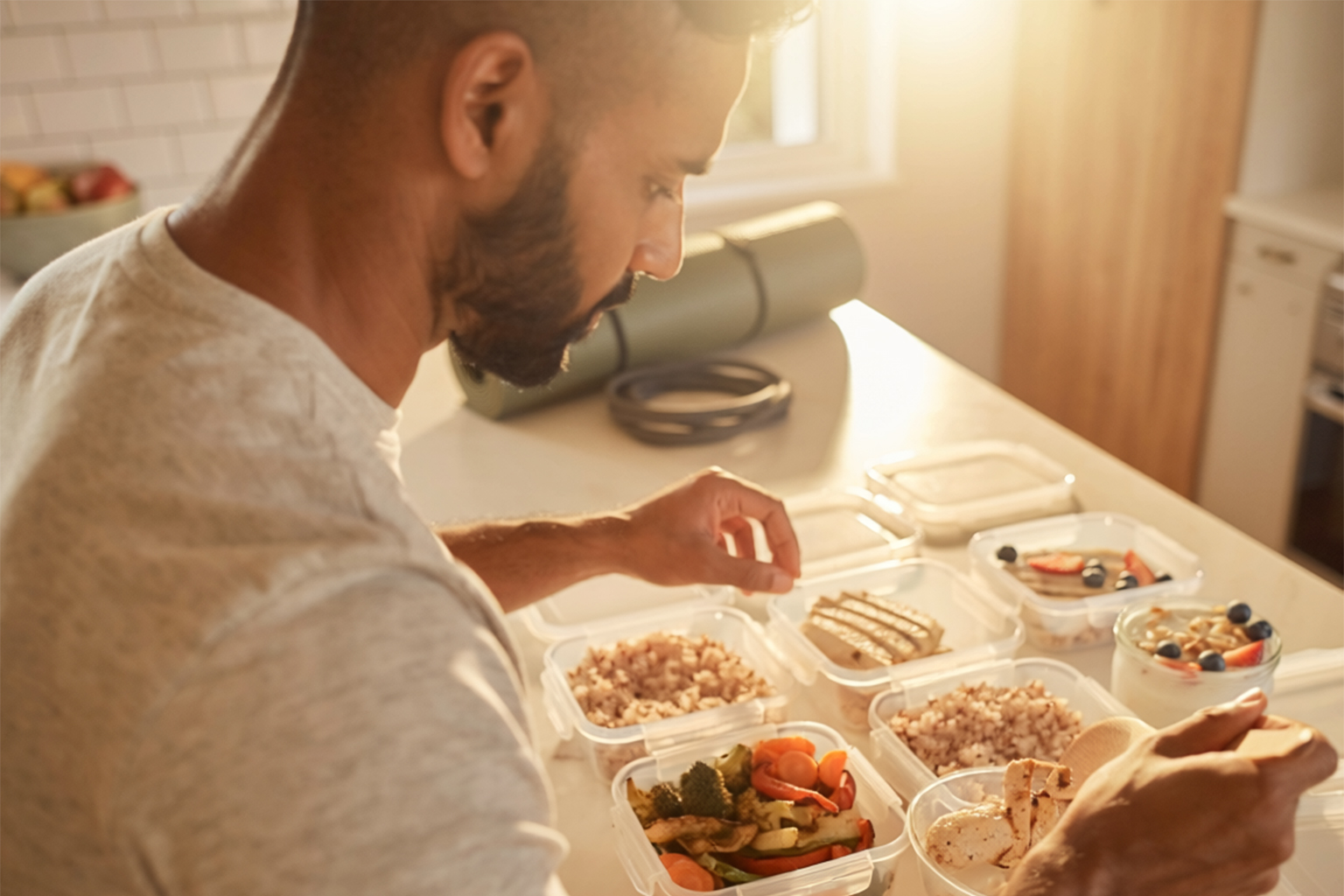
Prepare staples in batches — cooked grains, roasted vegetables, and portioned proteins save time on busy days.
Consistency in meal structure reduces decision fatigue and keeps fueling predictable for home training.
- Cook once, eat twice: double recipes for grab-and-go portions.
- Keep simple condiments and herbs to vary flavors rapidly.
- Use reusable containers to streamline weekday meals.
Small prep rituals turn nutrition into a supportive habit rather than an extra chore.
Over time these routines free mental energy for exercising and recovery.
Simple High-Impact Snacks
Choose snacks that combine protein and carbohydrate to sustain energy between meals.
Examples include yogurt with fruit, nut butter on whole-grain crackers, or a hard-boiled egg with a piece of fruit.
Snacks can be planned around workout timing to either top up energy or aid recovery.
Keep portable options on hand so hunger doesn’t derail a planned session.
Smart snacking stabilizes blood sugar and supports steady effort during at-home workouts.
Rotate choices so snacks remain appealing and effective.
Conclusion
Focus on simple, repeatable food patterns that support energy and recovery.
Prioritize protein, practical meal timing, and easy prep to stay consistent with training.
Over weeks these habits compound into noticeable improvements in performance and well-being.