Trying to eat simply while keeping energy high for home workouts doesn’t require complicated recipes or a long grocery list. Small adjustments to familiar meals give steady fuel, faster recovery, and better overall consistency. This piece outlines practical templates, quick shopping tips, and prep habits you can adopt on any week. Read on for approachable ideas that fit busy schedules and modest kitchens.
Why meal structure matters more than strict diets
Consistent meal structure helps stabilize energy without micromanaging every bite. Aim for a balance of protein, carbohydrates, and a little healthy fat at most meals so your body has what it needs before and after exercise. Timing also matters: a light carbohydrate-plus-protein snack 30–90 minutes before a workout often beats skipping food or overindulging. Simple routines reduce decision fatigue and make it easier to stick with a training schedule.
Think in templates rather than recipes — for example, a grain, a protein, and a vegetable. That mindset makes substitutions easy and keeps meals interesting without extra effort.
Easy meal templates to mix and match
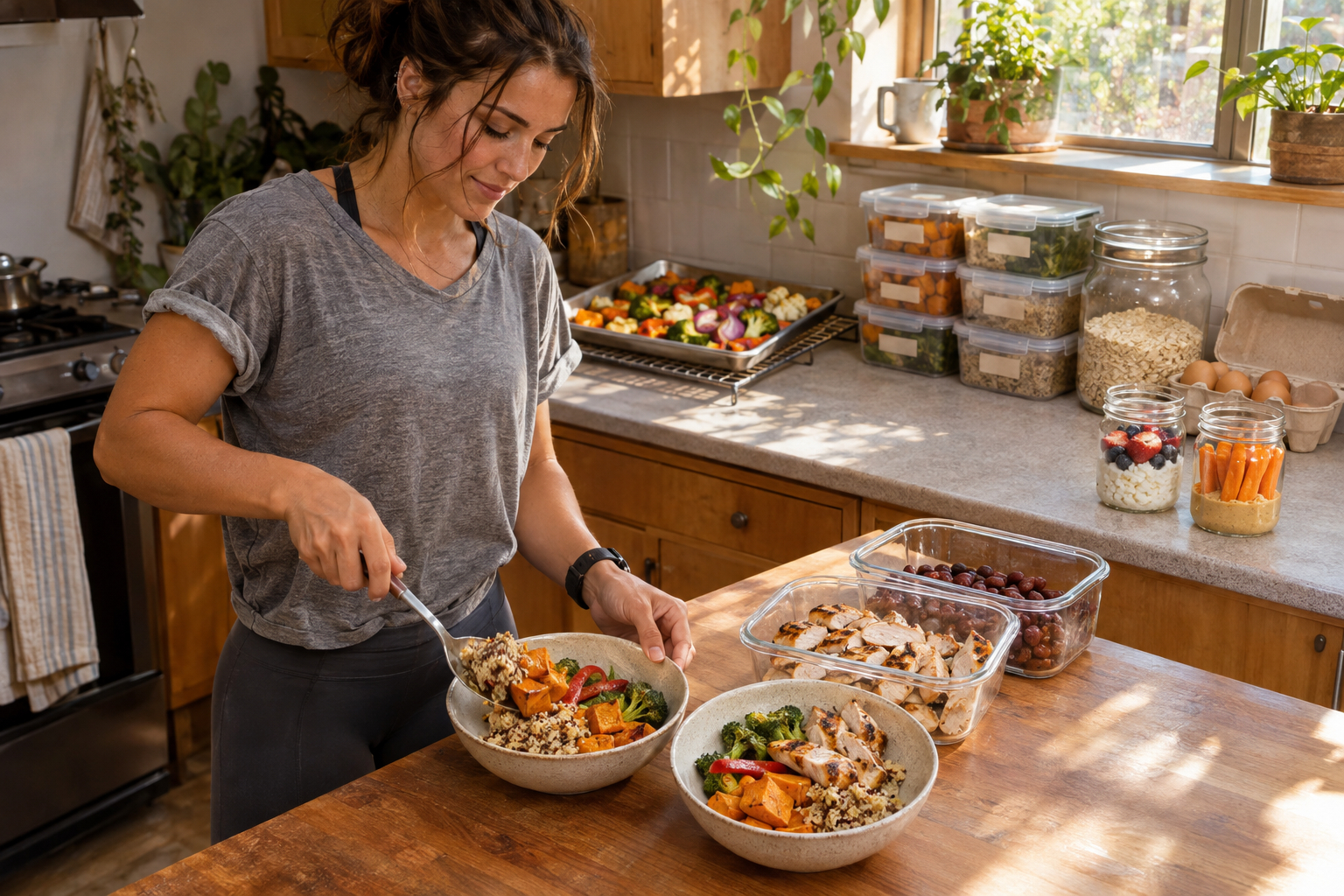
Use a small set of templates to cover breakfasts, lunches, dinners, and snacks. For breakfast, pair oats or whole-grain toast with Greek yogurt or eggs and a piece of fruit. Lunches can follow a bowl formula: cooked grain, leafy greens, roasted vegetables, and a protein like beans or grilled chicken. Dinners work well with a lean protein, a starchy side such as sweet potato or quinoa, and a quick salad or steamed greens.
- Quick combos: scrambled eggs + toast + banana; canned tuna + brown rice + steamed broccoli.
- Snack ideas: cottage cheese with berries; hummus with carrot sticks; handful of nuts and an apple.
Those combos are flexible: swap proteins, change grains, or season differently to keep variety without complexity.
Shopping and prep shortcuts that save time
Plan one 30–60 minute prep session each week to cook a batch grain, roast a tray of vegetables, and portion proteins. Choose a mix of shelf-stable staples—canned beans, frozen vegetables, whole grains—and a few fresh items that keep well. Store prepped components separately so you can assemble meals quickly and adjust portions based on hunger and workout intensity.
Label containers with dates and use clear storage to avoid waste. Small habits like this turn a few cooked ingredients into reliable meals all week long.
Conclusion
Adopt simple templates and a once-a-week prep session to keep meals effortless and nourishing. Focus on balanced plates that pair protein with carbs and vegetables for steady energy. These small shifts make home workouts easier to support through food, week after week.