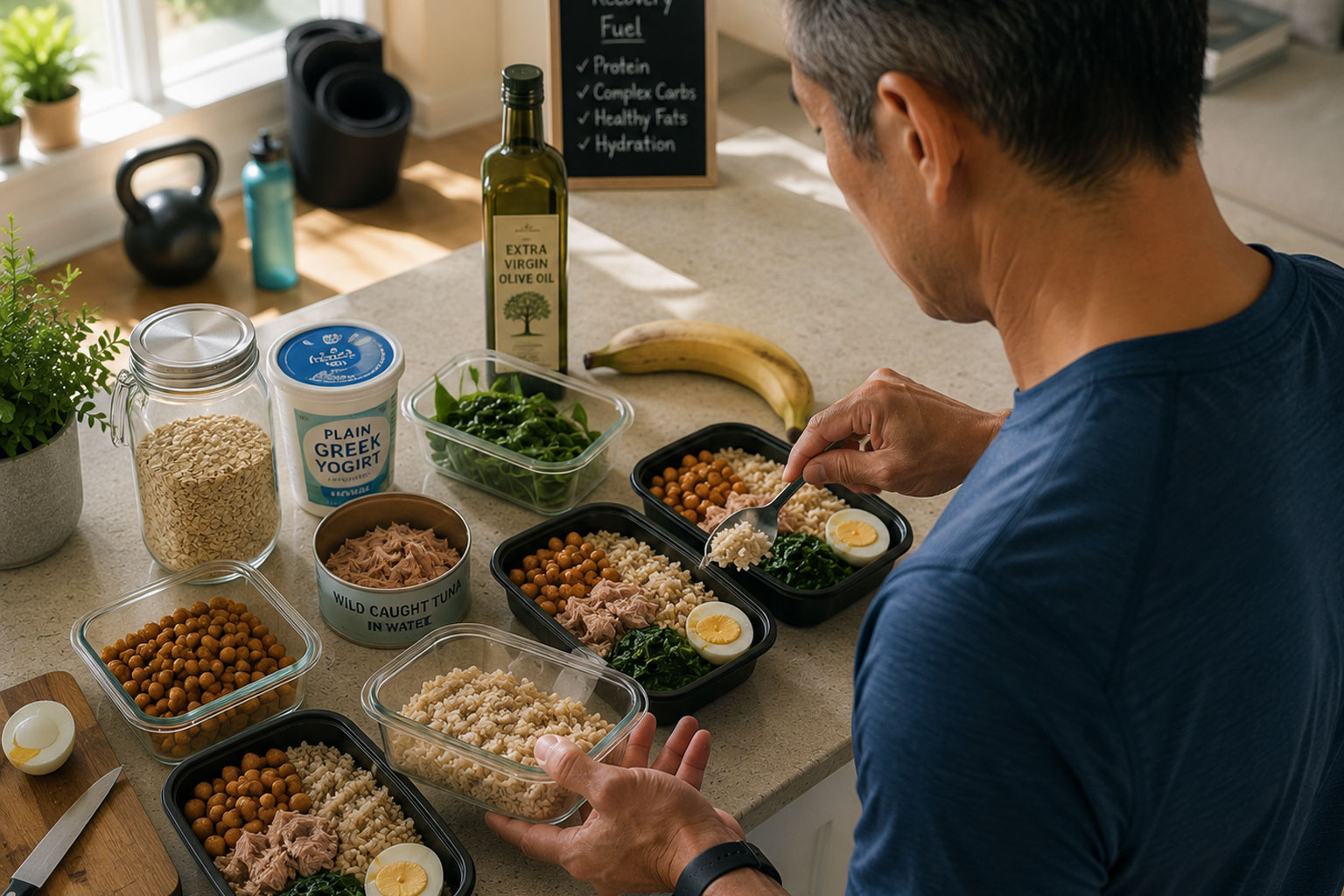
Recovering well after a home workout starts with consistent, simple meals that prioritize protein, carbohydrates, and micronutrients. Using pantry and fridge staples reduces decision fatigue and keeps nutrition practical for busy schedules. This article outlines how to assemble balanced recovery plates, what to prioritize in portions and timing, and easy examples you can rotate weekly. Emphasis is on flexible combinations rather than strict recipes, so you can adapt to what’s on hand. Follow these principles to improve recovery, sustain energy, and support training progress at home.
Staples That Build Balanced Recovery Meals
Start with reliable protein sources like canned tuna, eggs, Greek yogurt, or legumes, which are easy to store and prepare. Pair protein with a carbohydrate source for glycogen replenishment — think rice, potatoes, whole-grain pasta, or oats. Add vegetables, fresh or frozen, to supply fiber and micronutrients that support repair and immune function. Include a healthy fat such as olive oil, nuts, or avocado to aid satiety and vitamin absorption.
Keep a small rotation of these staples so you can throw meals together quickly after training. Swapping items seasonally or by sale keeps variety without complicating choices.
Portioning and Timing for Muscle Repair
A practical target is to include 20–35 grams of protein at a post-workout meal, adjusted for body size and total daily needs. Carbohydrate portions should match workout intensity; a moderate session needs a sensible serving of rice, bread, or fruit. Eating within two hours of training optimizes recovery, but focus on consistent intake across the day rather than single-meal perfection. Hydration and electrolyte balance are often overlooked but matter especially when sweat losses are significant.
Use simple measures—hand portions or scoop sizes—to keep portions consistent without scales. Track how you feel and tweak timing, especially on high-volume training days.
Simple Meal Examples and Prep Tips
Combine scrambled eggs with spinach and a slice of whole-grain toast for a quick recovery breakfast rich in protein and carbs. For lunch try a grain bowl: cooked quinoa, roasted chickpeas, mixed greens, and a tahini dressing for balanced macros and easy prep. Keep a batch of cooked rice or roasted vegetables in the fridge to speed assembly of dinners after evening workouts. Snack options like yogurt with fruit, cottage cheese with nuts, or a banana with peanut butter bridge the gap between meals.
Use weekly prep sessions to cook staples and portion them into containers for grab-and-go recovery. Small habits like labeling portions and keeping sauces separate maintain flavor and flexibility.
Conclusion
Consistent recovery meals built from pantry and fridge staples make it easier to support training and daily performance. Prioritize protein, suitable carbohydrates, vegetables, and simple fats, and adjust portions to your workout demands. With a small set of go-to combinations and basic prep, at-home recovery nutrition becomes sustainable and effective.