Creating consistent progress with home workouts depends as much on food choices as on exercise selection. Small adjustments to what you eat and when you eat can lift energy, sustain intensity, and speed recovery. This article outlines practical, easy-to-follow strategies using common ingredients and realistic meal patterns. The aim is to help you make sustainable changes that support both performance and daily life.
Fuel the Session
Start by aligning meal timing with workout intensity and duration. For moderate sessions, prioritize a balanced snack containing carbohydrate and protein about 30 to 90 minutes before exercise to provide steady energy and reduce muscle breakdown. For longer or high-intensity training, include slightly more carbohydrates and a little fluid to maintain blood glucose and delay fatigue. Keep portions moderate so you avoid discomfort while exercising.
Choose foods that digest well for you and test timing on noncritical workout days. Simple options like a banana with yogurt or oatmeal with nut butter are practical and portable. Adjust timing based on whether you train fasted or after a meal.
Snacks and Small Meals
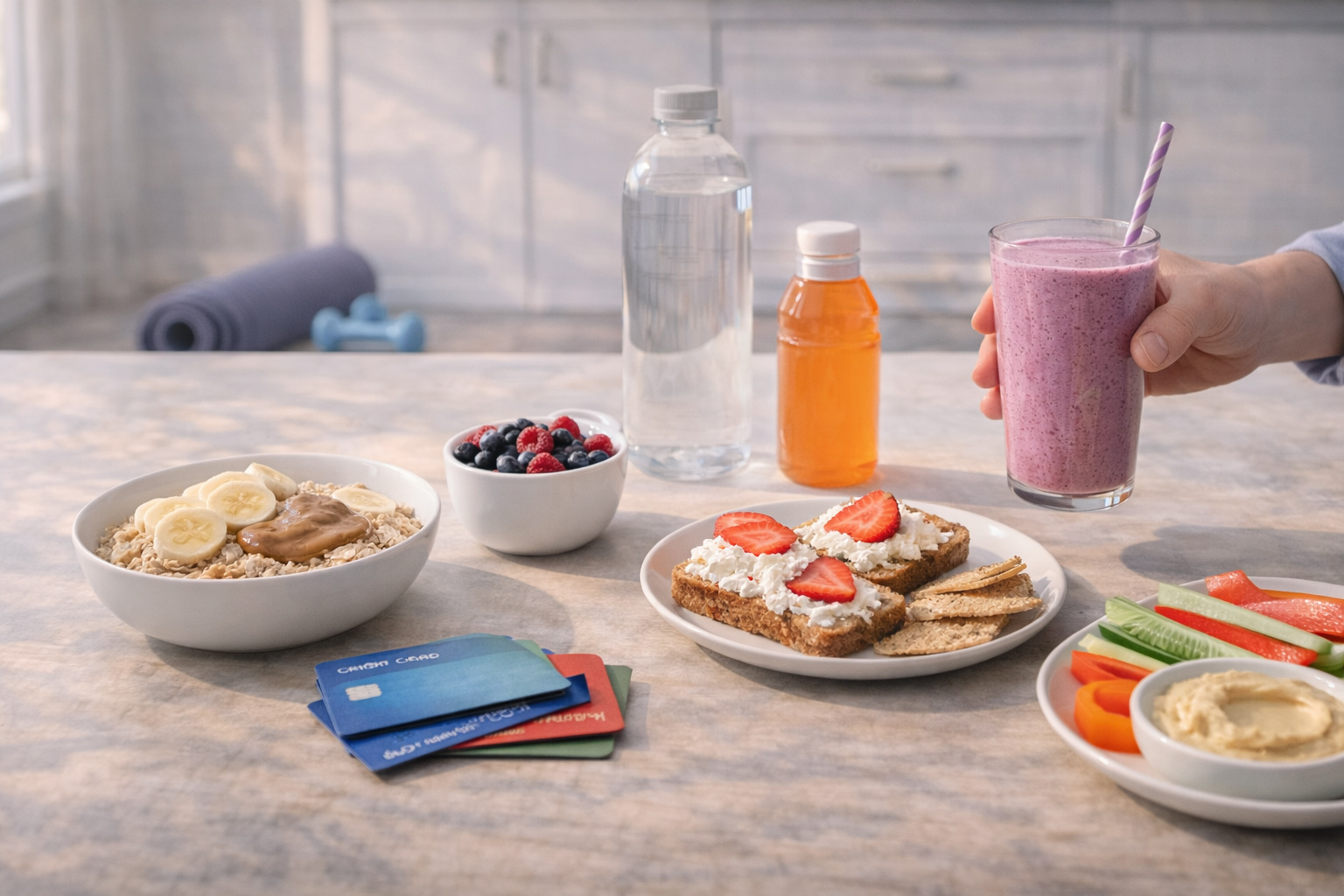
When you’re training multiple times a week, focus on snacks that combine protein and carbohydrates to support recovery and keep energy steady. Examples include whole-grain toast with cottage cheese, a small smoothie with fruit and protein powder, or hummus with whole-grain crackers and vegetables. These combinations support muscle repair and replenish glycogen without requiring large meals between sessions. Aim for 150–300 calories depending on activity level and personal needs.
Prioritize nutrient-dense choices over empty calories to maximize satiety and micronutrient intake. Rotate options so variety supplies vitamins and minerals important for performance, such as iron, magnesium, and vitamin D.
Hydration and Recovery
Hydration influences perceived exertion, concentration, and recovery, so treat fluids as part of your fueling plan. Water is usually sufficient for most short workouts, while electrolyte-containing drinks can help after long or very sweaty sessions. After training, include a recovery meal or snack with both protein and carbohydrates within two hours to support repair and restore energy stores. Whole-food sources are preferable, but convenience blends work when necessary.
Prioritize sleep and consistent meal patterns alongside hydration to amplify recovery benefits. Monitor how you feel across workouts and tweak fluid and recovery choices accordingly for best results.
Conclusion
Small, consistent changes in what and when you eat can noticeably improve at-home workout quality and recovery. Focus on balanced pre-workout snacks, protein plus carbohydrate for recovery, and sensible hydration throughout the day. Over time these habits build better performance and sustainable progress.