Consistent, simple cooking habits are one of the most reliable ways to support home fitness goals. Small changes in how you plan and prepare meals can improve energy, recovery, and long-term progress without adding complexity. This article outlines practical meal-building principles, quick templates for busy days, and planning techniques that fit an active at-home lifestyle. Read on for straightforward, sustainable approaches you can start using this week.
Core Meal Building Blocks
Effective meals start with three primary components: a quality protein source, a fiber-rich carbohydrate or vegetable base, and a source of healthy fats. Balancing these elements helps stabilize blood sugar, supports muscle repair, and keeps you satisfied between workouts. Prioritize whole foods such as lean proteins, whole grains, legumes, and an abundance of vegetables to maximize nutrient density. Keep seasoning and simple dressings on hand to make repeated choices more enjoyable.
- Protein: eggs, chicken, tofu, fish, legumes.
- Carbs: brown rice, quinoa, sweet potato, whole-grain pasta.
- Fats and extras: olive oil, avocado, nuts, seeds.
By combining these blocks in different proportions you create variety without reinventing the wheel. This approach reduces decision fatigue and ensures each meal contributes to recovery and performance.
Simple Meal Templates for Busy Days
Having a few repeatable meal templates makes it easy to eat well when time is tight. Templates like a protein-forward bowl, a hearty salad with grains, or a quick stir-fry allow you to swap ingredients based on what’s available. These frameworks also make grocery shopping and batch cooking more efficient, since you can prepare components that work across several meals. Aim for one template you enjoy for breakfasts, one for lunches, and one for dinners.
- Grain bowl: base + protein + veg + sauce.
- Stir-fry: protein + veg + quick sauce over rice or noodles.
- Frittata or omelet: eggs + veg + optional cheese or beans.
Rotate templates weekly to avoid monotony while keeping prep simple and predictable. Small ingredient swaps keep flavors fresh without extra planning.
Practical Planning and Batch Prep
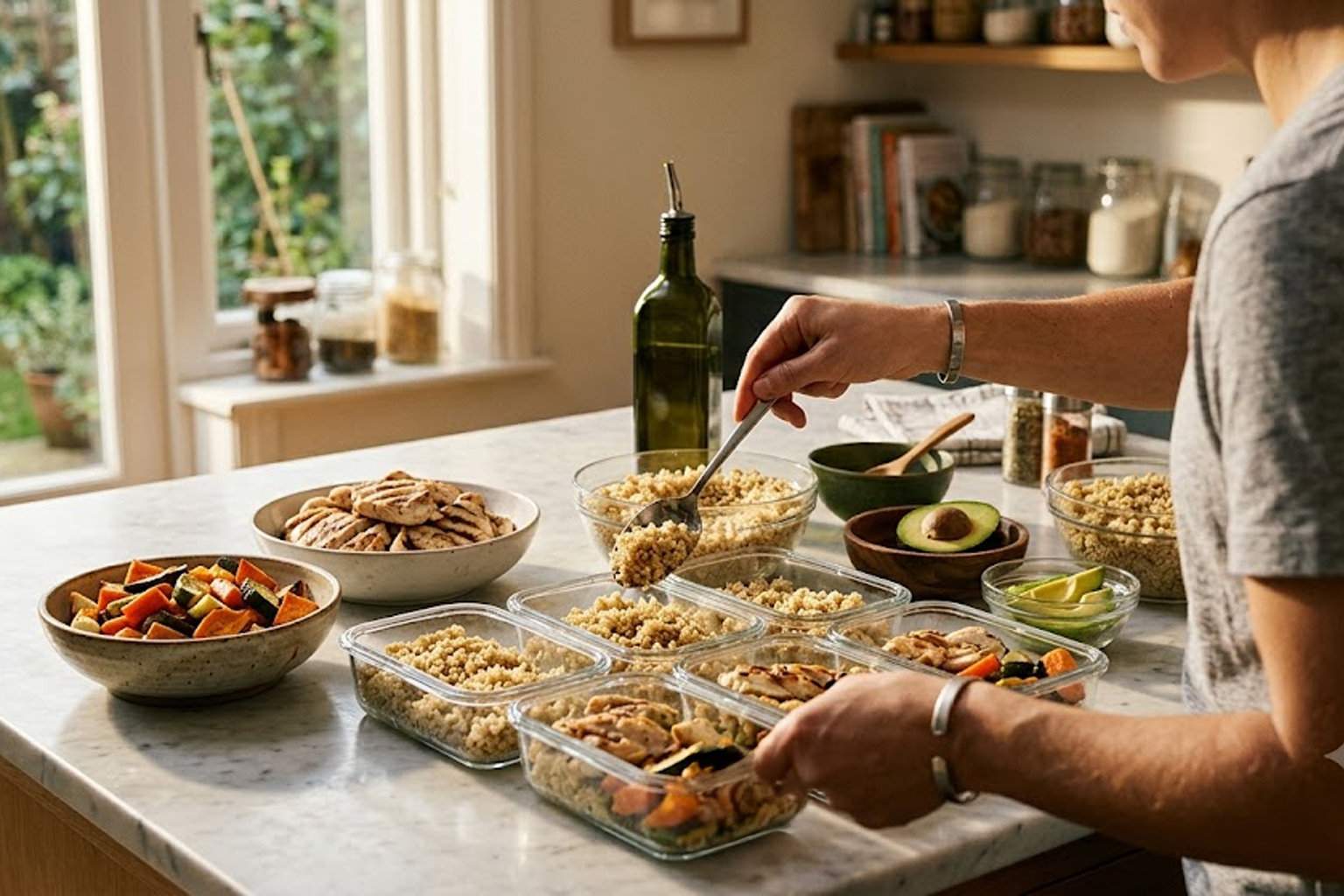
Batch cooking core components like roasted vegetables, a grain batch, and a cooked protein streamlines meal assembly during the week. Set aside one or two prep sessions that fit your schedule and portion meals into reusable containers for grab-and-go access. Use frozen vegetables and pre-washed greens when short on time to preserve convenience. Label containers with dates and mix components at mealtime to maintain texture and flavor.
- Cook once, eat multiple ways to save time.
- Portion by need to control serving sizes.
- Freeze extras for future busy weeks.
Consistent planning reduces stress and improves adherence to healthy eating habits, which in turn supports consistent training progress and recovery. Small, repeatable routines are more effective than perfect but unsustainable efforts.
Conclusion
Adopting a few reliable cooking habits makes nutritious eating accessible and sustainable for home fitness. Focus on building balanced meals, keeping simple templates, and using batch prep to save time and maintain variety. Over weeks and months, these small routines compound into better energy, recovery, and progress.