After a home workout the last thing most of us want is a long recipe to follow. Five versatile ingredients—proteins, a grain or tuber, a vegetable, a healthy fat, and a flavor element—cover most recovery needs without special shopping. This minimal approach helps you rebuild glycogen, supply amino acids for repair, and keep dinner prep under thirty minutes. Below are practical uses for each ingredient, three easy dinner builds, and portion tips that actually fit a busy evening.
Five ingredients to keep on hand
Pick items that store and cook reliably: a lean protein (chicken, canned fish, or tofu), a whole grain or potato, a sturdy vegetable, an oil or nut, and a simple sauce or herb for flavor. Each plays a role: protein for muscle repair, carb for energy restoration, and vegetables for micronutrients and digestion. Healthy fats support absorption of certain vitamins and add satiety so you don’t graze later. Rotate brands and forms—frozen vegetables, jarred sauces, and shelf-stable proteins reduce friction in busy weeks.
- Protein: skinless chicken breast, canned tuna, or firm tofu.
- Carb: brown rice, quinoa, or sweet potatoes.
- Vegetable: frozen greens, bell peppers, or broccoli florets.
- Fat: olive oil, avocado, or a spoonful of nut butter.
- Flavor: salsa, soy sauce, lemon, or dried herbs.
Keeping those five categories stocked makes it easy to improvise. Swap items depending on what’s on sale or what you already own.
Combine them into balanced plates
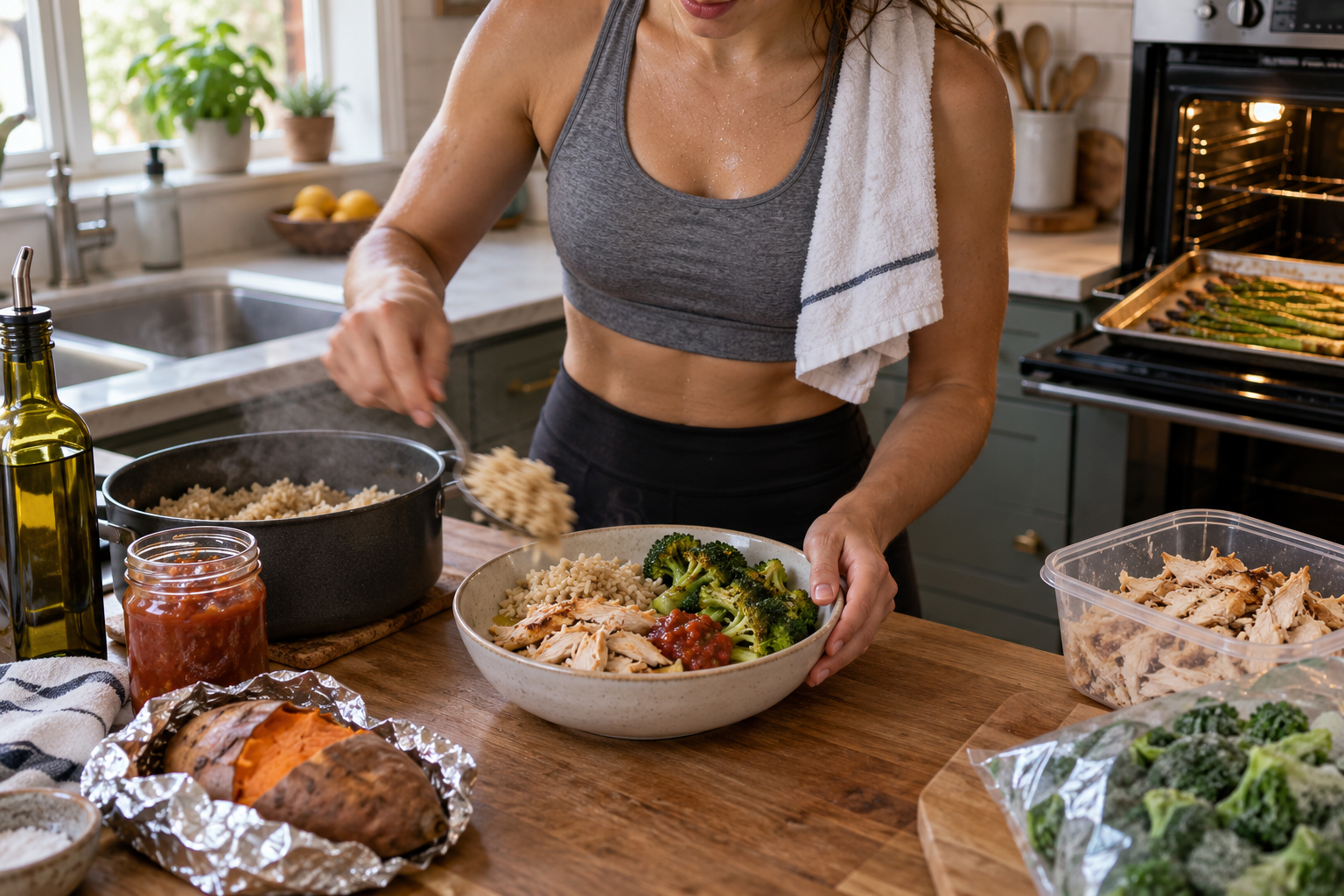
Start with a base: grain or potato, then add your cooked protein and a generous portion of vegetables. Finish with a fat and a flavoring to improve digestion and make the meal satisfying. For example, roast a sweet potato, pan-sear salmon, toss wilted spinach with lemon and olive oil, and you have a recovery dinner in under 25 minutes. The plate ratio that works for most people is roughly 1/3 protein, 1/3 carbs, and 1/3 vegetables, adjusted for hunger and workout intensity.
These combinations also travel well as leftovers if you meal-prep a couple portions. Small adjustments—extra carbs after a long session, a bit more protein on strength days—keep the plan responsive.
Three dinner builds you can make tonight
Here are three quick templates using the five staples. Each example focuses on speed and straightforward technique so you can cook right after training.
- Grain bowl: warm brown rice, shredded rotisserie chicken, roasted broccoli, drizzle olive oil, and a spoonful of salsa.
- One-pan hash: cubed sweet potato, crumbled tofu or turkey, diced peppers, sautéed in oil with smoked paprika; finish with avocado slices.
- Sheet-pan plate: salmon fillet and asparagus on a tray with lemon and oil, roast while quinoa cooks; serve together.
These builds let you swap ingredients without breaking the recovery pattern. Keep one go-to build you enjoy to remove decision fatigue on busy days.
Timing and portion tips
Aim to eat within two hours after moderate workouts and sooner after long or intense sessions to support repair. Drink water with the meal and include a carb and protein together to maximize refueling. Portions depend on goals—add more carbs for endurance work or bump protein slightly for heavy strength sessions.
Small routines—grill extra protein, batch-cook grains—save time later. With five reliable ingredients you’ll reduce dinner stress and keep recovery consistent.
Conclusion
Stock five adaptable staples and you can assemble recovery-focused dinners in twenty to thirty minutes. Simple plates built from a protein, a carb, a vegetable, a fat, and a flavor get you the nutrients you need without fuss. That steady, repeatable approach makes sticking to post-workout nutrition realistic on weeknights.