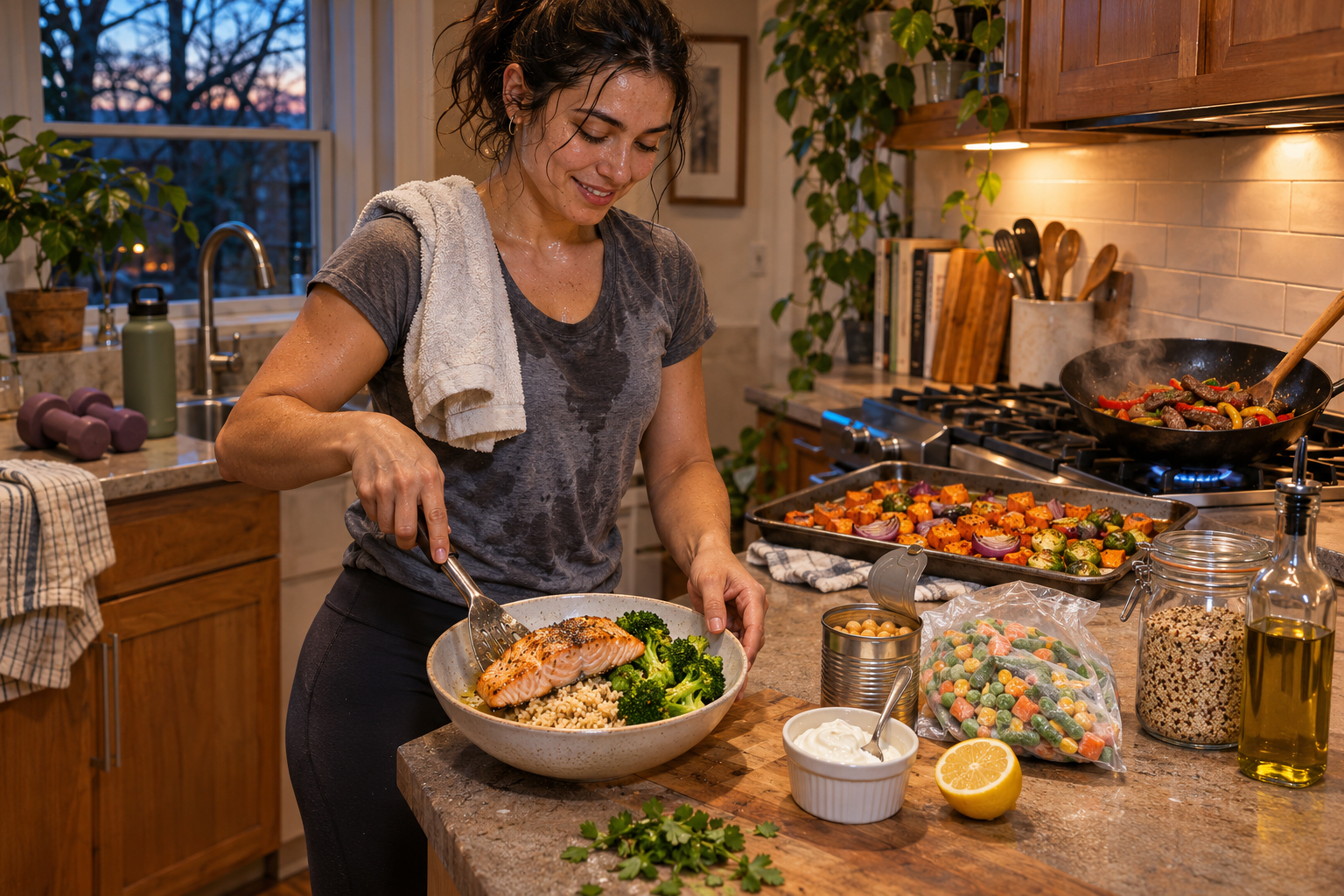
After a home workout you want a dinner that helps rebuild muscle without turning cooking into a second session. The right mix of protein, carbohydrate and a little fat gets repair started and energy restored. Small changes to what you already cook make a big difference for recovery and next-day performance. This piece offers practical menus you can assemble from common pantry and fridge staples.
What to prioritize on your plate
Start with protein: aim for a serving that fits your appetite and training intensity, roughly 20–40 grams for most people. Add a starchy carbohydrate to replenish glycogen and support recovery—potato, rice, pasta, or whole grains work well. Include a colorful vegetable or salad to deliver micronutrients and fiber, and finish with a modest source of healthy fat to improve satiety. These components together help muscle repair, calm inflammation, and restore energy.
Keep portion sizes flexible: heavier sessions call for the upper end of protein and carbs, lighter ones need less. Matching food to how you feel makes these menus sustainable night after night.
Three quick evening menu templates
Template 1: A simple bowl—grilled or pan-seared protein over brown rice with steamed broccoli and a drizzle of olive oil. Template 2: Sheet-pan night—roasted salmon or tofu with cubed sweet potato and mixed vegetables, tossed with a lemon-herb dressing. Template 3: Stir-fry—lean beef or tempeh stir-fried with bell peppers and snap peas, served on quinoa or noodles with a splash of soy and sesame.
- Quick swaps: canned beans for added protein, frozen veggies to save time, instant grains when minutes matter.
- Flavor lifts: citrus, mustard, herbs, and a spoonful of yogurt or tahini.
Each template supports recovery without complicated recipes—mix and match based on what’s in your kitchen and how much time you want to spend.
Timing and small swaps that matter
You don’t need to eat immediately after a workout, but getting a balanced meal within two hours is practical for most home trainers. If dinner is several hours away, a small snack combining protein and carbs—Greek yogurt and fruit, a turkey sandwich, or a protein shake with a banana—bridges the gap. Swap highly processed snacks for whole-food choices to get more nutrients for the same calories and better satiety.
Hydration and a bit of sleep-friendly carbohydrate in the evening can also help overnight repair. Make simple habits—batch-cook grains, keep a jar of roasted chickpeas, and freeze single portions of cooked protein—to reduce friction on busy nights.
Conclusion
Choose a protein, add a starchy carbohydrate, and include vegetables to create a recovery-focused dinner. Use the three templates as starting points and make small swaps to fit your pantry and schedule. Consistency matters more than perfection—steady, simple meals drive better recovery and training results.