Consistent nutrition makes at-home workouts more productive and sustainable. Building simple, repeatable meal plans reduces decision fatigue and keeps energy steady. This article outlines practical daily fuel plans focused on balance, convenience, and recovery. Use these templates to save time and support performance across your training week.
Core Meal Templates
Start with three reliable daily plates: a breakfast that pairs protein and whole grains, a midday lunch centered on vegetables and lean protein, and a dinner emphasizing complex carbs and a vegetable side. Include a pre- or post-workout snack when workouts are short or intense to bridge gaps and accelerate recovery. Portion sizes depend on goals; aim for a palm-size protein portion, two cupped hands of vegetables, and a fist-sized carbohydrate serving per meal as a starting point. Hydration and small sources of fat, like nuts or olive oil, round out each plate and support sustained energy.
- Breakfast: Greek yogurt, oats, berries, and a spoon of nut butter.
- Lunch: Roast chicken, quinoa, mixed greens, and an olive oil dressing.
- Dinner: Salmon, sweet potato, steamed broccoli, and a small side salad.
Rotate easy swaps like canned beans, frozen vegetables, and whole-grain wraps to keep meals varied without extra cooking. These simple templates scale for different calorie needs.
Timing and Portions
Align meal timing with your workouts: aim to eat a balanced meal two to three hours before moderate exercise, or a small carbohydrate-rich snack 30 to 60 minutes before short sessions. After training, prioritize 20 to 40 grams of protein and some carbohydrates within an hour to support muscle repair. Adjust portions on heavier training days with more carbohydrates and on rest days with slightly lower totals. Consistent timing improves sleep and recovery by stabilizing blood sugar and appetite.
Track how you feel during sessions and tweak timing accordingly. Small changes often yield the best sustainable improvements.
Practical Prep and Staples
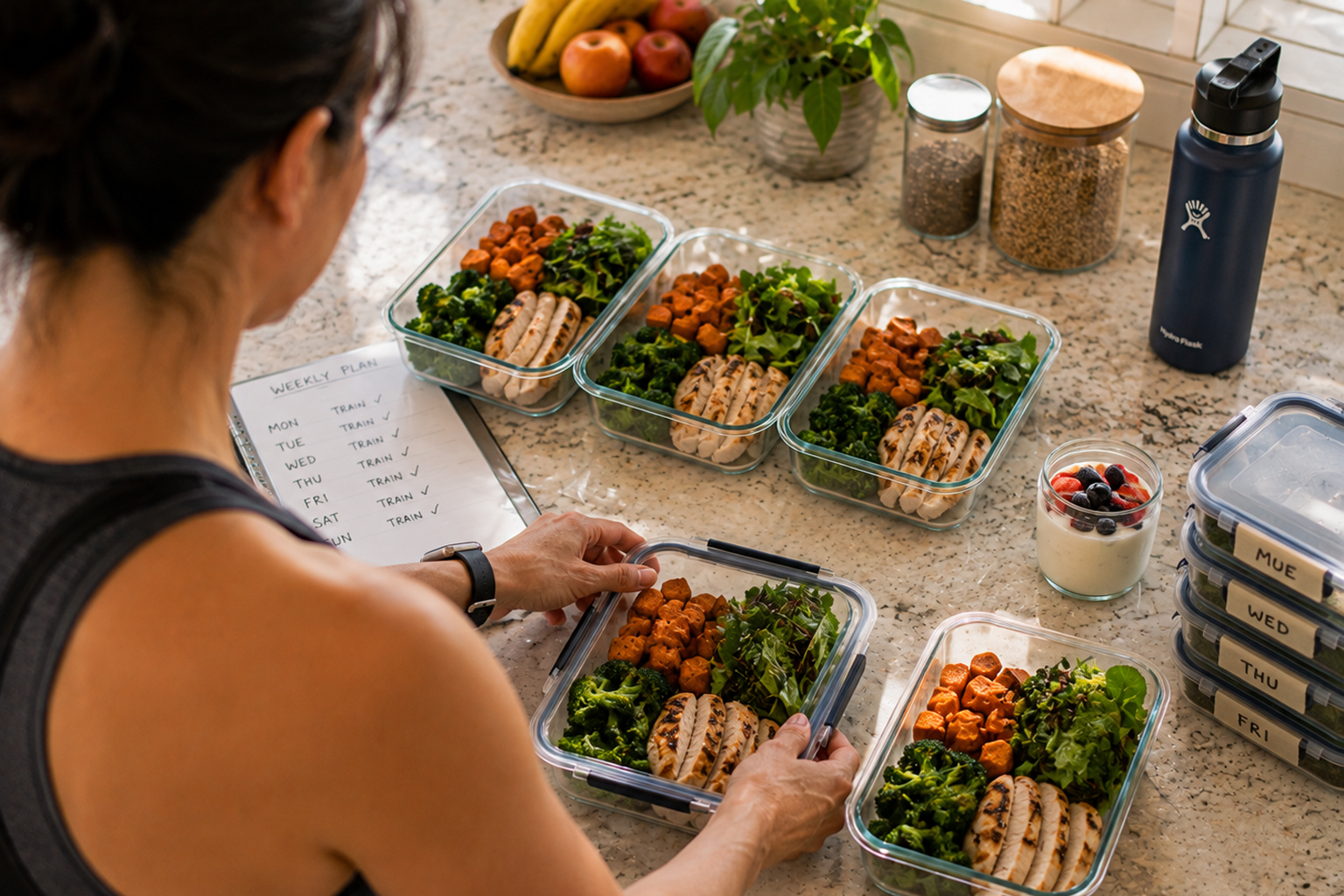
Batch cooking and simple assemblies reduce daily work: roast a tray of mixed vegetables, cook a pot of grains, and grill or bake a protein source twice a week. Keep staples like eggs, frozen fish, canned legumes, and whole-grain pasta on hand to assemble quick meals. Use herbs, citrus, and spice blends to vary flavor without extra calories or effort. Investing sixty to ninety minutes once or twice weekly can create several days of ready meals.
- Staples: eggs, canned beans, frozen vegetables, whole grains, and olive oil.
- Prep tip: roast a large tray of vegetables and portion into containers.
- Flavor hacks: lemon, garlic, chili flakes, and dried herbs.
Pack meals in clear containers so grab-and-go decisions are easier. Small prep habits compound into consistent nutrition that supports your training.
Conclusion
Consistent, simple meal plans make at-home training more effective and sustainable. Start with the templates above and adapt portions to your goals and schedule. Over time, the habits will support better energy, performance, and recovery.