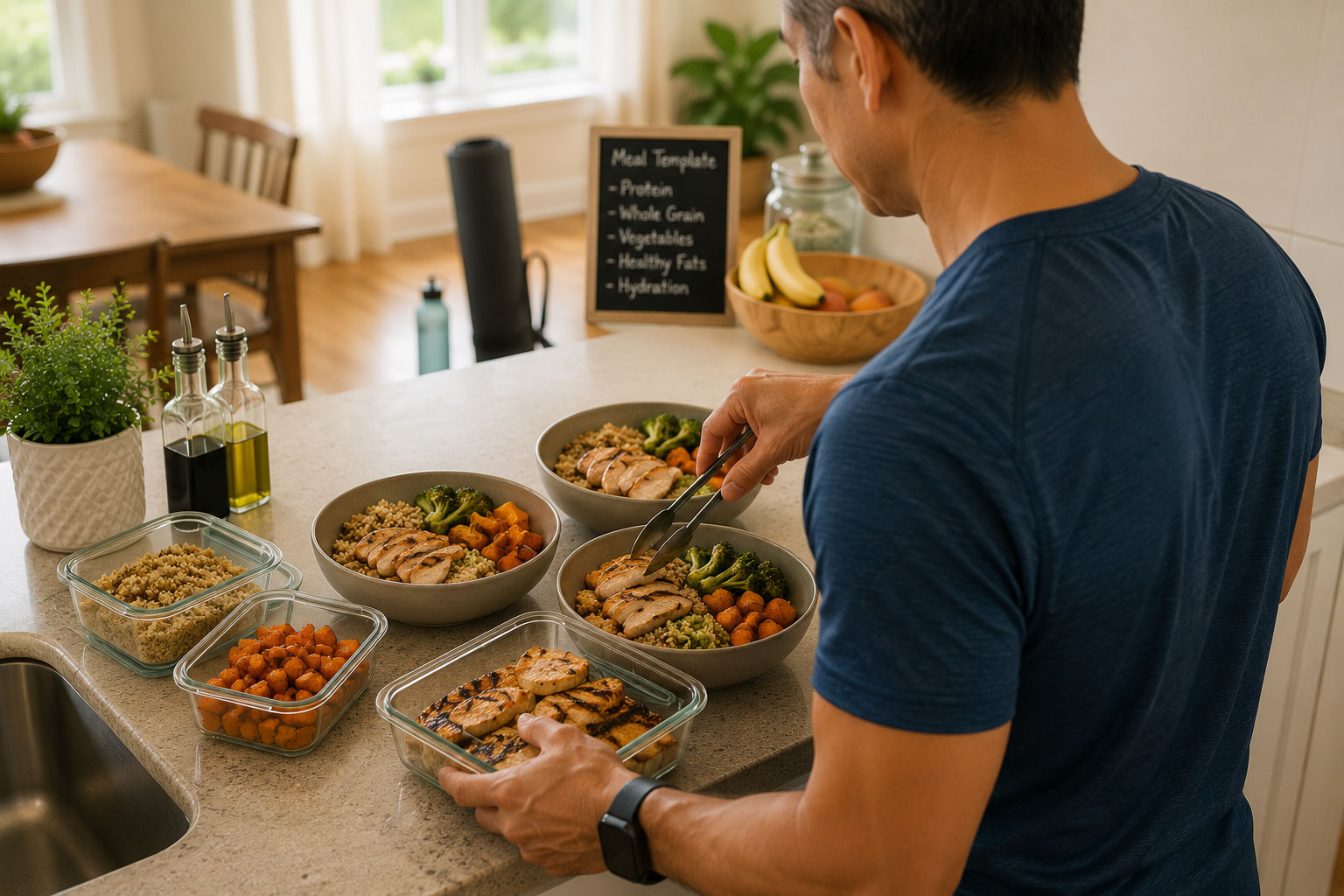
Consistent energy and recovery at home start with simple, repeatable meal blueprints that fit busy schedules. These frameworks focus on nutrient balance rather than strict recipes, so you can adapt ingredients you already keep on hand. The goal is to make meals that support training, recovery, and overall wellbeing without extra complexity. Read on for practical templates, timing tips, and easy swaps to keep nutrition consistent.
Why a Balanced Blueprint Works
A meal blueprint organizes portions of protein, carbohydrates, fats, and vegetables so every plate delivers what your body needs for workouts and recovery. This approach reduces decision fatigue by using categories instead of exact recipes, which makes it easier to cook more often. Balanced plates also help manage hunger, stabilize blood sugar, and support steady energy throughout the day. Over time, consistent structure improves adherence and performance at home.
- Protein: lean meats, legumes, eggs, dairy, or plant alternatives.
- Carbohydrates: whole grains, starchy vegetables, or fruit.
- Fats and veg: healthy oils, nuts, seeds, and colorful vegetables.
Using these categories keeps shopping and prep straightforward, and the portions can be adjusted to match activity levels. It also makes leftovers easier to repurpose for multiple meals.
Practical Templates to Build Meals
Start with simple templates you can mix and match across the week. For example: a grilled protein + roasted vegetables + whole grain, or a bowl with legumes + greens + healthy fat and a grain. Templates reduce the need for new recipes and allow fast swaps — change the spice, grain, or vegetable to create variety. They work especially well when you batch-cook components like grains and proteins ahead of time.
- Post-workout plate: lean protein, quick carbs, and a small vegetable portion.
- Low-intensity day: moderate protein, larger vegetable portion, and fewer dense carbs.
Adapting templates to your daily training load keeps fueling efficient and purposeful without extra cooking time.
Timing and Portion Tips for Energy
Meal timing should reflect your training schedule: aim for a balanced meal 2–3 hours before exercise and a protein-focused snack or meal within an hour after. Portions shift with intensity — increase carbohydrate portions around longer or more intense sessions and prioritize protein for recovery. Hydration and simple electrolyte choices also matter, especially when sweat loss is high.
Keep portions moderate and consistent to maintain steady energy and avoid large post-meal lulls. Small adjustments week to week help you find what feels best for performance and daily life.
Conclusion
Simple, repeatable meal blueprints make nutritious eating sustainable and supportive of home training. Focus on balanced plates, practical templates, and timing that matches your workouts. Small, consistent choices lead to better energy, recovery, and long-term results.