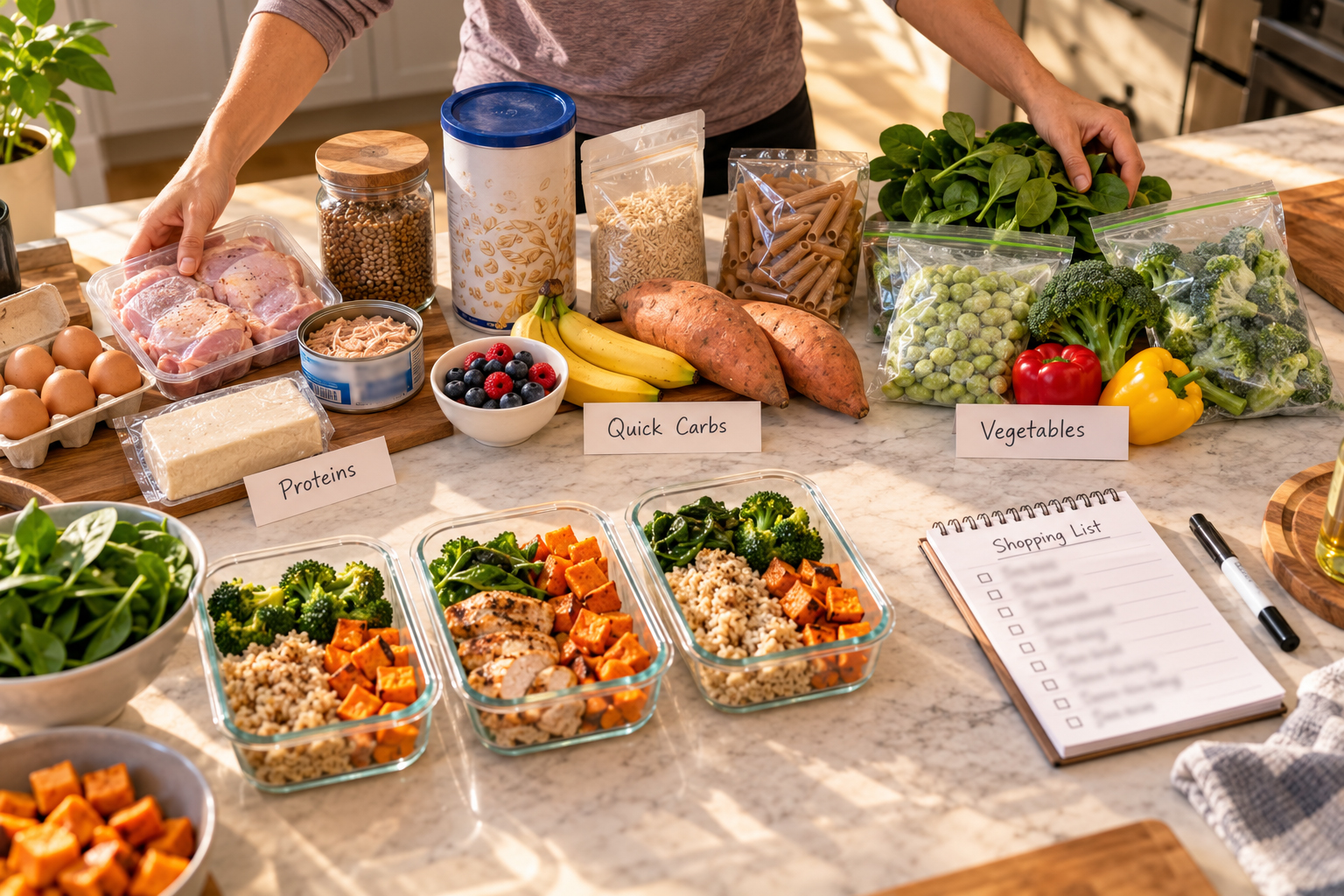
Having a few reliable grocery habits makes it far easier to eat well around home workouts. Start by thinking in terms of components—protein, a quick carbohydrate, and something fibrous or leafy—and buy staples that fit those slots. Keep amounts realistic for your household so food gets used rather than wasted. Small, consistent choices at the store remove decision fatigue when it’s time to cook.
Shop Protein First
Put protein at the top of your list and you’ll build every meal around recovery and strength. Pick two or three options you enjoy: one lean animal option, one plant-based choice, and one convenient shelf-stable or frozen item. That could be chicken thighs, canned tuna or salmon, lentils or chickpeas, and a bag of frozen edamame or pre-cooked tofu. Having variety prevents boredom and makes it easy to pair protein with whatever carbs you have on hand.
Buy sizes that match how often you cook and how quickly you’ll use them. If you live alone, choose smaller packages or plan to freeze portions. If you cook for others, bulk buys plus simple recipes keep costs down and meals consistent.
Choose Versatile Carbs and Veggies
Carbs and vegetables should feel like tools, not rules. Pick a few quick-cooking grains or starches—rice, quick oats, or whole-grain pasta—and two to three vegetables that can be roasted, steamed, or tossed raw in a salad. Root vegetables and sturdy greens are forgiving and last longer on the shelf. Frozen vegetables are a smart backup when fresh produce ages faster than expected.
- Quick combos: rice + beans + sautéed spinach
- One-pan idea: roasted sweet potato, chicken, and broccoli
- Snack fix: yogurt, berries, and a spoonful of oats
These staples let you assemble restorative meals in 15–30 minutes without a recipe. That speed is what keeps post-workout nutrition consistent.
Make Small, Repeatable Routines
Routines beat willpower. Block one shopping trip a week or two small trips to top up perishables, and use a short list that rotates staples. Prep one or two elements after shopping—cook a batch of grains, roast a tray of vegetables, or portion proteins—so weekday cooking is low-effort. A simple routine reduces friction and keeps your kitchen ready for training days.
Focus on habits that fit your schedule rather than perfect meals. Over time, small consistent choices compound into better recovery, steadier energy, and fewer skipped workouts because you lacked a quick, nourishing option.
Conclusion
Small changes at the grocery store shift your whole-week nutrition without drama. Buy a few go-to proteins, versatile carbs, and reliable vegetables, then prep minimally to save time. Those practical moves make it easier to fuel every workout and recover well.