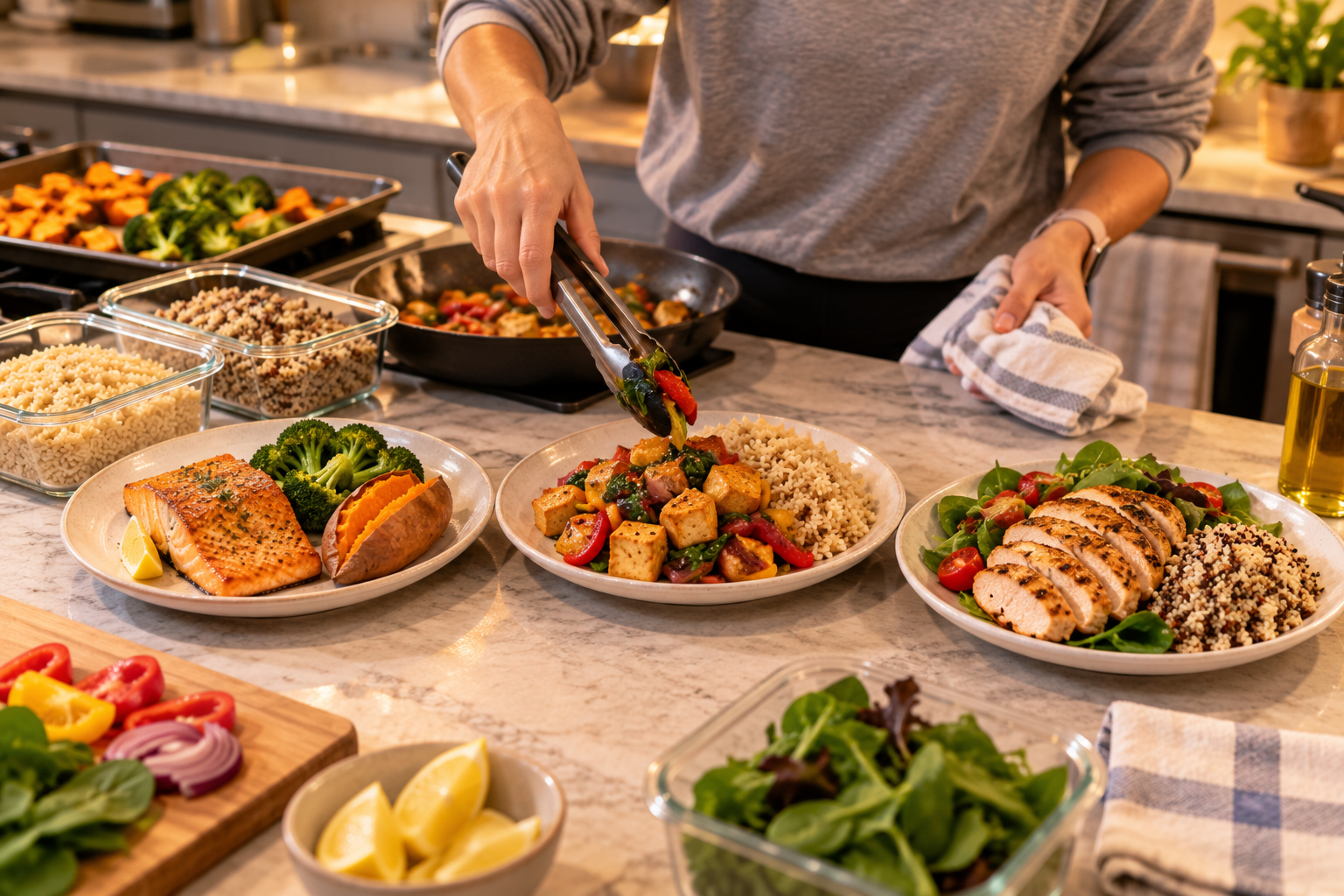
After an at-home training session, the easiest way to support recovery is to think in plate patterns rather than recipes. Center dinner on a solid protein, add two portions of non-starchy vegetables, and finish with a modest serving of starch or whole grain. That framework keeps shopping simple and lets you mix flavors without fuss. Below are practical choices and quick examples you can rotate through a busy week.
Choose a Strong Protein Core
Start each plate with 20–40 grams of protein depending on your appetite and workout intensity. Options include a palm-sized portion of grilled fish, a chicken breast, a serving of tofu, or a couple of eggs—whatever you can prepare quickly or batch-cook ahead. Protein supports muscle repair and helps you feel satisfied through the evening without excess calories. Aim for cooking methods that add flavor without heavy sauces, like roasting, searing, or a quick stir-fry.
Simple seasoning and a repeatable approach make this habit stick. Cook extra protein once or twice weekly to speed assembly on busy nights and reduce decision fatigue.
Add Veggies for Repair and Sleep-Friendly Nutrients
Vegetables bring fiber, micronutrients, and volume, which matters for recovery and digestion. Combine a leafy green salad, roasted cruciferous vegetables, or sautéed peppers and onions to get variety across the week. Include a colorful mix so you’re not relying on a single nutrient source and to keep meals interesting without extra work. Vegetables also add fluids and electrolytes that help rehydrate after sweat-heavy sessions.
Keep a couple of ready-to-eat veggie options in the fridge—washed greens and roasted trays store well and speed plating.
Include a Moderate Starch to Replenish Glycogen
A measured portion of starch—potato, rice, quinoa, or whole-grain pasta—complements the protein and vegetables. It helps restore glycogen and keeps your next workout from feeling flat, especially after longer or harder sessions. Portion size depends on your goals: smaller if you’re managing weight, larger if you’re training frequently or intensely. Choose whole grains when possible for added fiber and a steadier blood-sugar response.
When time is short, batch-cook a grain and portion it into containers; reheating takes minutes and keeps dinners balanced without thinking.
Quick Plate Examples
Use these templates as starting points and swap proteins, veggies, or grains based on what’s in your kitchen. Each plate follows the protein-veg-starch pattern so you get consistent recovery benefits without complex recipes.
- Seared salmon, steamed broccoli, and a small baked sweet potato.
- Tofu stir-fry with mixed peppers, baby spinach, and brown rice.
- Grilled chicken, mixed greens salad with vinaigrette, and quinoa.
Rotate these combinations and adjust portions to match your energy needs. Simple swaps keep eating enjoyable and effective for recovery.
Conclusion
Thinking in protein, vegetables, and a modest starch simplifies post-workout dinners and makes consistent recovery practical. Small planning steps—batch cooking protein and grains—save time and reduce excuses. Stick with the pattern and tweak portions to fit your goals.