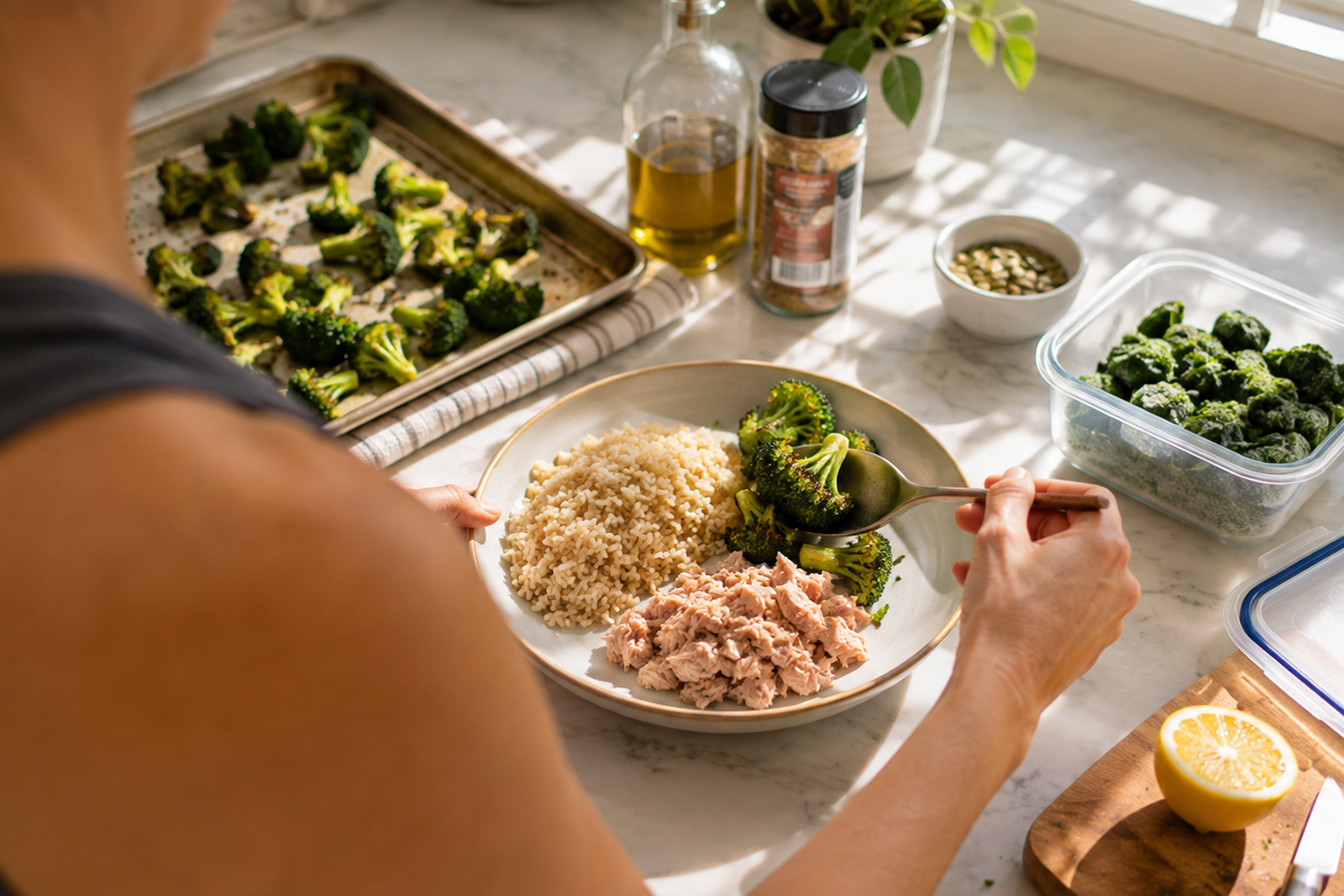
Keeping nutrition simple is one of the best ways to stay consistent with home workouts. You don’t need a long list of specialty items to build meals that support energy, recovery, and overall progress. With a few reliable staples and a clear plate template, you can assemble balanced meals in minutes. This article explains practical approaches to constructing plates from minimal ingredients.
Small changes add up, and simple systems reduce decision fatigue while improving food quality. Read on for pantry suggestions, plate templates, and basic prep routines.
Core principles for balanced plates
A balanced plate centers on three components: a source of protein, a vegetable or fruit for micronutrients and fiber, and a whole-food carbohydrate or healthy fat for sustained energy. Prioritize portion sizes that match your workout intensity and daily activity levels rather than chasing perfection. Aim for variety across the week so you hit different vitamins and minerals without complicating shopping. Keep seasonings and simple sauces on hand to make repeated ingredients feel different.
These principles make it easy to mix and match staples into satisfying combinations while supporting performance and recovery. Use them as rules of thumb rather than rigid formulas.
Pantry and fridge staples to keep
Stock items that are versatile, shelf-stable, and affordable to minimize waste and decision making. Consider canned beans, lentils, oats, rice, whole-grain pasta, frozen vegetables, eggs, yogurt, nut butter, and a lean protein you enjoy. Fresh produce can be rotated weekly, while frozen fruit and veg are nutritious backups that save time. Simple condiments like olive oil, vinegar, mustard, and a spice blend will elevate many dishes.
- Canned tuna or beans for quick protein.
- Frozen spinach, broccoli, and mixed berries for convenience.
- Whole grains like brown rice or rolled oats for energy.
With these staples you can construct balanced plates without special shopping trips. Keep a short list focused on flexibility and shelf life.
Three simple plate templates to use
Template one: breakfast bowl — oats or yogurt, fruit, a spoon of nut butter, and a sprinkle of seeds for protein and healthy fat. Template two: lunch plate — leafy greens or roasted veg, a grain or starchy veggie, and a portion of canned fish, beans, or grilled chicken. Template three: dinner sheet-pan — roasted vegetables, a whole grain or potato, and a seasoned protein cooked together for minimal cleanup. Each template can be adapted with what you have.
Rotating these templates across the week keeps meals predictable yet varied, ideal for consistent fueling around workouts.
Simple prep habits that save time
Set aside one short session a week to cook a grain, roast a tray of vegetables, and portion a protein source. Use batch-cooked staples to assemble meals in under five minutes on busy days. Labeling containers and keeping ready-to-eat ingredients at eye level reduces reliance on convenience foods. Small habits like chopping a lemon or pre-mixing a spice rub amplify flavor without extra work.
These routines lower the barrier to eating well and free more mental energy for training. Start with one habit and build from there.
Conclusion
Balanced plates made from minimal ingredients are achievable and sustainable for home workout routines. Focus on protein, vegetables, and a source of carbs or healthy fat, and keep versatile staples on hand. Small prep habits and simple templates will maintain consistency and support both energy and recovery.