Designing meals that support at-home training doesn’t have to be complicated or time consuming. A clear, repeatable blueprint helps you feel energized for workouts and recover efficiently afterward. Focusing on portions, protein, and mindful carbohydrate choices creates a steady foundation for performance and daily energy. Small, consistent changes to meals and snacks deliver measurable gains over weeks and months.
Core Meal Structure
Start each main meal with a protein source that matches your activity level and goals, since protein supports muscle repair and satiety. Add a portion of whole grains, starchy vegetables, or legumes for sustained fuel, especially before planned training sessions. Include two servings of colorful vegetables or a salad to supply fiber, micronutrients, and volume without excessive calories. A modest amount of healthy fat rounds out the plate and helps nutrient absorption while keeping meals satisfying.
Keep portions practical by using simple cues like palm-sized protein or cupped-hand carbs, which make home nutrition easier to maintain. Adjust serving sizes up or down based on how workouts feel and whether recovery is progressing.
Smart Snack Choices
Snacks bridge the gap between meals and can support performance when timed before or after exercise, depending on intensity and duration. Choose a combination of protein and carbohydrate such as yogurt with fruit, a nut butter and banana on whole-grain toast, or cottage cheese with berries to stabilize blood sugar. For evening workouts or longer sessions, include a slightly larger snack with more carbs to sustain effort and aid recovery. Hydration and electrolytes are also important, so pair snacks with water and consider a light electrolyte option after very sweaty sessions.
Rotate a handful of go-to snacks to avoid decision fatigue and to keep grocery lists short and predictable. Pre-portioning options into small containers saves time and reduces overeating.
Meal Timing and Practical Tips
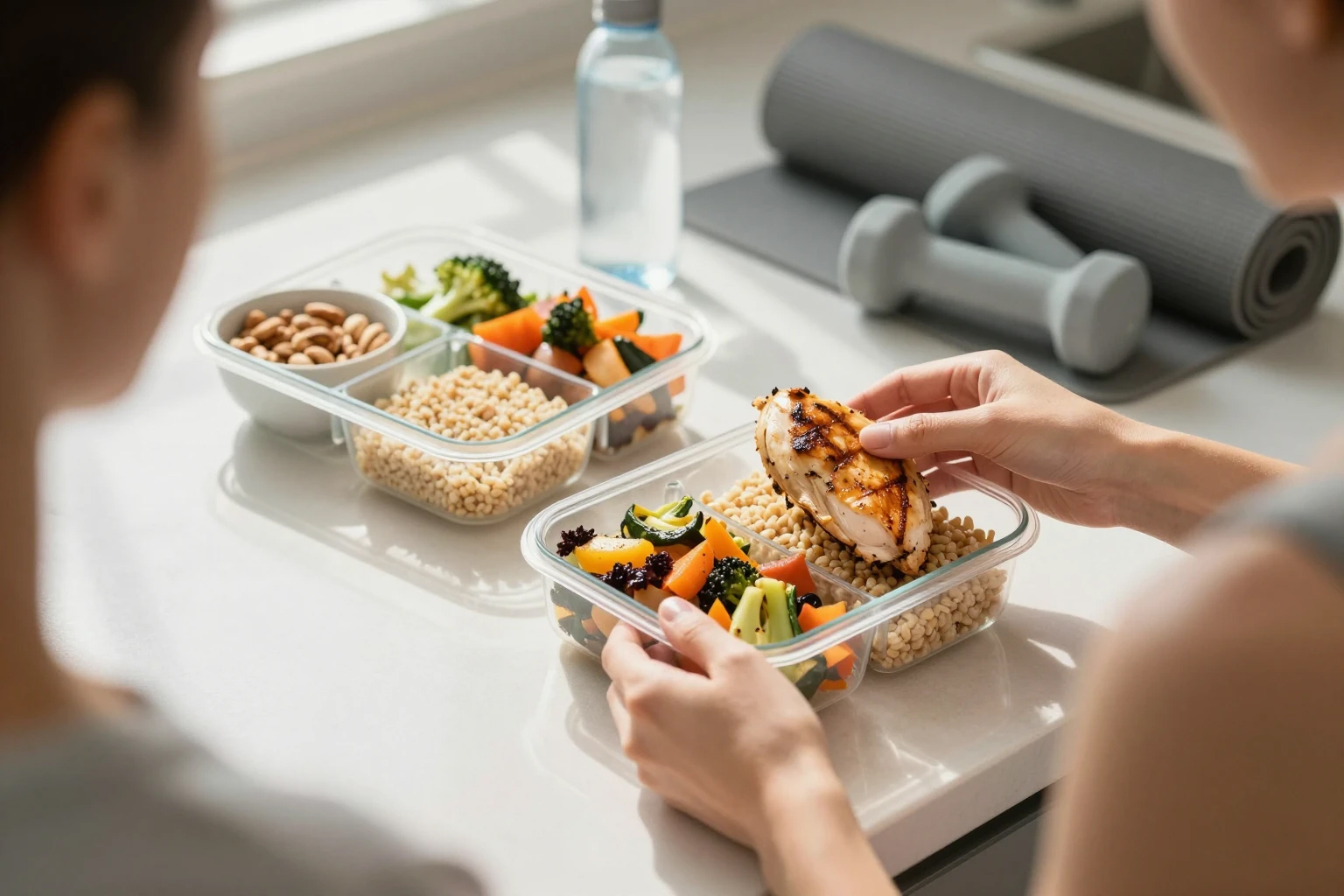
Plan meals around your most demanding training times by prioritizing a balanced meal one to three hours before exercise, or a small carb-rich snack 30 to 60 minutes prior if time is limited. After workouts aim for a mix of protein and carbohydrates within roughly an hour to support muscle recovery and replenish glycogen stores. Batch cooking staples like grilled chicken, roasted vegetables, and cooked grains simplifies assembly and helps maintain consistent fueling. Keep pantry staples such as canned beans, frozen vegetables, and whole-grain wraps to build quick, balanced meals on busy days.
Small habits like packing a post-workout snack or cooking once for several meals reduce barriers to good nutrition. Track how your body responds and adjust timing or portions to match energy needs and goals.
Conclusion
Creating balanced meal blueprints makes at-home workout fueling manageable and repeatable. Prioritizing protein, smart carbs, and vegetables supports energy, performance, and recovery. Simple planning and consistent habits compound into reliable results over time.