Building a simple, adaptable eating plan makes home workouts more consistent and productive. You don’t need strict rules to see better energy, recovery, and progress—small, repeatable choices scale over time. This framework focuses on timing, balanced macronutrients, and convenient meal blocks you can use daily. Followable habits help you train harder and recover faster without complex meal plans.
Meal Blocks and Timing
Think in blocks rather than strict meal categories: a pre-workout snack, a main meal, and a recovery serving are enough for most home training days. Aim for a modest carbohydrate and protein combination 45–90 minutes before exercise to top off energy without causing discomfort. After finishing a session, prioritize 20–30 grams of protein alongside some carbohydrates to support muscle repair and replenish glycogen. Consistency in timing helps your body respond predictably to training stimuli.
These blocks can be shifted earlier or later based on your schedule and workout intensity. Use them as a flexible template rather than a rulebook.
Balance of Macros and Portions
Protein should be the anchor of each block; it supports recovery and preserves lean mass when paired with resistance or high-intensity bodyweight work. Include healthy fats and fiber-rich vegetables to sustain fullness and support metabolic health, keeping portion sizes moderate. Carbohydrate choices should match training load: more for longer or intense sessions, less for short, moderate efforts. Tracking how you feel across workouts will guide small adjustments to portions and ratios.
Start with a palm-sized portion of protein, a cupped hand of carbs, and a thumb of fats as a simple guide. Modify those portions upward if workouts increase in duration or intensity.
Practical Meal Examples and Prep Tips
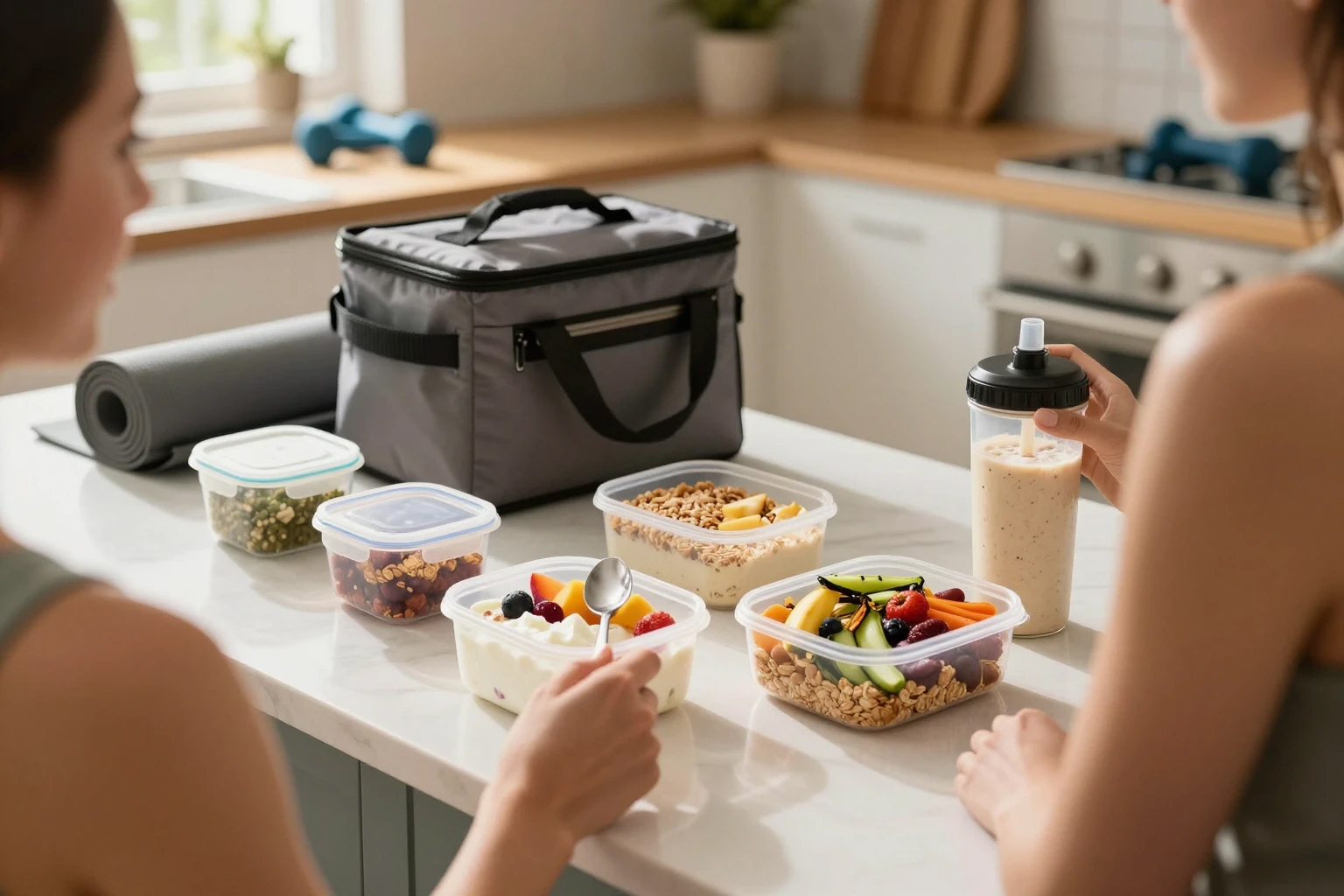
Practical meal examples help translate the framework into real food: simple combinations that are fast to prepare and taste good. Think Greek yogurt with fruit and oats for a morning pre-workout snack, a grain bowl with beans and roasted vegetables for a main meal, and a smoothie with protein powder and banana for quick recovery. Prepare components in advance—cook grains, roast vegetables, and portion proteins—to lower friction during busy days. Small tools like a cooler bag or airtight containers make it easier to keep meals ready.
- Yogurt, fruit, and oats — quick pre-workout.
- Grain bowl with beans, greens, and olive oil — main meal.
- Protein smoothie with banana and nut butter — fast recovery.
Regular, simple preparation is the glue that makes any nutrition plan sustainable. Over weeks, these small habits free up energy for consistent training.
Conclusion
Consistent, simple meal blocks provide reliable fuel without overcomplication. Focus on protein, match carbs to effort, and use practical prep to reduce decision fatigue. These small shifts produce durable gains in energy, performance, and recovery.